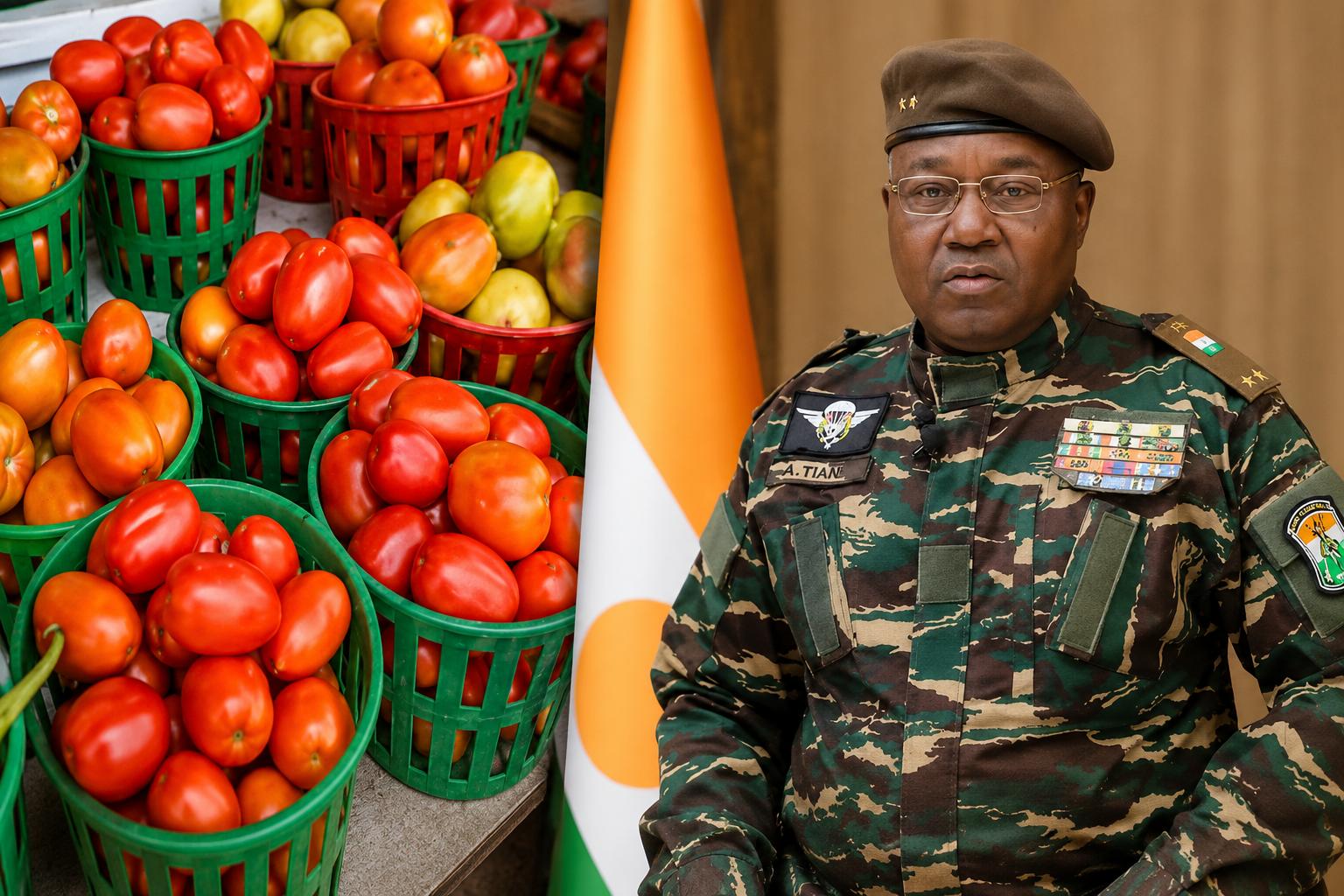
At a time when public discourse is saturated with talk of economic sovereignty and breaking free from external dependencies, the announcement of €3 million in Italian funding to ‘boost the tomato sector’ sounds like an admission of weakness, if not a glaring contradiction. For a state that champions sovereignism and self-sufficiency, reaching out for help in such basic agricultural sectors as horticulture raises a fundamental question: can one truly claim sovereignty while depending on Europe to grow one’s own tomatoes?
Self-sufficiency is not financed from abroad. True sovereignty cannot be bought with foreign subsidies or loans, even if they are labeled ‘development cooperation’. If a country chooses the path of autonomy, it must assume the mechanisms: mobilise national savings, reorient its own sovereign budgets, and trust its local genius.
A tomato is neither a cutting-edge microprocessor nor space technology requiring complex Western skills transfer. It is a crop mastered for generations by local farmers. Injecting millions of euros from Rome to set up small-scale irrigation or processing units demonstrates a chronic inability to structure our own economy by our own means. It perpetuates the cycle of assistance, dressed up in new managerial jargon.
Beyond the ideological inconsistency, this project highlights a much more serious problem: the complete lack of seriousness in strategic planning, both in food and security terms.
How can one design a viable agricultural development plan over three years in structurally unstable areas without strict coordination with territorial security? Developing production basins without first guaranteeing the secure free movement of goods and people is amateurish. The small-scale irrigation infrastructure, no matter how costly, will be useless if producers cannot access their fields or if harvests are abandoned in the face of security threats.
Moreover, the lack of planning is evident in value chain management:
- The diagnosis is well known: the country mass produces from January to June, then loses everything due to lack of storage, while importing tomato paste the rest of the year.
- The response is short-term: instead of building a genuine national agro-food industry financed by local capital or endogenous public-private partnerships, the country relies on external funds to ‘patch the holes’.
If the chosen sovereignist path is serious, it demands a radical break with these practices. Revitalising the tomato sector or any other strategic sector requires rigorous planning that links land security, patriotic financing, and protection of the domestic market against massive imports.
Continuing to celebrate €3 million packages from Europe keeps the country in a facade of sovereignty, where rhetoric is autarkic but plates remain dependent on the goodwill of Western capitals. It is time to move from posture to genuine planning.