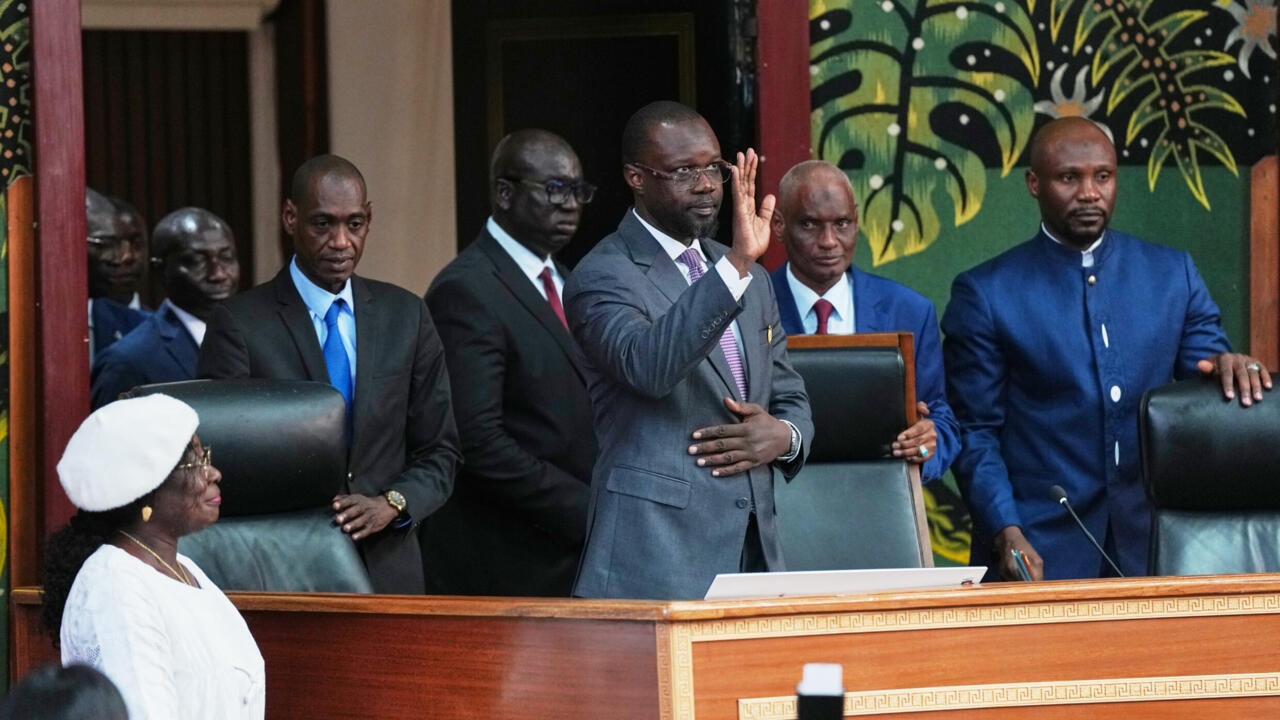
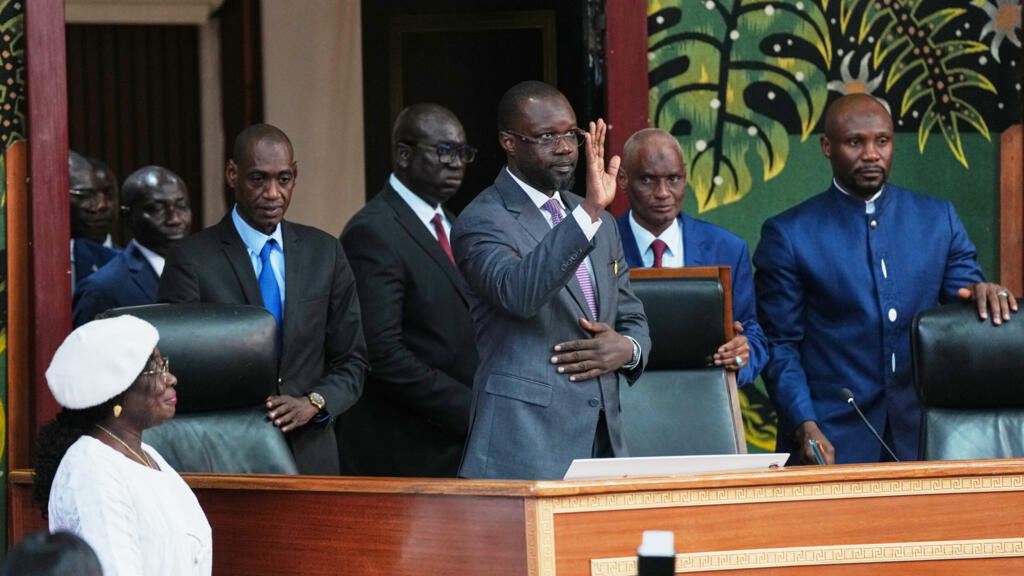
In Dakar, the political landscape of Senegal has shifted dramatically with Ousmane Sonko’s election as President of the National Assembly. The move raises critical questions about how President Diomaye Faye will navigate an Assembly now led by his former rival. Sonko, a prominent opposition figure, has pledged to avoid institutional crises but emphasized that the Assembly will not simply rubber-stamp government decisions.
a new era of political tension or cooperation?
Political analysts are divided over what Sonko’s election means for Senegal’s governance. Mamadou Lamine Sarr, a political science lecturer at the Cheikh Hamidou Kane Digital University in Dakar, suggests that while cohabitation between rival factions can be fraught with difficulty, it is not inherently impossible to achieve a peaceful balance. The key, he notes, will lie in the willingness of both the executive and legislative branches to engage in constructive dialogue rather than confrontation.
what challenges lie ahead?
The election of Sonko, a staunch critic of President Faye’s administration, introduces a period of uncertainty. Analysts warn that the National Assembly may now act as a counterbalance to the presidency, scrutinizing policies and potentially blocking legislative initiatives. The possibility of early legislative elections or even the dissolution of the Assembly looms, depending on the evolving dynamics between the two branches of government.
key statements from sonko
Ousmane Sonko, speaking shortly after his election, made it clear that his leadership would not be passive. He stated that the Assembly would not serve as a mere “recording chamber” for government decisions, signaling a potential shift toward greater parliamentary oversight. However, he also expressed a commitment to avoiding institutional crises, suggesting that dialogue and negotiation could pave the way for a functional cohabitation.
what does this mean for Senegal’s political future?
The coming weeks and months will be pivotal in determining whether Senegal can achieve a stable cohabitation between its executive and legislative branches. The outcome will depend on the ability of both sides to compromise and work toward common goals. Political observers will be closely watching for signs of cooperation—or escalating tensions—as the new Assembly begins its work.
As Senegal navigates this uncharted political terrain, the world will be watching to see if this experiment in cohabitation can succeed where others have failed.