The Sahel region, a vast geographical expanse stretching from Mali to Chad, hardly presents itself as an economic haven. Far from being a new Singapore for foreign direct investment, nations like Mali, Burkina Faso, and Niger grapple with significant economic challenges. Mali, for instance, faces a demographic reality where 47% of its 25.9 million citizens are under 15, with only 25% of its land being arable. Ranking 188th out of 193 countries on the Human Development Index, Mali also sees nearly 45% of its population living below the poverty line. Ouagadougou and Niamey exhibit comparable statistics, with 40% and 60.5% of their populations, respectively, enduring similar poverty levels, according to the World Bank. These three landlocked nations, currently under military leadership, have forged the Alliance des États du Sahel (AES), seemingly with the Kremlin’s distant endorsement, aiming to diminish remaining French influence. While their anti-French, anti-Western, and anti-democratic stance was positioned to usher in prosperity, the reality has yet to align with these promises. Amidst this complex landscape, two neighboring powers, Algeria and Morocco, are actively extending their services and strategic visions.
Morocco: an atlantic gateway
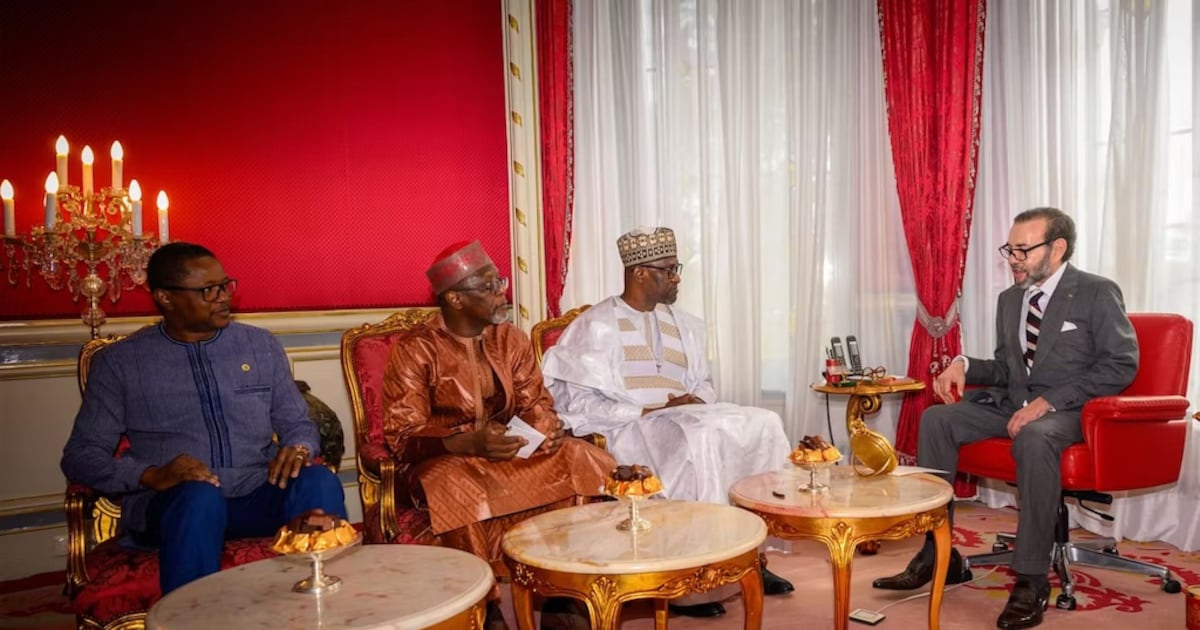
Morocco is strategically developing the Dakhla Atlantique port, envisioning it as a vital hub akin to Tanger Med, but situated in the Western Sahara. This ambitious project, slated for completion by 2028 and operational the following year, aims to serve as a crucial entry point for West African trade and a conduit to the Americas. Rabat has engaged directly with the three leaders of the AES, presenting a sharp geopolitical proposition: a deep-water port, potentially complemented by a proposed railway line (though not yet finalized), offering these landlocked nations direct access to the Atlantic Ocean. This initiative promises to significantly enhance their economic prospects by breaking their isolation. For Morocco, which faces geographical isolation due to its ongoing dispute with Algeria, this endeavor serves a dual purpose. It demonstrates that its development plan for the Western Sahara can yield benefits across the entire sub-region, while simultaneously leveraging economic progress to indirectly combat the jihadist groups destabilizing the Sahel. By providing opportunities for a youth demographic experiencing a rapidly increasing birth rate—with the region’s population projected to double within a decade—Morocco seeks to offer a tangible alternative to despair.
Algeria: a trans-saharan gas pipeline to europe
Algeria, having recently mended diplomatic ties with Niger in mid-February after a period of strained relations, has extended a significant offer to Abderrahmane Tiani, the head of Niger’s military government in Niamey. The proposal involves the construction of a segment of the Trans-Saharan Gas Pipeline (TSGP) “immediately after Ramadan.” This ambitious 4800-kilometer pipeline project, originating in Nigeria, would now traverse Niger before reaching Algeria, ultimately supplying natural gas to Europe. Sonatrach, Algeria’s national hydrocarbons company, is slated to manage the construction within Nigerien territory and, critically, commit to training Nigerien personnel in its operation. This commitment to local capacity building distinguishes Algeria’s approach from that of some other international actors, such as China, which often do not prioritize the training of local populations in the management of their national resources.
two complementary strategies that clash
Recent discussions in Madrid and Washington (February 23-24) regarding Morocco’s autonomy plan for the Western Sahara underscore the potential for a significant shift in regional dynamics. Should this conflict, now in its fifth decade, finally resolve, Algeria and Morocco could potentially collaborate on the Sahel’s explosive security and demographic challenges. Such cooperation would effectively prevent the Alliance des États du Sahel (AES) states from exploiting the existing rivalries between these two regional capitals.
Jihadism continues to flourish, fueled by the combined scourges of poverty and authoritarian governance. Both Algiers and Rabat are independently striving to disrupt this perilous cycle. Each capital brings distinct advantages to the table: Algeria offers its vast hydrocarbon resources and the specialized expertise of Sonatrach, while Morocco champions its grand infrastructure projects and its vision to become a pivotal hub connecting Africa, America, and Europe. These two strategies, inherently complementary in their objectives, are unfortunately at odds due to the unresolved Western Sahara conflict. This ongoing friction represents a missed opportunity for broader regional stability.
A notable instance of regional tension occurred on September 26, 2025, when Malian Prime Minister Abdoulaye Maïga publicly demanded that Algeria “cease supporting international terrorism.” In response, Ahmed Attaf, Algeria’s Minister of Foreign Affairs, dismissed the accusation as “soldier’s logorrhea.”