Senegal’s economic divide: Sonko’s hardline stance clashes with Faye’s pragmatism
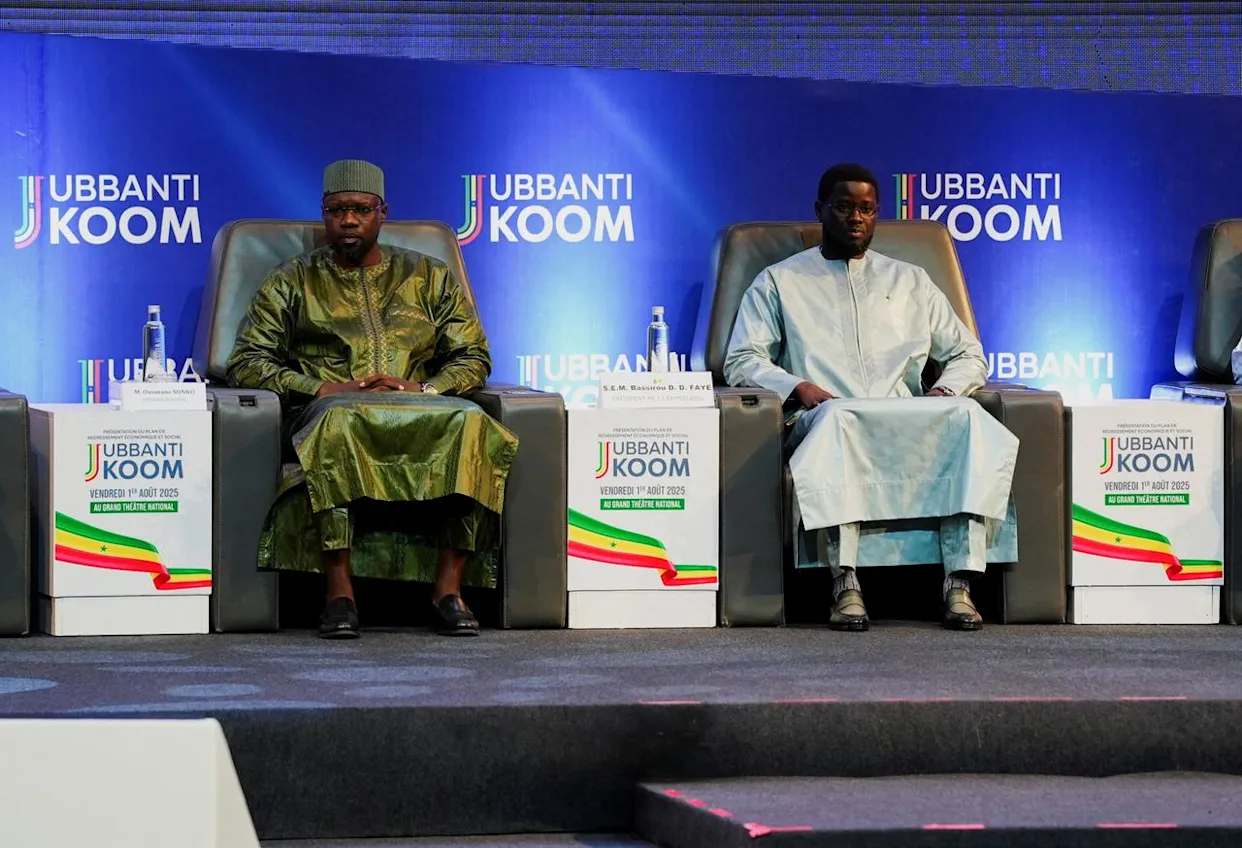
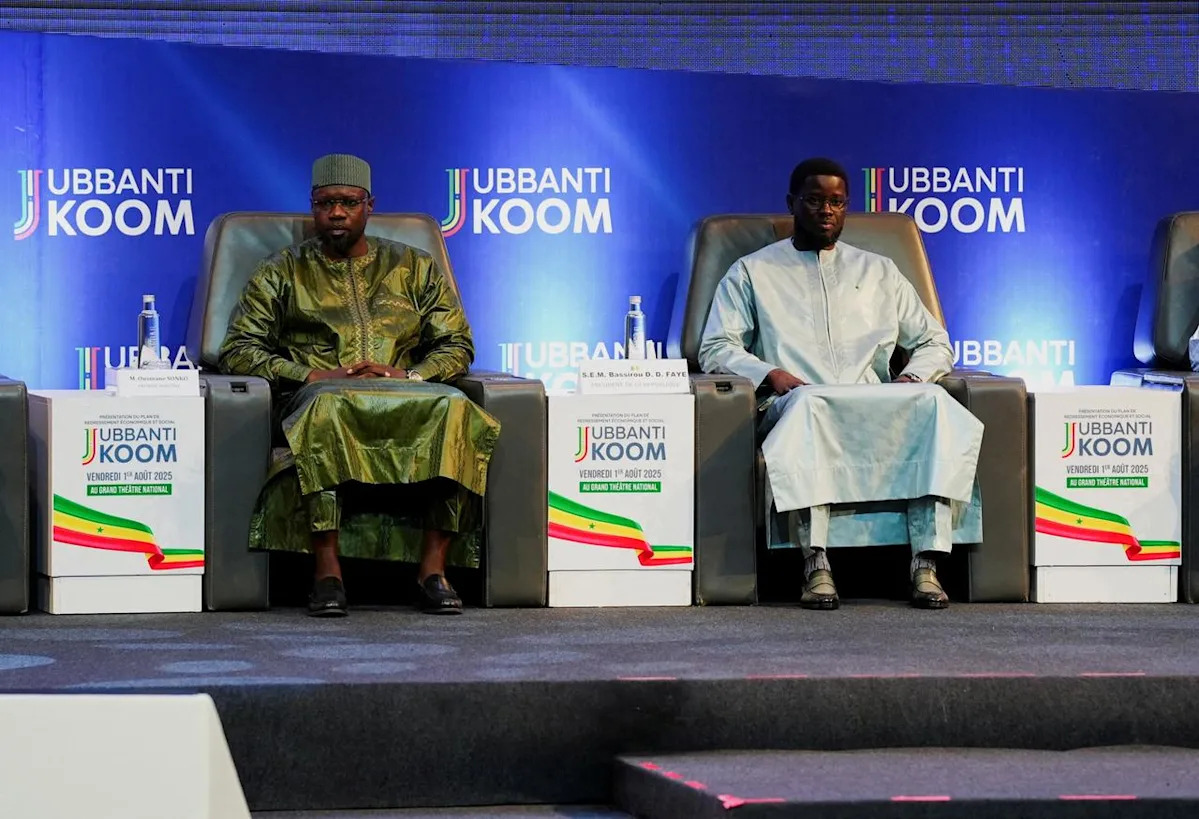
The dismissal of Ousmane Sonko by Bassirou Diomaye Faye on 23 May 2026 marks the end of a political alliance that was doomed from the start. Far from a clash of egos, this rupture stems from fundamental disagreements over Senegal’s economic future. Two years after Faye’s election in April 2024—which saw Sonko appointed Prime Minister—their paths have diverged sharply on three critical fronts: debt management, hydrocarbon strategy, and the role of foreign capital in national development.
Debt: the first battleground
The most glaring point of contention is debt. In September 2024, Sonko publicly exposed hidden debts accumulated under Macky Sall’s administration. By March 2025, an IMF assessment revealed approximately €7 billion in unreported obligations, pushing the country’s debt-to-GDP ratio beyond 100%. Annual debt servicing exceeds 5,500 billion CFA francs (€8.4 billion), while refinancing needs approach 6,000 billion CFA francs (€9.1 billion). The sovereign credit rating has been downgraded three times in twelve months.
Two diametrically opposed approaches have emerged. Sonko rejected any restructuring, prioritizing public denunciation of the previous regime and rallying his base. Faye, however, pursued a pragmatic path, engaging extensively with the IMF, hosting its delegation in November 2025, and initiating a national dialogue in May 2026. For Sonko, aligning with international creditors risked undermining his political capital, while Faye viewed restructuring as an economic necessity.
The suspended €1.55 billion IMF program, closed international financial markets, and the looming threat of a sovereign default by 2028 made Sonko’s position unsustainable—yet politically potent for mobilizing the Pastef party’s grassroots supporters.
Hydrocarbons: a clash of visions
Senegal’s oil and gas potential has become another flashpoint. Sonko championed a nationalist approach, advocating for state-controlled exploitation of offshore reserves to maximize revenues for domestic development. Faye, in contrast, favored foreign partnerships, particularly with European energy firms, to accelerate extraction and secure immediate financial inflows.
This divide extended to revenue allocation. Sonko insisted on reinvesting hydrocarbon profits into infrastructure and social programs, while Faye supported using early earnings to stabilize debt servicing and attract further investment.
Foreign capital: the ideological divide
At the heart of the disagreement lies the role of external financing. Sonko’s rhetoric emphasized economic sovereignty, criticizing reliance on multilateral institutions like the IMF and World Bank. Faye, however, embraced conditional funding, viewing it as essential to avoid economic collapse. This ideological split mirrored broader tensions between populism and pragmatism in Senegal’s political landscape.