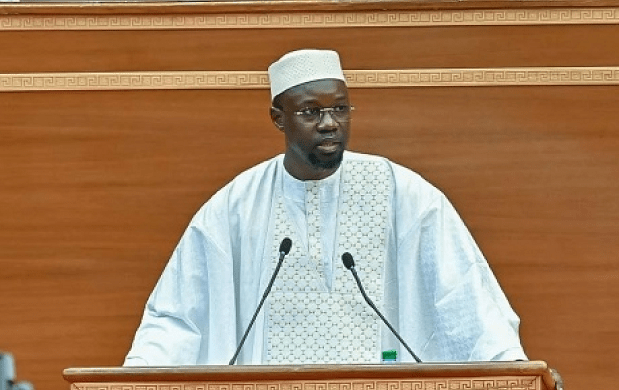
During a parliamentary session addressing current affairs, Prime Minister Ousmane Sonko made a firm declaration: the recently enacted amendment to the Senegalese Penal Code will be enforced with unwavering determination. The law, which toughens penalties for acts deemed “against nature,” leaves no room for compromise or delay in its implementation.
Sonko addressed lawmakers directly, emphasizing that the revised legal framework—specifically Article 319—must be upheld without exception. His statement underscored a broader principle: once a law is passed and signed, it becomes binding for all citizens, regardless of prior opposition. This stance reflects the government’s commitment to legal integrity and the rule of law in Senegal.
The amendment, signed into law by President Bassirou Diomaye Faye on March 27, 2026, introduces sweeping changes to the 1965 Penal Code. Among its key provisions are heightened criminal penalties, including imprisonment ranging from five to ten years and fines between two and ten million West African CFA francs for convicted individuals. Additionally, the law criminalizes the public promotion or financial support of such acts, broadening its scope.
Speaking to domestic and international concerns, Sonko firmly asserted Senegal’s legislative sovereignty. In response to criticism from several Western capitals, he declared that Senegalese society is free to define its moral and legal boundaries without external interference. “The Senegalese people do not need lessons from abroad,” he asserted, reaffirming the nation’s right to self-determination in matters of public policy.
The Prime Minister framed the reform as a necessary step to safeguard societal values and address pressing public health concerns, notably the spread of HIV. He dismissed suggestions of a moratorium on enforcement, affirming that the government is fully prepared to implement the law without delay or hesitation.
With this legislative move, Senegal joins a broader regional conversation about balancing cultural values, legal reforms, and international scrutiny. The government’s resolute position signals a new chapter in the nation’s approach to these complex issues.