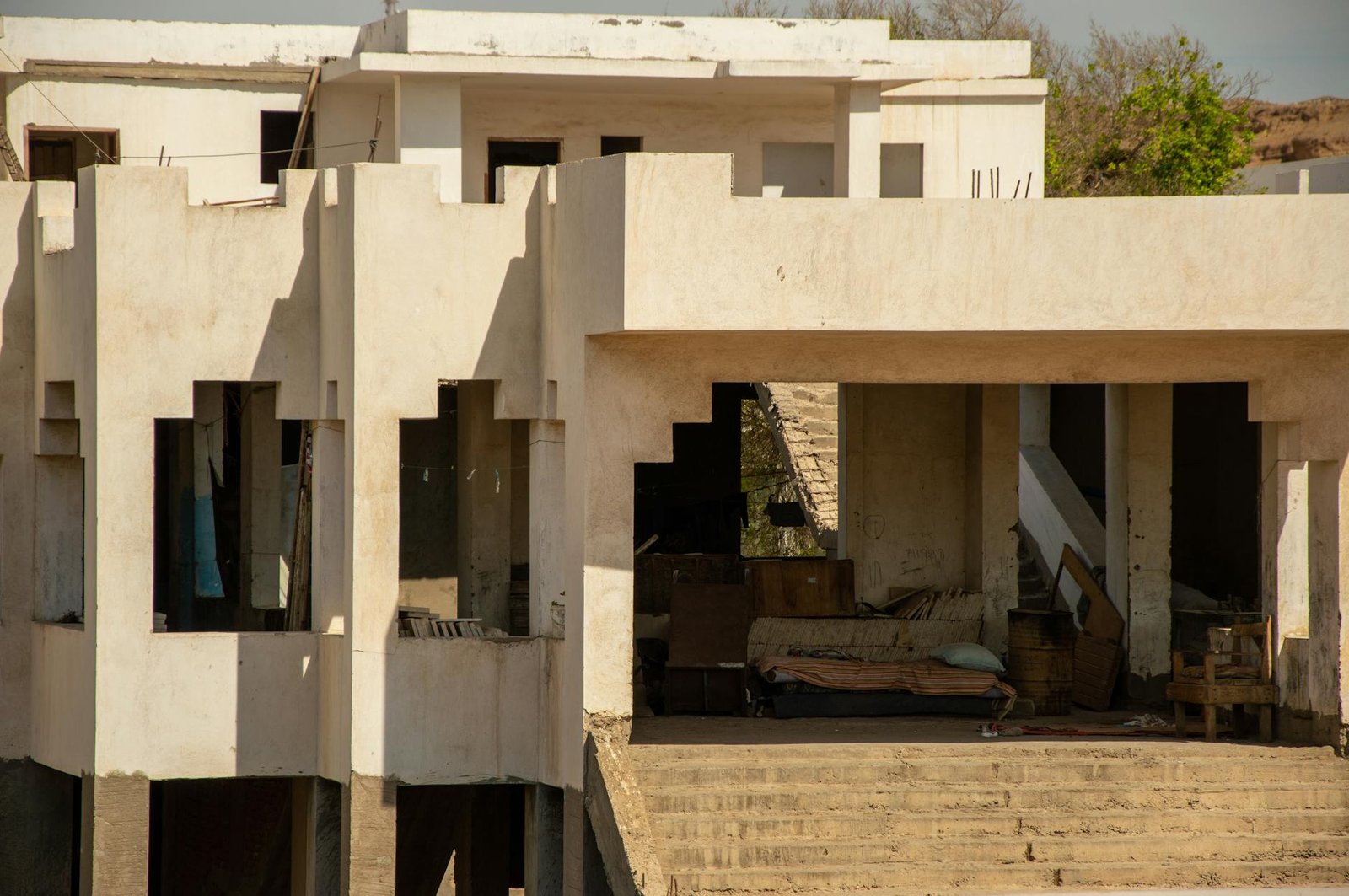
Senegal’s government has launched a comprehensive review of its public assets to address a persistent issue: 25 completed infrastructures that remain idle, failing to deliver the services they were designed for. These dormant assets, collectively valued at 279 billion West African CFA francs, represent a significant financial burden—essentially an immobilized budget without tangible economic or social return. The situation underscores a recurring flaw in public procurement: the disconnect between project completion and effective operational deployment.
Targeted audit exposes dormant assets
The initiative follows a systematic evaluation of state-owned properties, identifying buildings, sector-specific facilities, and economic structures left unused despite physical completion. Each idle asset incurs ongoing costs—minimal maintenance, security, and, in some cases, accelerated deterioration due to lack of occupancy—without generating any service value. Dakar’s strategy aims to reintegrate these facilities into productive or administrative use through redeployment, inter-agency collaboration, or public-private partnerships. The approach involves a detailed analysis of each infrastructure to pinpoint why it remains unused. Common causes include missing operational budgets, lack of pre-assigned purpose, or inadequate logistical planning by project owners.
Budgetary pressure drives efficiency push
The timing of this audit is strategic. Since assuming office in 2024, the government has prioritized financial transparency and expenditure control as key policy pillars. By unlocking the potential of these 279 billion CFA francs in already-paid assets, the state can generate fiscal space without resorting to new debt, addressing high debt servicing costs and reducing reliance on external financing. This effort aligns with broader reviews of public contracts and semi-public entities, reinforcing a clear principle: before increasing taxes or launching new investments, existing resources must be fully optimized. The initiative echoes long-standing critiques from the Court of Auditors, which has repeatedly highlighted weaknesses in post-delivery management within Senegal’s public procurement processes.
Strengthening project governance and accountability
Beyond the financial figures, the audit raises critical questions about infrastructure project governance. Completion of a structure does not mark the end of its lifecycle; rather, it marks the beginning of its operational utility. Yet, the process—from feasibility studies to commissioning—remains fragmented across multiple ministries and agencies, creating blind spots in accountability. International financial institutions have long emphasized the need for clearer responsibility chains throughout the project cycle. For these 25 sites, several solutions are under consideration. Some could be reassigned to government agencies currently renting private office space, yielding immediate rent savings. Others may be suitable for sale or concession to private operators under strict contractual terms. A third option involves addressing missing components—equipment, staffing, or utility connections—to activate the intended services. Decisions will be made on a case-by-case basis, guided by budgetary considerations.
This effort to revitalize public assets serves as a credibility test for the administration. Success hinges on transparent progress reporting and the establishment of verifiable performance indicators. Senegal’s approach could serve as a model for neighboring economies grappling with similar challenges of underutilized public infrastructures. Every West African CFA franc must yield maximum value, as the executive has made clear.