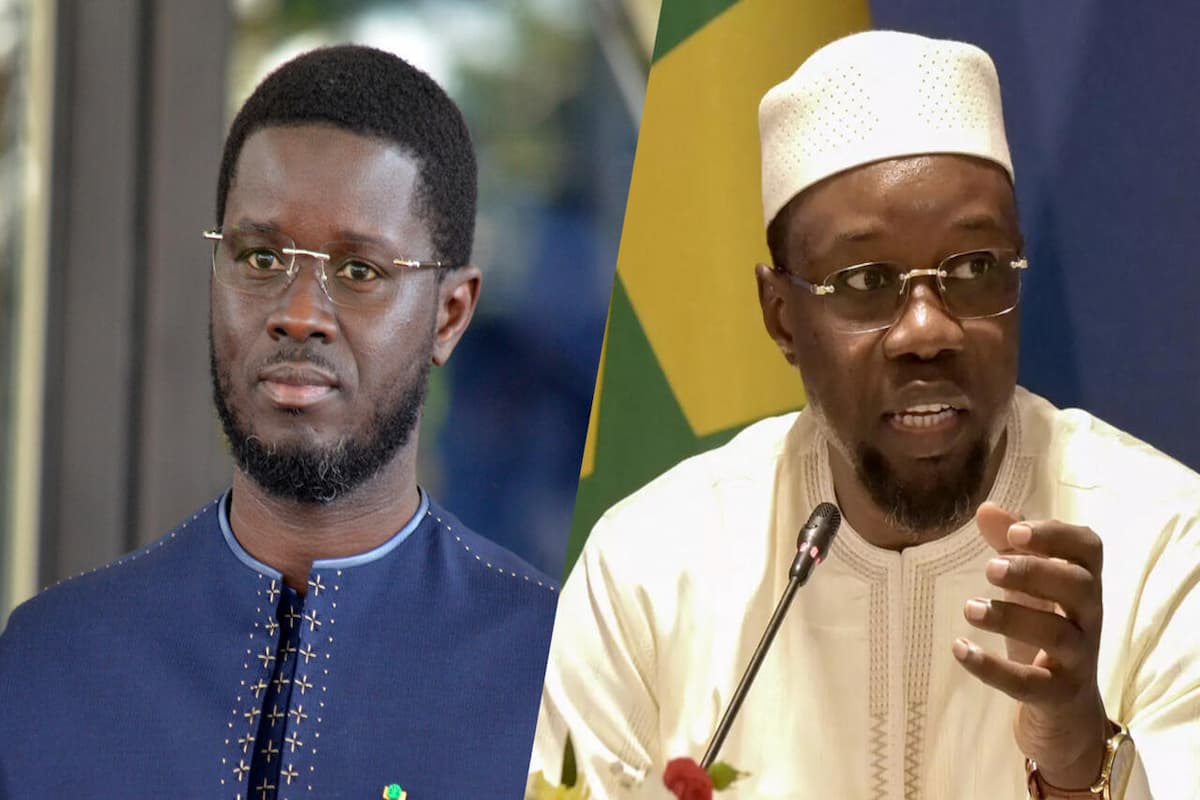
What began as an unprecedented political alliance in French-speaking Sub-Saharan Africa has culminated in a dramatic executive split. In Senegal, the formidable partnership between Ousmane Sonko, the mentor, and Bassirou Diomaye Faye, his protégé and a staunch opponent of former President Macky Sall, initially captivated the nation ahead of the 2024 presidential election. However, this powerful duo gradually transformed into a public rivalry, ultimately fracturing on the night of May 22, 2026.
The Senegalese public was taken by surprise on Friday, May 22, shortly before 10 PM. A brief but impactful address was broadcast across the nation via Radiotélévision Sénégalaise (RTS) directly from the Presidential Palace in Dakar. Oumar Samba Ba, the Secretary General of the Presidency, delivered the pivotal announcement: Prime Minister Ousmane Sonko had been relieved of his duties. Concurrently, every member of the government also saw their positions terminated.
“Through decree n°2026-1128 of May 22, 2026, the President of the Republic, Bassirou Diomaye Faye, has ended the functions of Ousmane Sonko, Prime Minister, and consequently, those of the ministers and secretaries of state who are members of the government. The outgoing government members are tasked with handling current affairs,” Oumar Samba Ba formally declared.
In the immediate aftermath of his dismissal, Ousmane Sonko shared his reaction on a social media platform, stating with a notable sense of calm: “Tonight, I will sleep with a light heart.”
Merely hours before this decisive development, Sonko had made a pointed statement before the National Assembly, responding to queries from deputies. He asserted, “I am not a Prime Minister who blindly obeys and agrees to everything.”
It is worth noting that discernible tensions had been brewing for several months between the two leading figures of the executive branch, who assumed power in 2024. Their political disagreements had become increasingly apparent in the public sphere. For instance, just weeks prior, during a press engagement with local media, President Bassirou Diomaye Faye had indicated that he reserved the right to “end the functions of his Prime Minister as soon as he no longer had confidence in him.” That evening, the figurative Rubicon was unequivocally crossed in Senegal’s dynamic African politics.
The immediate focus now shifts to how power dynamics will evolve within Senegal. With the next political milestones—local elections in 2027 and the presidential election in 2029—still on the horizon, observers of West Africa news will be closely watching the trajectory of this significant political development.