The political fallout from Senegal’s shifting power dynamics has reached a critical juncture after the National Assembly’s decisive rejection of the 2026 supplementary budget. The vote exposes a widening rift between President Bassirou Diomaye Faye’s administration and the parliamentary majority of the PASTEF, highlighting deepening institutional strains that could reshape the country’s economic and political landscape.
Parliament delivers a stinging rebuke to the government
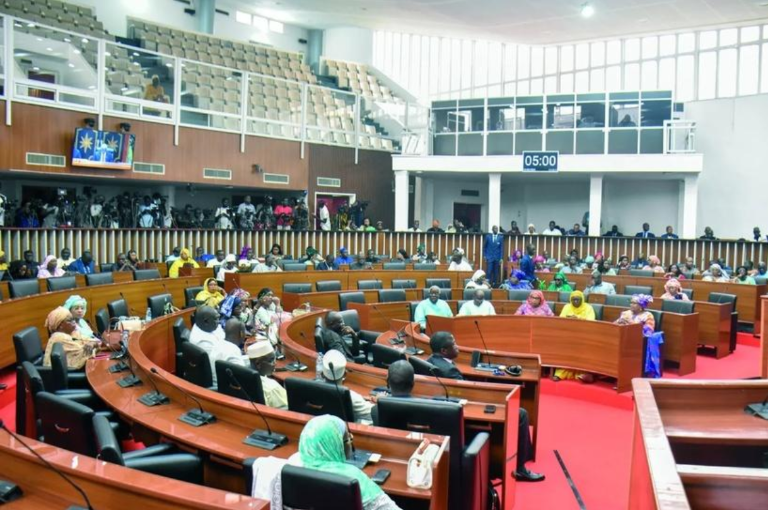
The National Assembly’s overwhelming vote—109 to 20 with three abstentions—against the 2026 supplementary finance bill marks a rare setback for an executive branch accustomed to legislative support. The rejection, triggered by a procedural motion filed by PASTEF lawmaker Amadou Ba, prevented any substantive debate on the government’s financial adjustments, underscoring the depth of parliamentary resistance.
This outcome represents more than a budgetary failure; it signals the collapse of automatic political backing for executive initiatives, despite shared ideological roots between the president and the ruling party’s parliamentary bloc.
From allies to adversaries: the breakdown of a once-united movement
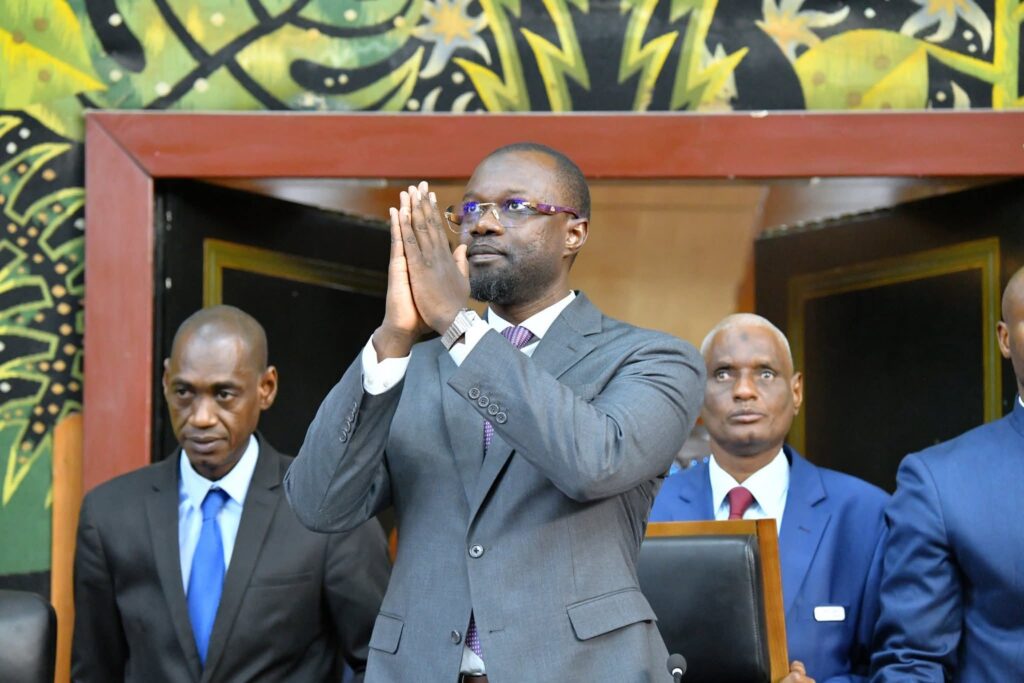
The schism reflects a dramatic shift since May 2026, when Ousmane Sonko—former Prime Minister and PASTEF’s leading figure—left government amid rising tensions. While Sonko now presides over the legislature, the party’s parliamentary dominance has not translated into unconditional support for President Faye’s agenda.
The excruciating irony lies in this paradox: two leaders who once fought side by side now anchor opposing ends of the same institution, transforming the National Assembly into a battleground for competing visions of Senegal’s economic future.
Economic tensions flare as fiscal priorities collide
The budget dispute centers on sharp disagreements over revenue forecasts, debt management strategies, and public spending allocations. The government’s revised proposal slashes investment credits by 555 billion CFA francs, while projecting a deficit of 7.6% of GDP—up from the initial 5.4%.
PASTEF lawmakers argue the adjustments betray fiscal irresponsibility, demanding greater transparency in subsidy allocations and social spending decisions. The Ministry of Economy and Finance counters that all requested data was provided, dismissing the rejection as a political maneuver rather than a substantive oversight.
The impasse reveals a fundamental clash: technocratic urgency versus democratic oversight, with both sides insisting on their authority to shape national priorities.
The global implications of Senegal’s budget deadlock
Beyond domestic discontent, the budget failure threatens Senegal’s ongoing negotiations with the International Monetary Fund (IMF) for a new financing program. A delayed or rejected budget weakens macroeconomic credibility, potentially derailing external funding flows and destabilizing the state’s ability to meet obligations to private contractors and strategic sectors.
The ripple effects could extend to crucial areas like energy subsidies, social welfare programs, and critical infrastructure investments—sectors already grappling with funding shortfalls.
The specter of institutional gridlock looms over Senegal’s future
While not a formal cohabitation, Senegal’s current power structure exhibits hallmark traits of institutional tension: a president wielding executive power while facing a legislature that rejects his policy agenda. The November 3 vote forces a pressing question: how far can such intra-movement disputes escalate before constitutional stability falters?
With no immediate resolution in sight, the government must chart a path forward through either renegotiation or alternative fiscal measures, while PASTEF lawmakers signal their intent to leverage every parliamentary tool to enforce their demands.
The rejection of the 2026 supplementary budget is more than a fiscal misstep—it is a defining moment that will determine whether Senegal navigates these turbulent waters through compromise or escalation. As the dust settles, one reality becomes clear: the future of Bassirou Diomaye Faye’s presidency and Ousmane Sonko’s influence will be written in the minutes of parliamentary chambers, not the halls of power alone.