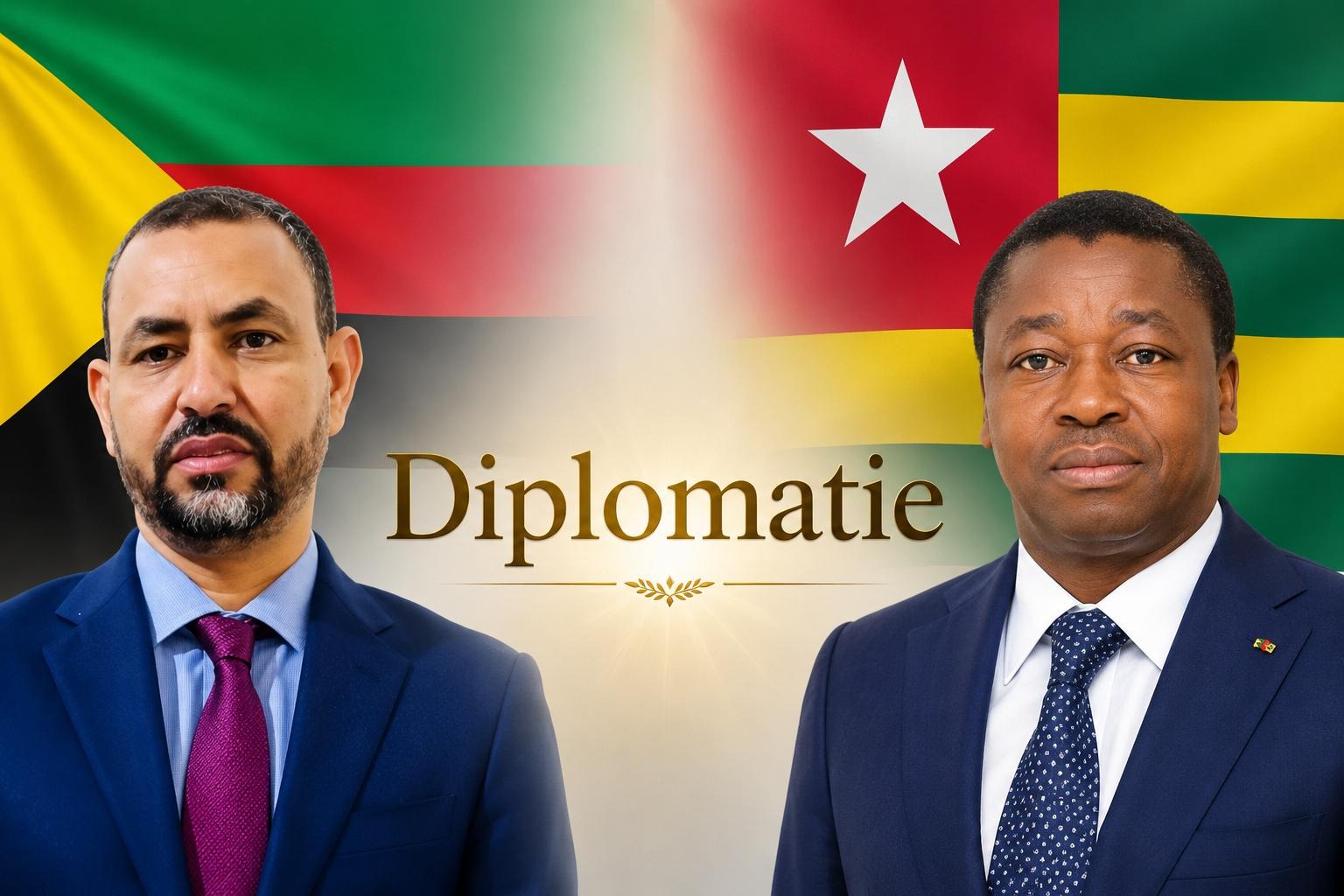
Behind the scenes of West African diplomacy, Lomé is preparing to take a decisive step. While the Front de Libération de l’Azawad (FLA) gears up for a strategic tour across regional capitals, Togolese authorities are on the verge of granting it official recognition. This move comes as President Faure Gnassingbé reaffirms his role as an unconventional mediator, drawing parallels with Lomé‘s bold alignment with the military regimes of the Alliance of Sahel States (AES)—a stance that continues to irk the ECOWAS bloc.
FLA’s West African tour: Lomé as the diplomatic launchpad
The Front de Libération de l’Azawad (FLA), a political and military force challenging Bamako’s authority over northern Mali, is stepping out of diplomatic obscurity. Its upcoming tour of West African capitals marks a calculated push to secure international legitimacy and shatter the isolation imposed by the transitional authorities in Mali.
The decision to kick off this diplomatic offensive in Lomé is far from coincidental. The FLA’s envoys are seeking receptive ears to amplify their demands for autonomy or self-determination. By agreeing to host the delegation and considering official recognition, Togo positions itself as a pivotal hub in this shifting geopolitical landscape.
Faure Gnassingbé’s ‘grand écart’ diplomatic doctrine
For keen observers of Togolese politics, this move aligns with—though escalates—the president’s long-standing strategy of fostering alternative diplomatic channels. While regional leaders often adhere to rigid institutional stances, Faure Gnassingbé has consistently prioritized engagement with dissenting voices.
His approach, built over years, revolves around refusing to conform blindly to conventional diplomatic norms. The anticipated recognition of the FLA exemplifies this mindset: Togo chooses to navigate the complexities of regional fractures rather than toe a rigid line, even if it means bending—or outright crossing—traditional diplomatic red lines.
From AES to FLA: A consistent tilt toward disruption
This pragmatic (or opportunistic, as critics argue) stance reached its peak during recent Sahelian political upheavals. When Mali, Burkina Faso, and Niger experienced military coups, ECOWAS swiftly imposed sanctions and isolation policies. Togo took the opposite route, emerging as a critical dialogue partner for the AES putschists. Faure Gnassingbé positioned himself as the preferred interlocutor for Bamako’s colonels and Niamey’s generals, undermining ECOWAS’s unified front.
Today, as Lomé opens its doors to the FLA—a group that challenges Bamako’s transitional government—it applies the same playbook. The apparent contradiction underscores a clear pattern: Togo seeks to be the indispensable crossroads for all transitions and rebellions in the subregion, regardless of ideological alignment.
Regional balance at stake: the fallout of Lomé’s decision
The impending recognition of the FLA by Togo is poised to strain bilateral relations within West Africa. For Mali’s transitional authorities, welcoming and legitimizing the FLA amounts to direct interference in domestic affairs—if not outright support for territorial destabilization.
Within ECOWAS, already weakened by the schism with Sahelian states, Togo’s initiative risks further eroding the bloc’s cohesion. By acting independently, Lomé underscores a stark reality: the region’s security and diplomatic architecture is undergoing a radical overhaul. The once-unassailable principles of border inviolability and non-interference are giving way to a pragmatic, ever-shifting geopolitical calculus.
As Togo prepares to recognize the FLA amid its regional tour, Lomé cements its reputation as West Africa’s diplomatic laboratory. Faure Gnassingbé’s strategy remains unchanged: anticipate fractures, engage with the excluded, and position Togo as a bold yet neutral mediator. The question now is whether this hand of outreach to dissenters will amplify Lomé’s influence or further isolate it in a region increasingly divided along new fault lines.