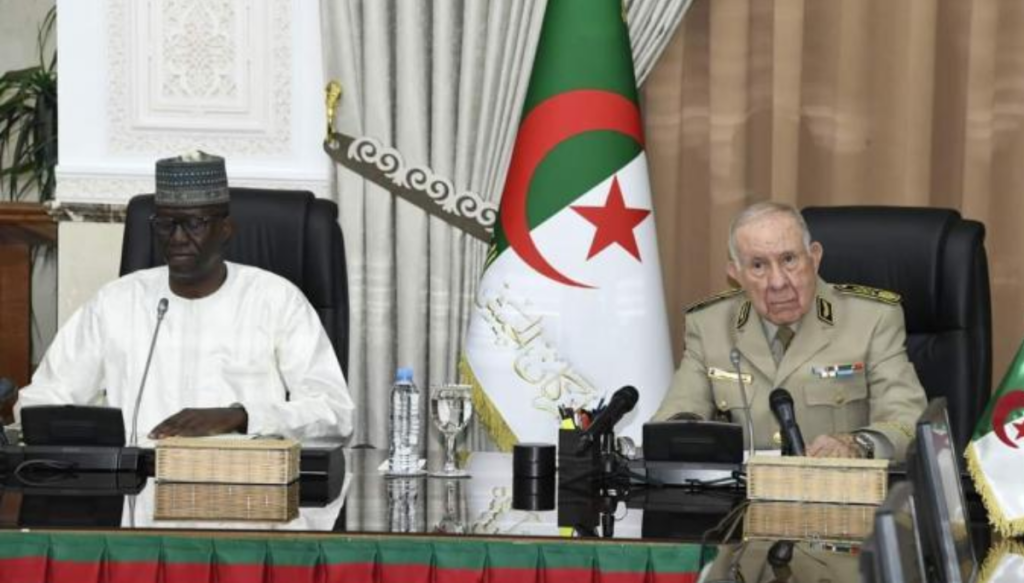
The military juntas of Mali, Burkina Faso, and Niger are convening in Bamako for a critical two-day summit to assess progress since the Niger founding summit in July 2024. The meeting, which began on December 22, will evaluate security, diplomatic, and development challenges while designating a new president for the Alliance of Sahel States (AES) confederation.
According to the Malian government, the gathering marks the first anniversary of the AES’s operational roadmap. Key discussions will focus on consolidating institutional frameworks and addressing regional and international implications of the confederation’s initiatives.
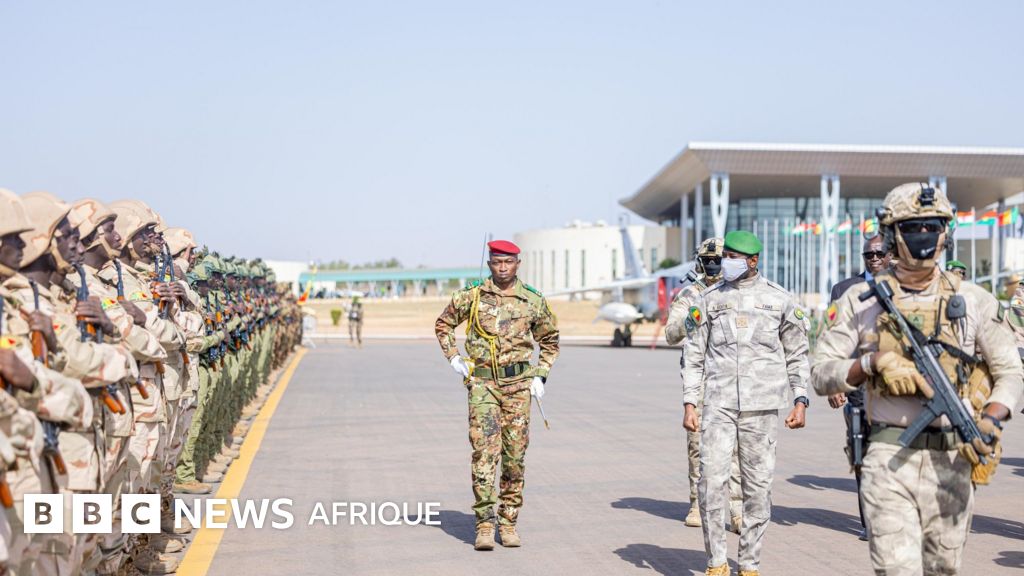
On the eve of the summit, Malian transitional President and AES head General Assimi Goïta inaugurated the unified AES Force (FU-AES) in Bamako. This marks a strategic step toward enhanced military coordination among the three nations.
what is the unified AES force?
The FU-AES represents a 5,000-strong multinational military force comprising troops from Mali, Burkina Faso, and Niger, led by Burkina Faso’s General Daouda Traoré. Its primary mission is to combat insecurity and jihadist threats across the AES region.
General Sadio Camara, Mali’s defense minister, emphasized the force’s significance: « Peace, security, and sovereignty cannot be delegated »*. He framed the initiative as a strategic commitment rooted in Sahelian values of solidarity and dignity, underscoring its irreversible nature for the three member states.
how can the unified force achieve its objectives?
While the FU-AES aims to strengthen cross-border military collaboration, experts warn that operational success hinges on more than just troop deployment. Fiacre Vidjenagninou, Senior Researcher at the Behanzin Institute in Cotonou and Associate Senior Researcher at the Egmont Institute in Brussels, stresses that credibility depends on tangible battlefield results that alleviate civilian suffering.
The force’s effectiveness will be measured by its ability to:
- optimize command structures: Clear decision-making chains are essential to avoid operational bottlenecks.
- fuse intelligence with rapid action: Collecting, analyzing, and acting on intelligence swiftly can dismantle jihadist networks before they regroup.
- secure liberated zones: Temporary control is insufficient; sustained presence through patrolling, market protection, and village security is critical to prevent insurgent resurgence.
- address governance gaps: Without local justice systems, conflict mediation, and community trust, military victories may prove fleeting.
Vidjenagninou cautions against a « hit-and-run » strategy, noting that jihadist groups often return after operations. Instead, he advocates for:
- Priority targeting of high-value enemy strongholds.
- Cross-border pursuit agreements to prevent militant regrouping in neighboring territories.
- Integration of civil-military efforts to restore governance in liberated areas.
« A force can win battles, but without minimal governance, it cannot achieve lasting stabilization »*, he asserts.
balancing expansion with effectiveness
While the AES may eventually expand, Vidjenagninou recommends a phased approach. Starting with the three core member states allows for:
- Building trust through shared operational successes.
- Refining coordination mechanisms before adding more partners.
- Establishing formal integration only after proven interoperability and mutual confidence.
The upcoming Bamako summit will also formalize the AES Television (headquartered in Bamako) and Daandè Liptako Radio (based in Ouagadougou), alongside discussions on the Confederate Investment and Development Bank, which has an initial capital of 500 billion CFA francs.
The AES emerged from the withdrawal of Mali, Burkina Faso, and Niger from the ECOWAS bloc following their 2020–2023 coups d’état. The alliance was formalized in July 2024 under the Liptako-Gourma Charter, signaling a shift toward self-reliance in regional security.