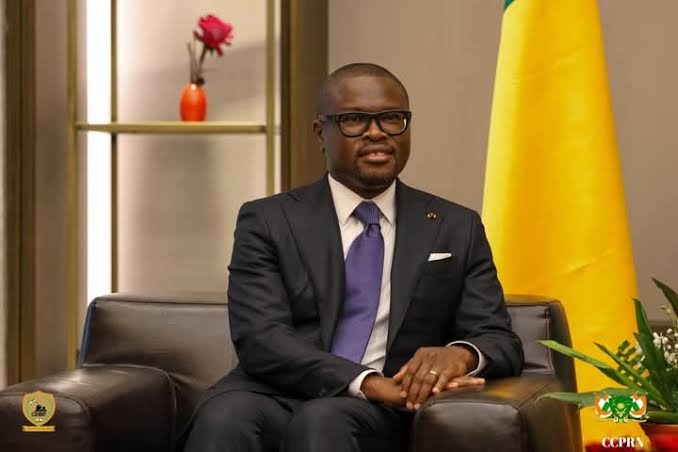
After three years of closure, the border between Niger and Bénin appears poised for a significant shift. A recent visit by Nigerien Prime Minister Ali Lamine Zeine to Cotonou, where he attended the inauguration of Bénin’s new Head of State, Romuald Wadagni, has re-established a vital direct political channel between Niamey and Cotonou. During his address to the hosts, the Nigerien head of government spoke of a “new way” forward for the two nations, a diplomatic phrasing that strongly suggests the beginning of a thaw following the open crisis that erupted after the July 2023 coup.
The closure of the Malanville border post, which serves as the primary commercial thoroughfare connecting the two states, was implemented in response to sanctions imposed by the Economic Community of West African States (ECOWAS) against the Nigerien military regime. Since then, the flow of hydrocarbons, foodstuffs, and various other goods has been rerouted through Burkina Faso and Togo, leading to a substantial increase in logistical expenses for businesses on both sides of the frontier.
significant economic repercussions
The Port of Cotonou traditionally functioned as the preferred maritime access point for Niger’s landlocked economy. Its exclusion has negatively impacted Bénin’s customs revenues and complicated supply chains for Niamey, particularly following the launch of the crude oil export pipeline linking Agadem to Bénin’s Sèmè-Kpodji terminal. The dispute surrounding this crucial infrastructure, operated in partnership with the China National Petroleum Corporation (CNPC), further intensified the distrust between the two capitals throughout 2024.
For communities residing along the border, the closure has resulted in severe commercial stagnation in areas heavily reliant on transit trade. Informal operators, including transporters and merchants, have increasingly resorted to using secondary routes to circumvent official checkpoints, fostering a parallel market that is challenging to regulate. An economist, Olivier Vallée, who previously served as a technical advisor in Niger, indicated that an official reopening would provide immediate relief for households on both sides of the border line.
security concerns at the core of hesitations
Nevertheless, security remains a primary point of contention. Béninese authorities are contending with an escalation of armed groups, including those affiliated with the Islamic State in the Sahel and Jama’at Nusrat al-Islam wal-Muslimin (JNIM), operating in the northern regions of the country, notably within the W and Pendjari National Parks. Cotonou harbors concerns that an inadequately managed reopening of the Malanville post could facilitate the movement of combatants and the logistical resupply of cells established in the tri-border area.
From the Nigerien perspective, a symmetrical distrust prevails. The transitional authorities accuse Bénin of having permitted, in the aftermath of the 2023 coup, the presence of elements hostile to the military government on its territory. Niamey has repeatedly alleged that Cotonou is hosting training bases, accusations which Béninese authorities have consistently denied. This climate of mutual suspicion explains why, according to insights from Olivier Vallée, both sides still fear infiltrations, whether they are jihadist or political in nature.
a conditional diplomatic re-engagement
The assumption of the Béninese presidency by Romuald Wadagni partially reshuffles the diplomatic deck. As a former Minister of Finance well-regarded by international donors, he inherits a situation where economic imperatives strongly advocate for a swift de-escalation. The full and uninterrupted resumption of Nigerien crude oil exports through the Béninese terminal represents an annual financial stake worth hundreds of billions of CFA francs for both national treasuries.
However, the precise timeline for the border’s reopening remains ambiguous. Several technical stages are anticipated, including the establishment of enhanced control protocols at Malanville, the potential reactivation of a joint security commission, and clarification regarding the status of nationals from both countries who have been stranded since 2023. Niger’s withdrawal from ECOWAS alongside Mali and Burkina Faso to form the Confederation of Sahel States, and its subsequent return to a regional cooperation dynamic, adds another layer of institutional complexity. The recent gesture made in Cotonou undeniably stands as the most tangible political signal since the crisis began, offering a promising outlook for West Africa news and African politics.