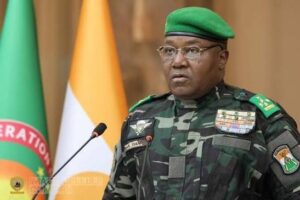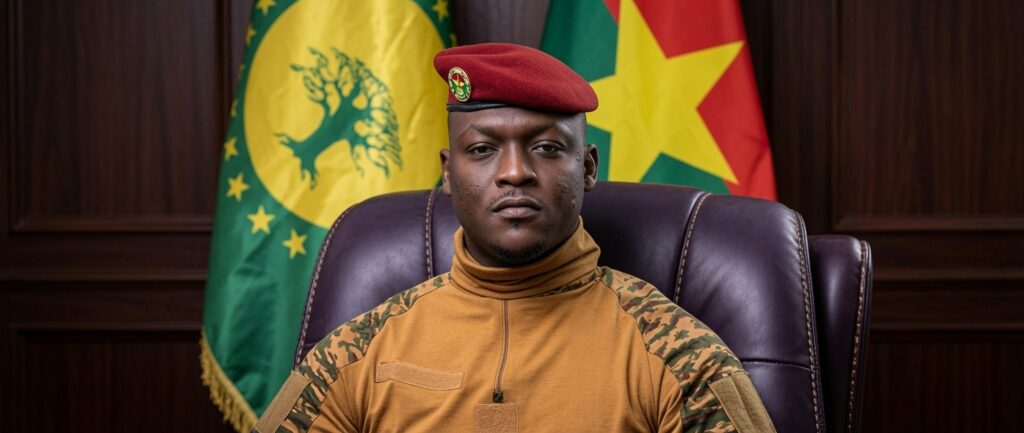
Burkina Faso’s transitional government has proudly declared that it now controls approximately 75% of the national territory—a claim backed by an official report showing 74.53%. Yet, when examined against independent assessments, humanitarian reports, and the lived experiences of citizens, this bold assertion reveals itself as more of a strategic PR maneuver than a reflection of actual military or administrative dominance.
Redefining ‘control’: a blurred line between presence and authority
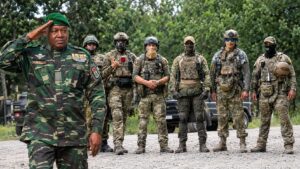
The government’s inflated figure hinges on an unusually broad interpretation of what constitutes ‘control’. Under this framework, a military detachment passing through, a convoy moving under armed escort, or even a mobile patrol by volunteer defense forces (VDP) is enough to classify an area as ‘secured’. However, true territorial control demands far more: sustained administrative presence, functional justice systems, unhindered civilian movement, and permanent protection from armed threats.
In reality, armed groups—particularly the Jama’at Nusrat al-Islam wal Muslimin (JNIM)—continue to challenge state authority through asymmetric warfare. They routinely disrupt major roadways, besiege key towns, and reassert influence the moment military convoys withdraw. The official narrative, therefore, obscures a far more complex and precarious security landscape.
Information blackout: how data suppression distorts perception
The gap between government claims and ground realities is further widened by a rigid clampdown on independent reporting:
- Silencing independent voices: Local NGOs, security observers, and independent media face severe restrictions—often outright bans—on publishing assessments that contradict official security narratives, with threats of accusations such as ‘undermining troop morale’.
- Lack of third-party verification: No independent or international body has been granted access to validate the Defense Ministry’s territorial mapping. Think tanks and conflict-tracking organizations like ACLED continue to document a high frequency of violent incidents across wide swathes of the country, casting doubt on Ouagadougou’s optimistic portrayal.
Humanitarian crisis deepens despite reassuring statistics
If 75% of the country were truly secure and reintegrated under state authority, one would expect a sharp decline in humanitarian indicators. Instead, the opposite is unfolding:
- Internally displaced persons (IDPs) remain trapped: Returns to original villages are rare and perilous. Tens of thousands still rely on emergency aid, with little prospect of safe repatriation.
- Public services are paralyzed: Schools stay shuttered in many so-called ‘controlled’ zones, healthcare workers refuse postings without ironclad security guarantees, and civil administration struggles to function beyond heavily fortified provincial capitals.
Political motives behind the narrative
The government’s upbeat territorial statistics appear designed less to reflect military progress and more to serve pressing domestic political goals:
- Justifying the transition: Emphasizing territorial gains helps legitimize the extension of the transitional period and the imposition of wartime policies, including new taxes and conscription measures.
- Concealing tactical setbacks: Focusing on broad percentage claims diverts attention from recurring ambushes on isolated military units and volunteer militias, particularly in the North, East, and Boucle du Mouhoun regions.