confronting the ebola bundibugyo outbreak: msf’s critical efforts in drc and Uganda
Weeks into the ongoing Ebola outbreak gripping the Democratic Republic of Congo (DRC) and neighboring Uganda, Médecins Sans Frontières (MSF) has significantly ramped up its efforts to contain the deadly virus. Our teams are currently on the ground, operating critical treatment centers in Goma and Bunia, located in Ituri, which has emerged as an epicenter for this seventeenth documented epidemic.
escalating epidemiological figures continue to challenge the drc ebola response
Following an increase in testing capacity towards the end of May, the DRC’s Ministry of Health has updated its official data. As of June 4, 2026, the national biomedical research institute (INRB) reports the following figures for the Democratic Republic of Congo:
- 381 confirmed cases;
- 64 confirmed fatalities;
- 233 suspected patients currently in isolation.
In Uganda, the situation remains under close observation, with 19 reported cases and one death recorded by June 5.
msf establishes and expands ebola treatment facilities
To combat the spread of the Bundibugyo virus and effectively break transmission chains, MSF teams are strategically adapting their interventions in the most affected regions.
in bunia: an expanding center to meet patient demand
The treatment center in Bunia has been experiencing significant congestion. On June 5, the facility was caring for 37 suspected and 7 confirmed patients. Recognizing the severe risk of further transmission, the center is undergoing rapid expansion. « We are preparing a new plot of land and will double our capacity to reach 70 beds within days, » explained Anthony Kergosien, MSF’s emergency coordinator in Bunia. Should the need arise, the center can further increase its capacity to 100 beds.
in goma: revitalizing a vital treatment hub
In Goma, MSF has reactivated a dedicated treatment center designed to isolate suspected cases and provide care for confirmed patients. The first admissions at this facility took place on May 28.
« This particular center has been utilized during previous outbreaks. Our teams prioritize engaging with patients, reassuring them about the process, explaining the care they will receive, the average length of stay, and the diagnostic samples that will be collected, » stated Tathy Modjaka Nzoko, MSF’s medical activities manager in Goma.
healthcare worker safety and community trust: cornerstones of the drc ebola response
safeguarding medical personnel from the virus
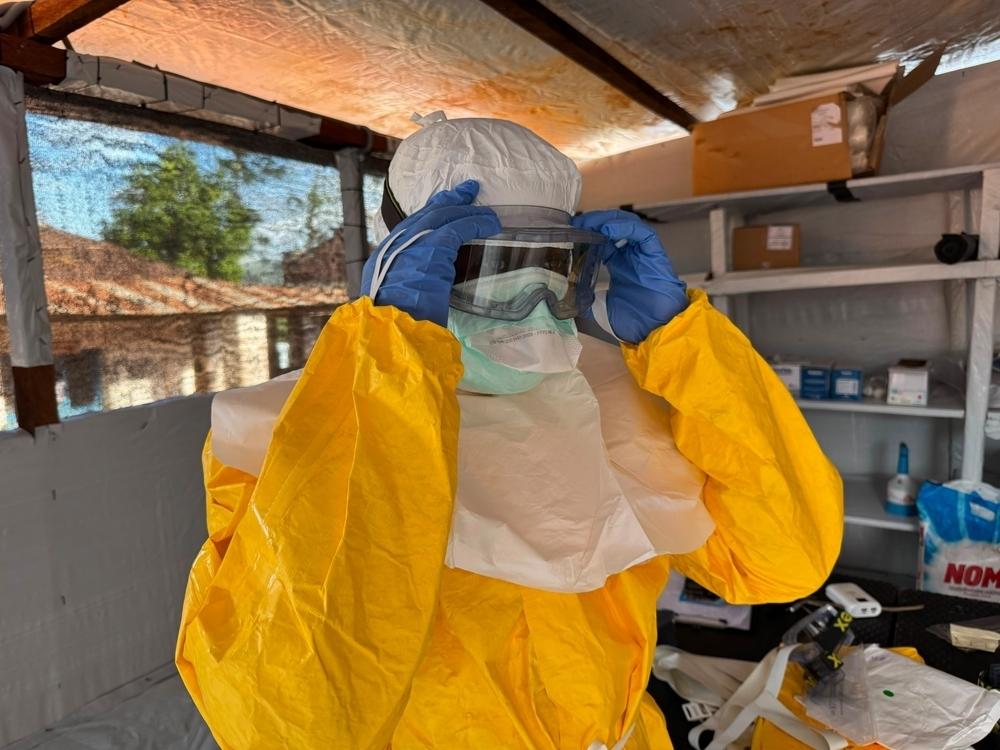
Medical staff are equipped with comprehensive personal protective equipment (PPE) to ensure their effective protection against the Bundibugyo virus. The infectious dose of this particular virus is extremely low. « It only takes a few viral particles in the wrong place, such as the eyes or mouth, to trigger the illness. »
The primary purpose of this protective gear is to prevent the Ebola virus from contacting the skin. « For this reason, the equipment must be impermeable to water, as the virus is transmitted via bodily fluids. This is especially crucial because we do not have the usual vaccines and treatments typically available for other Ebola strains, » testified Armand Sprecher, an emergency physician and epidemiologist for MSF.
cultivating trust within local communities
For individuals to accept rapid isolation, comprehensive explanation and awareness-raising efforts are indispensable.
« Trust between MSF and the local population is paramount. People typically care for their family members at home. However, we urgently need them to seek immediate care at a treatment center. The appearance of our staff in protective equipment, resembling individuals from another planet, can make them hesitant. Therefore, we meticulously explain why we wear this equipment, emphasizing that many of those wearing these suits are familiar faces from their own communities, » according to Armand Sprecher.
transferring expertise and training teams
To ensure a robust and widespread response, MSF prioritizes the sharing of expertise. Specialized training programs are conducted, notably at a center in Belgium, before teams deploy to the field.
« With every Ebola epidemic, knowledge transfer forms a crucial component of our response. Within MSF, there are individuals with extensive experience in managing epidemics. Consequently, we deploy these highly skilled personnel to the field, who either possess the necessary expertise or can effectively train others, » affirmed Armand Sprecher.
Je donne au Fonds d’urgence MSF
understanding the bundibugyo virus: unique aspects of this ebola outbreak
Unlike previous outbreaks in the DRC, this current epidemic is specifically caused by the Ebola virus of the Bundibugyo type (part of the Orthoebolavirus family, which also includes the Zaire and Sudan viruses).
While the case fatality rate for the Bundibugyo virus is lower than that of classic Ebola (ranging between 25% and 40%), the medical response faces a significant hurdle: there are currently no approved vaccines or treatments specifically for this variant of the virus.
msf’s humanitarian operations continue across the drc
Hundreds of MSF professionals remain actively deployed in the affected regions of Ituri and Nord-Kivu, while new care capacities are being organized in Sud-Kivu. Each week, several tons of essential medical and logistical supplies continue to arrive in the DRC from our international hubs to bolster the ongoing intervention.