The acute fuel shortage gripping Mali has sent shockwaves through its already fragile humanitarian landscape. A jihadist blockade on key highways has choked vital supply routes, leaving millions in desperation. This crisis is not just about fuel—it’s about lives hanging in the balance as aid organizations struggle to reach those most in need.
Blockades crush aid delivery
The Groupe de soutien à l’islam et aux musulmans (GSIM), an Al-Qaeda affiliate, has tightened its grip on fuel imports from Senegal and Côte d’Ivoire, cutting off the primary lifelines for this landlocked West African nation. The impact is devastating:
- Humanitarian missions in central and southern Mali—including regions like Ségou, San, Koutiala, Mopti, and Bandiagara—have ground to a halt.
- Field teams have been forced to scale back operations, with mobile clinics now limited to a 10-kilometer radius from their bases.
- Movement restrictions, armed robberies, and irregular checkpoints have led to the temporary suspension of critical aid programs.
The blockade has now reached Bamako, paralyzing the entire country. The consequences are dire: fuel scarcity is fueling food insecurity, leaving families with little to eat and even less hope.
Isolated communities face extreme hardship
In Tombouctou, the town of Léré has been cut off from the world since October 27, when armed groups imposed a blockade on the border with Mauritania. The situation is catastrophic:
- Thousands have fled to safer areas, abandoning their homes and livelihoods.
- No humanitarian actors—except those already on-site—can access the area, leaving residents without food, medical care, or protection.
- The United Nations Office for the Coordination of Humanitarian Affairs (OCHA) reports a 13% increase in access incidents in October, with explosive devices being the leading threat.
In Douentza, two aid workers lost their lives when their boat capsized on the Niger River. Violence and logistical nightmares are pushing the humanitarian crisis into uncharted territory, where unpredictability reigns.
Political repression fuels instability
The humanitarian emergency is unfolding against a backdrop of political turmoil. Since seizing power in 2020, General Assimi Goïta has consolidated control over the state apparatus, indefinitely postponing presidential elections and dissolving all political parties in May 2025. A new law grants him the power to extend his mandate “as many times as necessary” until peace is achieved.
Volker Türk, the UN High Commissioner for Human Rights, has condemned the move, calling it a “closure of the door to democratic elections” and an “instrumentalization of the law to stifle dissent.” Opposition figures, including former Prime Minister Moussa Mara, have been arrested and imprisoned on charges of “undermining state credibility.”
The situation is further exacerbated by the resurgence of armed violence. Groups like the GSIM and the local branch of ISIS continue to terrorize central and northern Mali, particularly along the borders with Burkina Faso and Niger. Reports from Volker Türk’s office highlight “hundreds of extrajudicial executions, arbitrary arrests, enforced disappearances, and kidnappings” committed by all parties involved in the conflict.
Refugees overwhelmed local resources
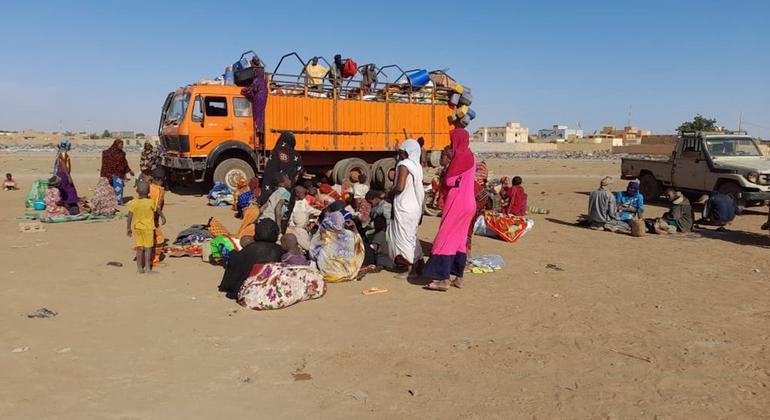
The crisis has spilled across borders, with nearly 50,000 refugees from Burkina Faso arriving in the Koro circle since April. This influx has doubled the local refugee population, straining already scarce resources. The UN High Commissioner for Refugees (UNHCR) has opened a field office in Koro to coordinate emergency responses and provide critical support.
Today, Mali hosts over 150,000 refugees from Burkina Faso and Niger, all fleeing the same threats: jihadist attacks and military offensives against armed groups. The country is now home to 400,000 internally displaced persons and 335,000 refugees, grappling with one of the world’s most severe food crises, according to the UN.
With international disengagement accelerating, the situation in Mali is deteriorating at an alarming rate. Communities in already vulnerable regions face an uncertain future, where survival hinges on the fragile threads of humanitarian aid—and the fuel that keeps it moving.