Why Côte d’Ivoire is rewriting the rules of gold project financing
The Ivorian gold industry is undergoing a quiet revolution, one that isn’t happening in the financial centers of London, Toronto, or Sydney, but in Abidjan’s banking corridors. Three years since AFG Bank Côte d’Ivoire opened its doors, the institution is no longer content with simply participating in gold mine financing—it now aims to become a lead arranger for major industrial projects entirely from Abidjan. What’s driving this shift isn’t just ambition, but the underlying structural realities of Côte d’Ivoire’s booming mining sector and a deliberate push by authorities to anchor economic value within the country.
Behind this movement lies a fundamental question: Why export financing when local banks can do it better? For decades, large-scale gold projects in West Africa have relied on international financial hubs to secure long-term debt. But Côte d’Ivoire’s growing gold output—59.33 tonnes in 2025, with plans to reach 62 tonnes in 2026—and its expanding pipeline of mines (like Koné and Doropo) demand a new financing model. One where local liquidity, regulatory incentives, and sector know-how converge.
The birth of a homegrown financing ecosystem
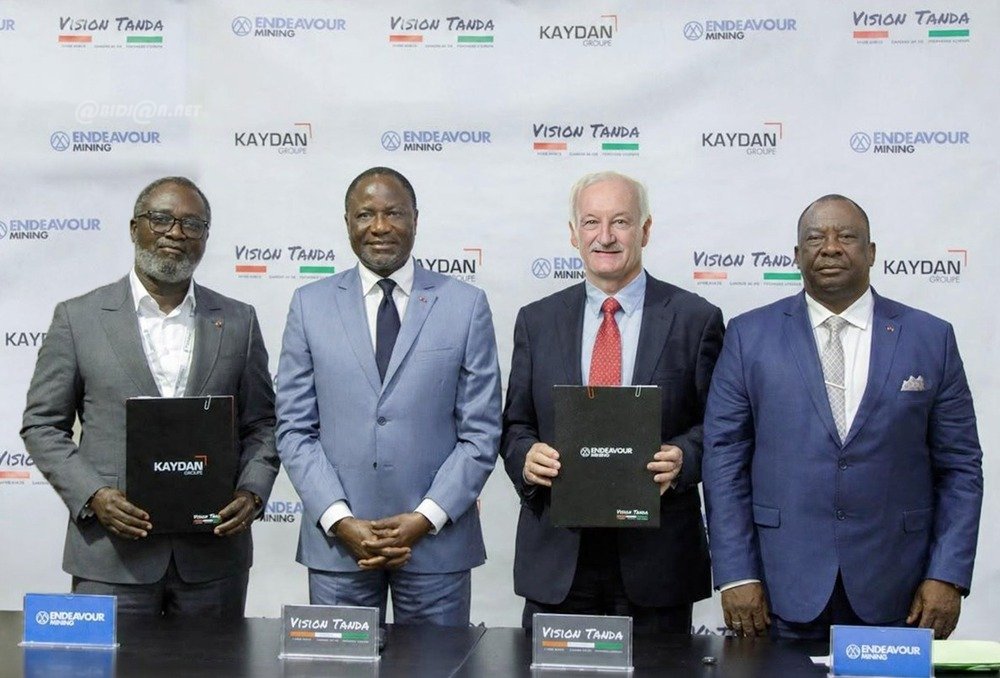
The transformation is visible in real time. In early 2026, Resolute Mining finalized a 260 million USD financing package with seven Ivorian banks for its Doropo gold mine—including a 43 million USD commitment from AFG Bank. Just weeks later, a joint venture involving Montage Gold, Endeavour Mining, and Perseus secured similar support. These aren’t token contributions; they represent a structural shift where local banks, once seen only as cash managers for mining firms, now underwrite multi-million-dollar industrial ventures. AFG Bank itself, launched in 2023, has grown its balance to 1.37 billion USD within two years—now ranking eighth in Côte d’Ivoire’s banking sector by assets.
This momentum is reinforced by Ivorian government policy. Since late 2025, the local content law has formalized the inclusion of banks and insurance firms in the mining value chain, ensuring financing flows circulate within the national economy. “We now have the financial muscle and the regulatory framework to support entire project life cycles,” said a senior executive at AFG Bank. “That wasn’t possible just three years ago.”
From treasury partners to mining financiers: the evolution of Ivorian banks
For AFG Bank, the journey began with a strategic pivot: the creation of a dedicated Mining Desk. More than a department, it’s a center of expertise aimed at understanding gold project cycles—construction phases, gold price volatility, and cash flow profiles. Within months, it facilitated the 31.5 million USD Koné mine credit facility and managed payroll disbursements for over 1,150 displaced residents near the Assafo-Dibibango mine, all through its national network of 88 branches.
“The key isn’t just providing capital,” explains Daniel Touré, AFG Bank CEO since September 2024. “It’s understanding that a gold mine needs more than money—it needs continuous liquidity, supplier financing, risk coverage, and local banking integration.” AFG Assurances, the group’s insurance arm, now plays a role in covering operational risks, while the bank handles payroll and supplier payments directly in mining regions. This integrated model gives AFG a competitive edge in a sector where long timelines and delayed revenue streams demand patient capital.
The role of Atlantic Group: from bank to miner
AFG Bank’s strategy is further bolstered by its parent company, Atlantic Group, which entered gold production in late 2025 with the acquisition of the Tongon mine. This vertical integration—rare among financial institutions—gives the bank unparalleled insight into mine economics, investment cycles, and risk exposure. “We know what it takes to run a mine,” says Touré. “We know the language, the pitfalls, the cash burn patterns. That translates into smarter financing decisions.”
The group is already replicating this model: AFG Bank Mali recently showcased its mining capabilities at the Mining Indaba, and AFG Bank Madagascar is launching its own Mining Desk. This vertical expansion signals a broader industry trend: African banks are evolving beyond financial intermediaries into holistic economic partners for extractive industries.
Challenges on the road to self-financing gold projects
The path forward isn’t without hurdles. Gold financing remains inherently high-risk: construction can take three years, production delays are common, and repayment hinges on fluctuating gold prices and ore reserves. Regulatory caps on single-borrower exposure force banks to collaborate in syndicates—a disciplined yet cumbersome process. And while Ivorian banks now control 38% of assets in the West African Monetary Union (a 31.2 billion USD total at year-end 2025), they still trail global institutions in long-term tenor markets and risk appetite.
“We’re competing with institutions that have 50-year relationships with mines,” admits Touré. “But we have proximity, agility, and the full support of our government. That’s our differentiator.” Increasingly, mining firms are recognizing the value of a banking partner embedded in the same regulatory and economic ecosystem—especially when that partner can offer real-time payment solutions, local currency access, and integrated insurance through group affiliates.
What’s next for Côte d’Ivoire’s gold financing future?
The stakes are high. With gold production rising and new mines like Doropo (expected to begin operations in 2028) requiring over 500 million USD in development, Côte d’Ivoire is at a crossroads. Will it continue sending financial flows north, or build a self-sustaining ecosystem in Abidjan? AFG Bank’s ambition is clear: to become the go-to partner for financing gold projects entirely within the country, from feasibility studies to commercial production.
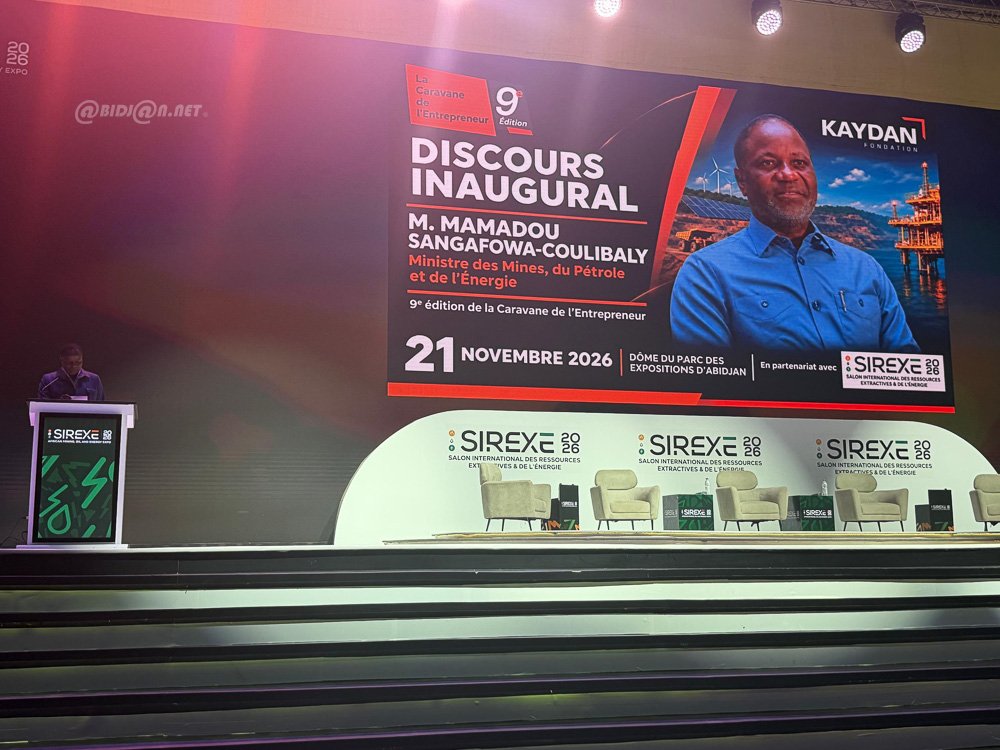
At the recent SIREXE 2026 mining exhibition in Abidjan, AFG Bank didn’t just showcase its balance sheet—it presented a vision. One where Côte d’Ivoire doesn’t just export gold, but owns the capital, expertise, and financial architecture to mine, refine, and finance it locally. If successful, this model could redefine mining finance across West Africa—proving that economic sovereignty in natural resources begins not in Toronto or London, but in the banks of Abidjan.