The collateral damage of France’s unrest: how Sahel juntas turn civil strife into political ammunition
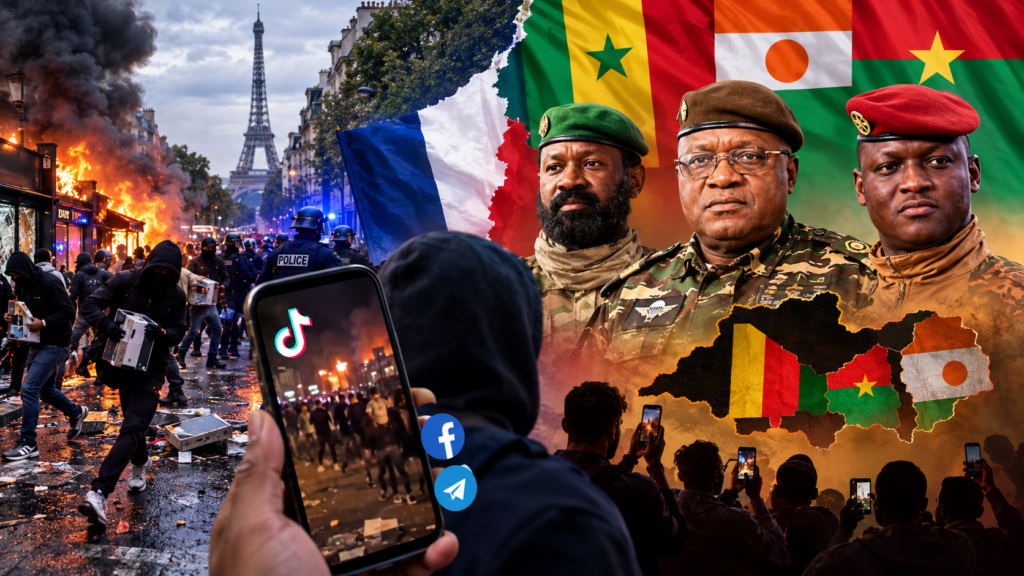
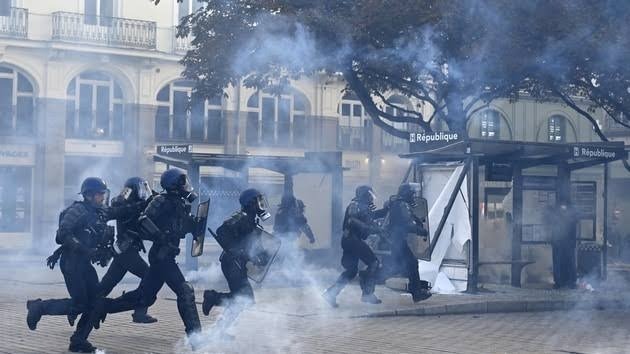
When riot police fire tear gas into crowds of protesters in Paris, those images don’t stay in Europe. In Bamako, Ouagadougou and Niamey, they are weaponised in real time, repackaged as proof of a collapsing Western order and recycled to justify Sahel’s military rulers. What began as domestic French discontent has quietly become the soundtrack for a continent-wide information war, one that risks rewriting diplomatic norms across the Sahel.
From Paris streets to Bamako pulpits: the viral rebirth of anti-colonial talking points
Each broken shop window and each charge by the Compagnies Républicaines de Sécurité now triggers a digital echo chamber in the capitals of the Alliance of Sahel States (AES). Strategists in these governments don’t just report the unrest—they frame it as divine retribution for decades of French interference. The once-unassailable image of France as a beacon of democratic stability now stands cracked, and each viral clip of disorder becomes a brick in a new narrative: the former coloniser’s hypocrisy has finally been exposed.
From ‘democracy teacher’ to ‘declining hegemon’ in 72 hours
For generals like Mali’s Assimi Goïta, Burkina Faso’s Ibrahim Traoré and Niger’s Abdourahamane Tiani, the footage from France is no accident—it’s an accelerant. Social media amplifiers, often linked to foreign influence networks, splice tear-gas clouds with archival speeches by French officials condemning coups, creating a seamless loop that suggests the West has lost the moral high ground. The same leaders who once relied on French military support now cite the scenes of French unrest to argue that democracy itself is a failing experiment, while their own firm-handed rule is the only credible path to sovereignty.
Three strategic uses of France’s fragility on Sahel airwaves
Analysts in regional capitals map three clear objectives behind the relentless amplification:
- Undermine democratic legitimacy: By branding liberal democracy as inherently unstable and chaotic, the juntas recalibrate domestic expectations, selling direct rule as the sole alternative to perpetual disorder.
- Distract from local crises: With inflation soaring above 30% and jihadist groups intensifying attacks, the constant replay of Parisian unrest shifts the media spotlight away from unmet pledges on salaries, fuel and security.
- Fuel the narrative of Western decline: By pairing French police tactics with satellite images of collapsing infrastructure, the propaganda machine constructs a visual syllogism: if Europe cannot maintain order in its own backyard, how can it lecture Africa on governance?
When the facts challenge the frame
Outside the carefully curated echo chambers, independent voices point out a contradiction: the very freedom to protest, strike and criticise that the junta videos pretend to celebrate is precisely what no longer exists under their own regimes. Criticising the French government is protected speech in France; doing the same in Bamako, Ouagadougou or Niamey can lead to arrest, exile or worse. Yet the visual power of Parisian unrest drowns out such nuances, carving a new conventional wisdom across Sahel airwaves: France’s moral authority has evaporated.
What lies ahead for Paris and the Sahel
The coming months will test whether this propaganda advantage translates into lasting diplomatic ruptures. Already, France’s cultural institutes in the region report dwindling enrolments, while local elites openly discuss deeper ties with Ankara, Tehran and Moscow. One thing is certain: every additional night of unrest in Lyon or Lille doesn’t just weaken France’s hand in Africa—it hands Sahel generals fresh ammunition to sell their brand of rule as the only viable response to a world in chaos.