Israel’s political earthquake: no clear path forward after fragmented election results
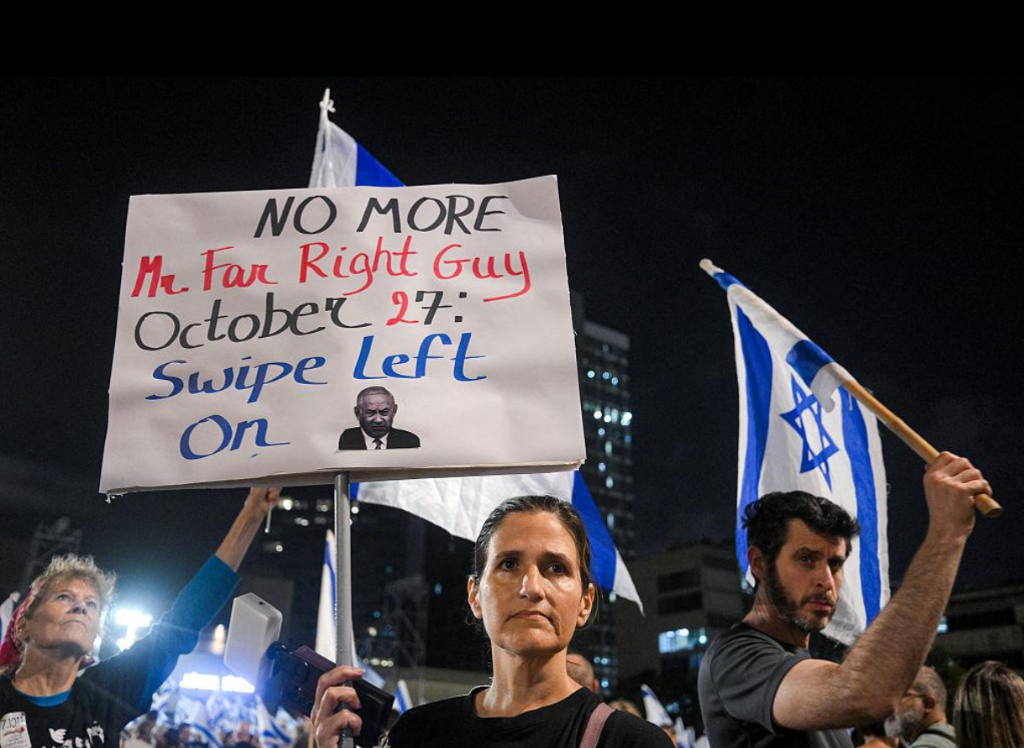
The October 27, 2026 legislative elections have delivered a seismic shock to Israeli politics, leaving Benjamin Netanyahu’s bloc with 53 seats in the Knesset – 8 short of the 61 needed for a majority. With the opposition holding 48 seats and Arab parties securing 19, the fragmented parliament has plunged the nation into uncharted political waters that could reshape Israel’s domestic and regional landscape.
What the vote reveals about Israel’s deeply divided society
The election results expose fundamental divisions within Israeli society. Netanyahu’s Likud party remains the largest faction with 27 seats, but this represents a significant erosion from the 68 seats his coalition held in the previous Knesset. The opposition bloc led by Gadi Eisenkot has gained ground, while Arab parties have achieved their highest representation yet. This new political reality reflects years of internal strife, wartime stress, and widespread dissatisfaction with government policies.
Three potential outcomes now loom over Israeli politics: Netanyahu could form a fragile coalition with traditional allies, an opposition government might emerge through unexpected alliances, or the nation could face a fifth election in as many years if negotiations collapse. Each scenario carries profound implications for Israel’s future direction.
Arab parties hold the political balance
The unprecedented 19-seat showing by Arab parties, including the Joint List and Ra’am, places them in a pivotal position. Their support could theoretically provide either bloc with a parliamentary majority, but deep-seated reluctance among Zionist parties to govern with Arab factions complicates coalition-building. This political dynamic has never been more consequential for Israel’s governance.
Regional consequences: from Gaza to Tehran and beyond
The election outcome arrives at a critical juncture for Israel’s regional relationships. The post-election period will test whether the next government can navigate complex security challenges while maintaining international partnerships.
Gaza’s future hangs in the balance
The Palestinian issue remains Israel’s most immediate challenge. The next government will face difficult decisions about Gaza’s reconstruction, security arrangements, and the broader question of Palestinian governance. While Netanyahu’s traditional allies advocate for maintaining current security policies toward the territories, opposition factions may push for different approaches. However, fundamental disagreements persist across Israel’s political spectrum regarding Hamas, security requirements, and Palestinian statehood.
For Palestinians, the election results offer no guarantee of improved conditions. The outcome primarily demonstrates that Gaza and West Bank policies will depend heavily on the alliances forged to establish Israel’s next government.
Confronting Iran’s regional ambitions
The nuclear program, ballistic missile capabilities, and regional proxy network of Iran continue to pose existential threats that Israeli leaders must address. A government weakened by parliamentary divisions may struggle to develop coherent policies on these critical security matters. Nevertheless, national security questions typically command broad consensus among Israeli policymakers, suggesting some continuity in approach regardless of the coalition that emerges.
Lebanon’s Hezbollah: a powder keg waiting to explode
Israel’s relationship with Hezbollah remains another flashpoint that could escalate into devastating conflict. The next government’s approach to Lebanon will significantly influence regional stability, particularly given the potential for military confrontation to trigger massive humanitarian and economic consequences throughout the area.
International reactions and diplomatic challenges ahead
The U.S. and Arab capitals are watching Israel’s political paralysis with growing concern. Washington’s relationship with Jerusalem, while strategically vital, faces strain over divergent approaches to Gaza, military operations, and regional de-escalation efforts.
Arab nations including Egypt, Jordan, Saudi Arabia, and the UAE are closely monitoring developments. For Riyadh, the normalization process with Israel remains a strategic priority, but its progress depends heavily on Palestinian conditions and regional security. A government unable to articulate clear policies may further delay diplomatic initiatives, while a coalition more open to negotiations could create new dialogue opportunities – though this wouldn’t automatically translate to breakthrough agreements.
Will Israel’s political turmoil reshape the Middle East?
The election results reveal a nation grappling with profound questions about security, governance, religion, and national identity. The absence of a clear majority signals an extended period of political uncertainty whose resolution could redefine Israel’s relationships with its neighbors and beyond.
The three potential paths forward – Netanyahu’s continued leadership through new alliances, a surprise opposition government, or another round of elections – each carry distinct implications:
- Netanyahu’s coalition-building: May lead to policy continuity on security matters but risks deeper social divisions
- Opposition government: Could introduce diplomatic shifts but faces formidable coalition challenges
- New elections: Might intensify political fragmentation without resolving fundamental disagreements
As Israel navigates this period of instability, its choices will reverberate across the Middle East. From Gaza’s reconstruction to Iran’s nuclear ambitions, from Lebanon’s fragile stability to Arab normalization processes, each decision made in Jerusalem carries potential consequences that extend far beyond Israel’s borders.
Ultimately, Netanyahu’s victory at the polls has provided neither the mandate nor the clarity needed to govern effectively. In a region where Israel’s actions can trigger international repercussions, this fractured mandate may herald a new era of geopolitical uncertainty that tests the resilience of both Israeli democracy and Middle Eastern stability.