After three weeks of paralysis, transitional authorities finally engage with striking academics
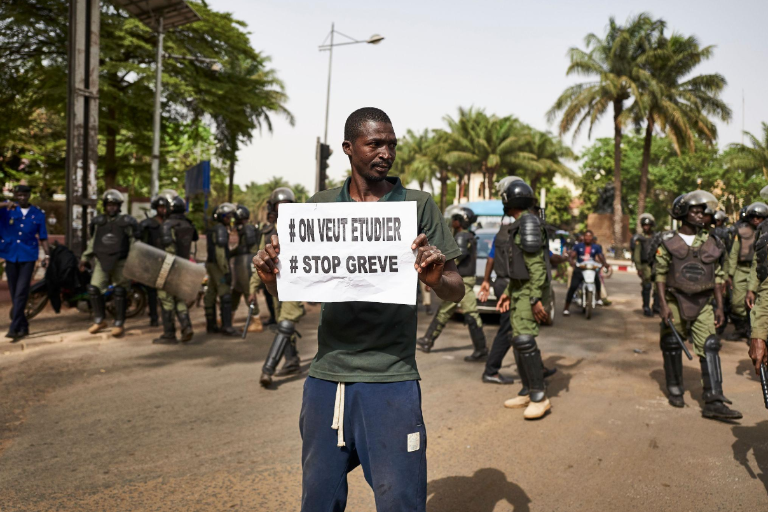
Mali’s university system is at a pivotal juncture as the nationwide strike by lecturers and researchers enters its fourth week. The Syndicat national de l’enseignement supérieur et de la recherche scientifique (SNESUP) has reported its first high-level meeting with transitional authorities, marking a potential shift in a deadlock that has left universities paralyzed since late October. But will this long-overdue engagement be enough to end the mobilization?
The government’s delayed response has only amplified frustrations among higher education staff, who accuse the state of neglecting a decade-old legal obligation. With no concrete solutions yet in sight, the future of Mali’s academic calendar—and the prospects for 20,000 affected students—hangs in the balance.
From ignored demands to high-level talks: How the strike escalated
The strike, which began on 26 October, stems from the non-payment of a long-promised research allowance. Introduced by presidential decree in 2017, the allowance was meant to support academics’ scientific output through additional funding for publications, research projects, and knowledge dissemination. Yet despite the legal framework, successive governments have failed to implement the measure.
For the SNESUP, the strike is not just about delayed wages—it’s a fight for institutional credibility. The union’s leadership emphasizes that this demand, rooted in existing legislation, has been stonewalled for nearly a decade. After three weeks of campus shutdowns and disrupted classes, transitional authorities have finally broken their silence, but the question remains: was it too little, too late?
What the union gained—and what it still demands
The SNESUP’s recent meeting with top officials—held over two days—represents the first direct engagement since the strike began. According to the union’s executive committee, discussions focused on restoring dialogue, though no commitments were announced regarding:
- The fixation of the research allowance’s amount
- Clear payment schedules for current and backlogged funds
- A timeline for resolving outstanding dues
The union has since called for consultation with its members before making any decision on suspending the strike. For now, the mobilization continues, with lecturers and researchers warning that symbolic gestures won’t suffice—they demand tangible actions.
The human cost: Students caught in the crossfire
The strike’s impact extends far beyond lecture halls. As universities remain shuttered, students face mounting uncertainty: delayed graduations, disrupted exam schedules, and the looming threat of an extended academic year. Early attempts at mediation—including appeals from religious and community leaders—have so far failed to yield results.
The transitional government’s belated intervention could signal a turning point, but academics stress that words must be followed by deeds. With the strike now in its fourth week, the pressure on authorities to deliver a resolution has never been greater.
What’s next? Strikers demand action, not just dialogue
The coming days will be decisive. The SNESUP has pledged to assess members’ responses before deciding whether to prolong the strike. Meanwhile, transitional authorities face a stark choice: either present a viable plan to end the deadlock or risk a prolonged crisis that further destabilizes Mali’s higher education sector.
One thing is clear: after a decade of broken promises, Mali’s academics are no longer willing to settle for assurances. The ball is now in the authorities’ court.