A 50-million-dollar ransom, paid in late 2025 to secure the release of foreign hostages held by Al-Qaïda-affiliated militants in Mali, has directly fueled the group’s military and operational expansion across the Sahel, according to a confidential United Nations assessment obtained by this newsroom.
How the ransom reshaped the threat landscape
The document, finalized on August 10, 2026, does not disclose the hostages’ identities or the payer’s nationality. However, regional intelligence sources indicate that the funds originated from the United Arab Emirates. Three individuals—an Emirati citizen, a Pakistani national, and an Iranian national—were reportedly freed in exchange for the payment. When contacted, a senior UAE official declined to address the specific case but reiterated the country’s commitment to “intensifying counter-terrorism efforts” and “cutting off extremist funding channels.”
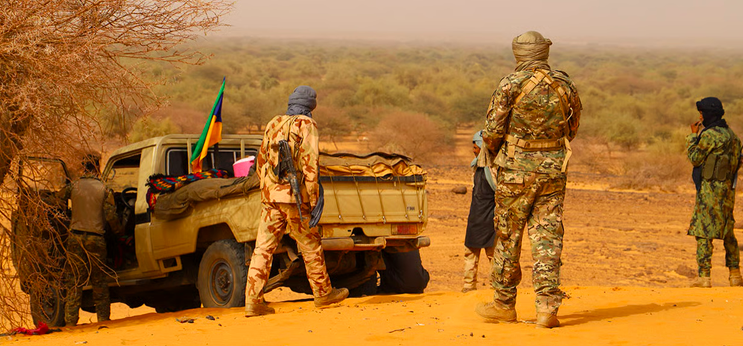
The ransom was not a one-time expenditure. Its impact rippled through the Sahel’s militant ecosystem. The majority of the funds were funneled into Jama’at Nusrat al-Islam wal-Muslimin (JNIM), the dominant Al-Qaïda franchise operating across Mali, Burkina Faso, and Niger. According to the UN report, the money directly bankrolled key offensives in central and southern Mali, where JNIM’s ranks swelled to an estimated 7,000 to 8,000 fighters—half of whom are based in Mali alone.
A portion of the ransom also followed a shadowy financial trail: funds were transferred from local katibas (fighting units) through Al-Qaïda in the Islamic Maghreb (AQIM) to the organization’s central command in Afghanistan and its Yemeni branch. This cross-border flow underscores the interconnected nature of militant financing in West Africa.
Militancy as a business model
For JNIM, hostage-taking has evolved into a lucrative revenue stream. Security officials monitoring the group’s activities report that typical ransoms for foreign captives range between $4 million and $6 million. The UN assessment highlights how these kidnappings serve a dual purpose: they generate income while simultaneously eroding public trust in government security apparatuses.
The timing of the 2025 payouts coincided with a surge in high-profile attacks. In April of that year, JNIM militants staged a brazen assault on Bamako, the capital of Mali, killing the country’s Defense Minister in broad daylight. By June, the group escalated its psychological warfare, offering multi-million-euro bounties for information leading to the capture of the Malian President.
What this means for regional stability
The UN experts warn that ransom payments—even when intended to save lives—have unintended consequences. In the Sahel, where state presence remains fragile, militant groups have weaponized these funds to recruit fighters, purchase weapons, and consolidate control over key supply routes and population centers. The report calls for stricter international protocols to stem the flow of illicit financing to terrorist organizations.