Diplomatic fallout over Niger’s exclusion from Mali-Burkina Faso talks
The absence of Niger’s leader from a high-profile gathering in Ouagadougou has sparked fresh debate about the cohesion of the Alliance of Sahel States (AES), a once-unified bloc now facing scrutiny over its fractured decision-making process.
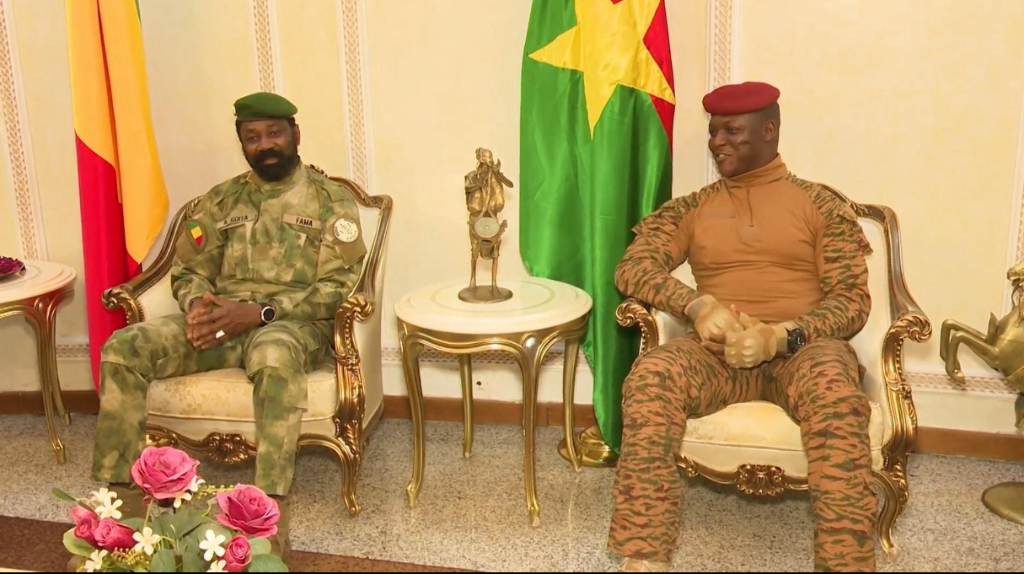
Malian head of state Assimi Goïta arrived in Burkina Faso on November 5, 2026, for an official visit aimed at deepening bilateral ties with his counterpart, Ibrahim Traoré. Yet the conspicuous non-appearance of Niger’s president, Abdourahamane Tiani, has raised eyebrows and prompted questions about the alliance’s future direction.
An alliance built on three pillars—where is the third?
Since its transformation from an alliance to a formal confederation in mid-2024, the AES has positioned itself as a unified front against regional instability, economic isolation, and foreign interference. The trio of Burkina Faso, Mali, and Niger pledged unconditional solidarity, yet the latest tête-à-tête between Bamako and Ouagadougou reveals the fragility of that unity.
Official statements describe the meeting as a routine friendship visit—nothing more. But the symbolism of Niger’s exclusion cannot be ignored. If the AES truly operates as a single political entity, why was Niamey left out of the most visible diplomatic show of unity in recent months?
Behind the curtain: coordination beyond the headlines
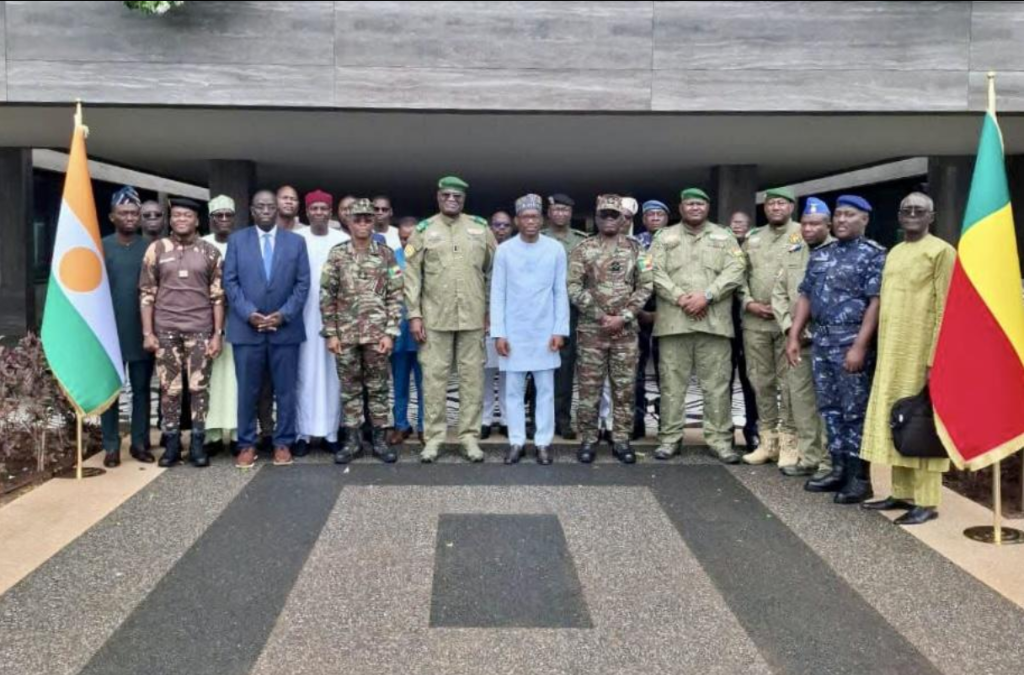
While the presidential summit in Ouagadougou unfolded without Niger’s delegation, lower-level coordination continued. Just weeks earlier, on October 16, 2026, the AES foreign ministers convened in the same city to finalize joint stances on regional security and economic integration. This dual-track diplomacy suggests that the alliance’s machinery is still functional—its top-tier politics, however, appear less synchronized.
Analysts point to competing national priorities as a possible cause. Mali and Burkina Faso have intensified their security cooperation, especially along volatile borders, while Niger grapples with its own evolving alliances and internal pressures. Whether this divergence is temporary or the start of a longer-term split remains to be seen.
Security cooperation at risk: can the AES survive without all three?
The trio’s original raison d’être was collective defense. Shared intelligence networks, coordinated military operations, and unified messaging to external partners were supposed to form the backbone of the alliance. With only two capitals represented in Ouagadougou, the credibility of these mechanisms is now in question.
Military observers warn that any erosion of trust between Niger and its neighbors could weaken cross-border counterterrorism efforts, leaving vast swathes of the Sahel more vulnerable to jihadist expansion. The question now circulating in diplomatic circles is simple: how long can the AES maintain operational unity when its highest-level consultations exclude one of its members?
What’s next for the AES—toward unity or division?
The coming weeks will reveal whether this visit marks a mere scheduling gap or the beginning of a deeper rift. If Mali and Burkina Faso emerge with a strengthened bilateral pact that excludes Niger, the AES could fracture into a series of bilateral arrangements rather than a cohesive confederation.
Conversely, if President Tiani is invited to the next high-level meeting—perhaps before the end of the year—the alliance may rebound. For now, however, the diplomatic vacuum left by Niger’s absence speaks louder than any communiqué.
The Sahel’s experiment with regional solidarity is at a crossroads. Whether it becomes a model for self-reliance or collapses under the weight of diverging national ambitions depends on how quickly all three leaders can restore trust and transparency at the top.