
In a brazen assault on Niger’s capital, armed militants linked to the Islamic State in the Greater Sahara (EIGS) launched a coordinated attack on Niamey’s international airport and the adjacent 101 military base on the night of January 28-29, 2025. The assault involved heavy gunfire, multiple rocket strikes, and the deliberate destruction of civilian aircraft and military equipment. Graphic footage released by the attackers revealed their movements through the facility, underscoring the sophistication and boldness of the operation.
Niger’s security landscape under Abdourahamane Tiani: progress and persistent threats
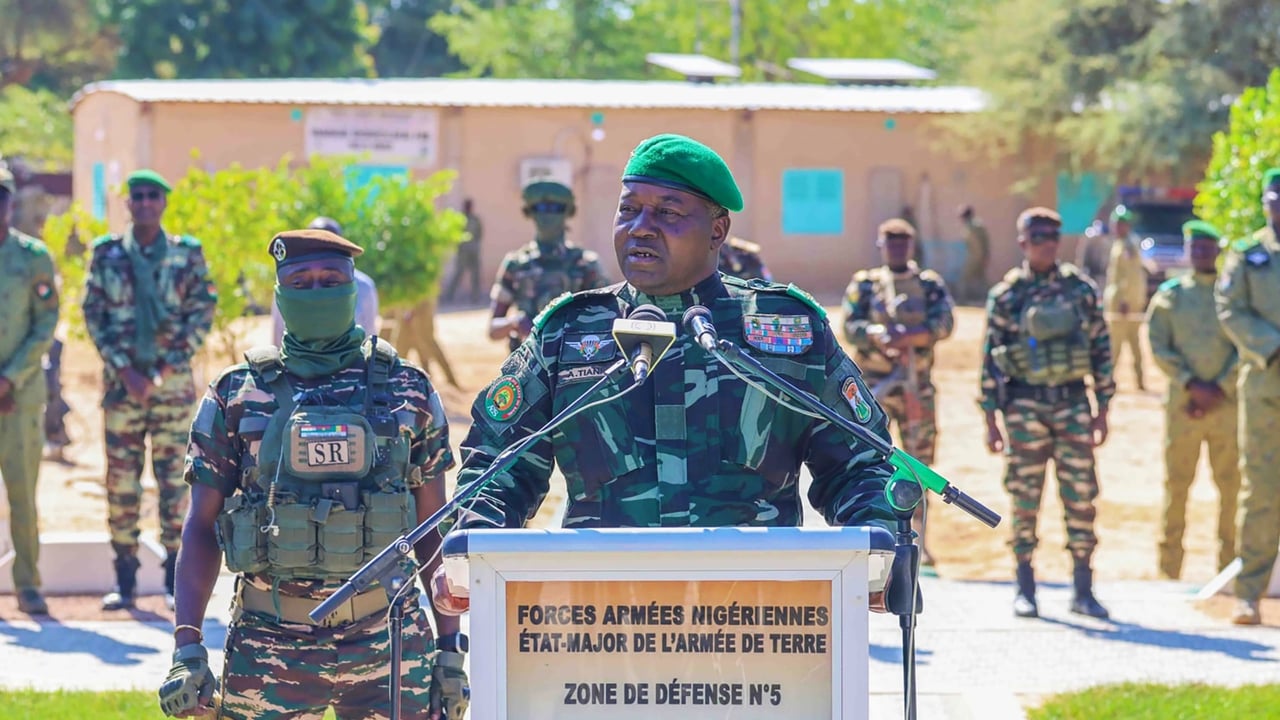
Since General Abdourahamane Tiani assumed leadership following the July 2023 coup, Niger has faced escalating security challenges. While his administration has prioritized military reform and regional cooperation, the January airport attack exposed critical vulnerabilities in the country’s defense infrastructure. Analysts note that despite increased troop deployments and enhanced surveillance in high-risk zones, militant groups continue to exploit gaps in border security and intelligence coordination.
Tiani’s strategy has centered on strengthening ties with neighboring Sahelian states through the Accord de Niamey, a regional security pact aimed at combating extremist violence. However, critics argue that structural weaknesses—including corruption within security forces and limited operational capacity—have hindered effective counterterrorism efforts. The attack on Niamey’s airport serves as a stark reminder of these ongoing challenges.
Key security developments under Tiani’s tenure
- Military restructuring: The junta has reorganized the armed forces, merging elite units and increasing troop numbers to improve operational readiness.
- Regional alliances: Niger has deepened security partnerships with Burkina Faso, Mali, and Chad, forming joint task forces to patrol porous borders.
- Counterterrorism operations: Increased airstrikes and ground offensives have targeted militant strongholds in the Tillabéri and Tahoua regions, though civilian casualties remain a concern.
- Civilian impact: Over 300,000 internally displaced persons (IDPs) continue to strain resources in host communities, with humanitarian access frequently disrupted by ongoing conflict.
What the January 2025 airport attack reveals about Niger’s security gaps
The brazen assault on Niamey’s airport has raised serious questions about the effectiveness of Niger’s security apparatus. While the government attributed the attack to the EIGS, the ability of militants to penetrate a heavily guarded military zone suggests systemic failures in intelligence, perimeter security, and rapid response mechanisms. The destruction of military hardware—including helicopters and transport aircraft—further highlights the need for urgent upgrades to defense infrastructure.
Security experts point to several contributing factors:
- Intelligence failures: Inadequate early warning systems and limited human intelligence (HUMINT) within militant networks.
- Logistical shortcomings: Delays in deploying reinforcements and coordinating with allied forces during crises.
- Corruption risks: Reports of embezzlement and weapon trafficking within security institutions undermine operational integrity.
In response, Tiani’s government has announced a sweeping review of security protocols, including the creation of a dedicated counterterrorism rapid-reaction unit and expanded drone surveillance programs. However, skepticism remains about whether these measures will address root causes such as poverty-driven recruitment into militant groups and weak governance in border regions.
Future outlook: Can Niger turn the tide on insecurity?
The trajectory of Niger’s security situation hinges on multiple factors: sustained international support, improved governance, and sustained pressure on militant groups. While Tiani’s administration has made progress in reshaping the military and fostering regional collaboration, the January attack demonstrates that tangible security gains remain fragile.
Looking ahead, priorities include:
- Enhanced training: Partnering with international allies (e.g., EU and U.S.) to modernize Niger’s armed forces and improve tactical capabilities.
- Community engagement: Countering extremist propaganda through local initiatives that address grievances tied to marginalization and economic exclusion.
- Economic resilience: Investing in border regions to reduce recruitment opportunities for militant groups by fostering alternative livelihoods.
As Niger navigates this critical juncture, the resilience of its security strategy will be tested. The true measure of Abdourahamane Tiani’s leadership may ultimately lie in whether his reforms can translate into lasting stability—or if the country remains trapped in a cycle of recurring violence.