Déclaration de patrimoine : vers un référendum au Sénégal
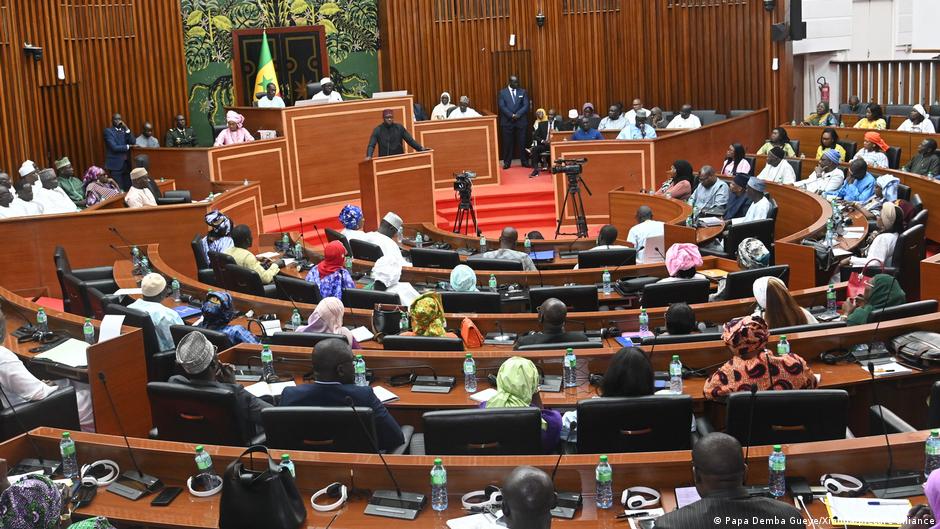
18 août 2026In a significant stride towards enhanced transparency within Senegal’s political landscape, a new legislative measure focused on asset declarations has been approved. Passed on Monday, August 17, 2026, with 133 votes out of 165 deputies, this text fortifies a requirement that has been enshrined in the nation’s Constitution since 2001.
Under the updated provisions, the three most senior state officials—the President of the Republic, the Prime Minister, and the Speaker of the National Assembly—will now be obligated to declare their assets. This declaration must occur not only at the commencement of their term but also upon its conclusion, submitted to the Conseil constitutionnel within a three-month timeframe.
This progressive step has garnered approval from Pastef, the political party led by National Assembly Speaker Ousmane Sonko.
“Enacting such a law can only bolster transparency in public administration, aligning perfectly with Pastef’s core convictions under Ousmane Sonko. It provides the Senegalese populace with oversight into their leaders’ financial holdings, thereby curbing illicit enrichment and the misuse of public funds,” asserted Ansoumana Sambou, a key member of Pastef’s National Communication Secretariat.
Adopted but subject to a referendum
While the text received broad parliamentary approval, the battle is far from over for Pastef, the party that initiated this measure. The reform, aimed at bolstering integrity in African politics, now faces an unexpected hurdle.
According to the Minister of Justice, “The President of the Republic has informed the Speaker of the National Assembly that, in accordance with Article 4 of Article 103 of the Constitution, he has decided to submit this proposed revision to a referendum for approval.”
Thus, the legislation will be put to a national vote, as stated by Justice Minister Moussa Sarr, who believes this reform should be integrated into a more comprehensive constitutional review.
“A costly referendum”
Analyst Moussa Diaw, however, expressed bewilderment regarding the decision to hold a referendum.
“One wonders why the President of the Republic wishes to subject this law to a referendum, especially when he agrees with its fundamental principle. It is perplexing why the text should be put to a referendum, which will incur substantial costs, at a time when Senegal is grappling with immense economic difficulties.”
Ansoumana Sambou of Pastef echoed this sentiment, noting that the Senegalese public broadly supports the measure, making the referendum decision incomprehensible.
“The subject has never been a source of controversy. On the contrary, declaring one’s assets upon entering and leaving office, regardless of the position, is widely viewed as a positive step.”
The asset declaration reform, initially an institutional matter, has evolved into a new arena for political contention between Ousmane Sonko’s Pastef and the presidential movement led by Bassirou Diomaye Faye. This development highlights the complex dynamics of West Africa news and African politics.
Further debates are anticipated this Wednesday, August 19, with the examination of the text concerning special credits—the ‘opaque’ funds managed by the presidency and prime minister’s office. These discussions are expected to be contentious.