Senegal’s president sacks Prime Minister Ousmane Sonko amid rising tensions
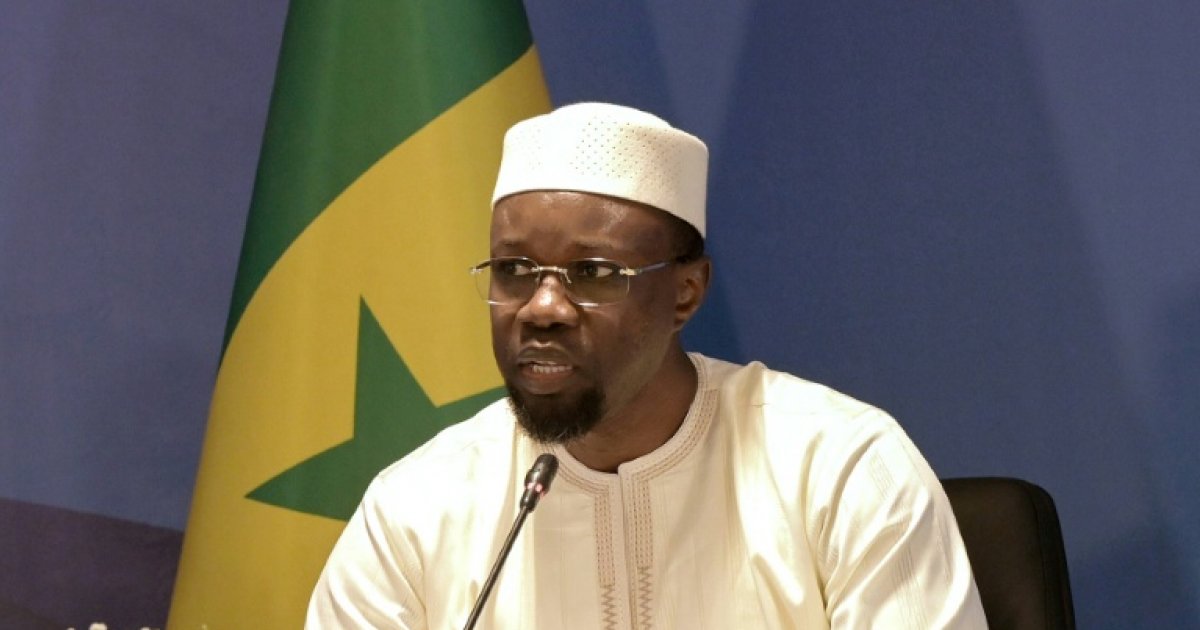
President Bassirou Diomaye Faye of Senegal has dismissed his Prime Minister and former ally Ousmane Sonko, marking the end of a turbulent chapter that began with their shared rise to power in April 2024 on a wave of popular hope.
In a televised address delivered by the Secretary-General of the Presidency, Oumar Samba Ba, the president announced the immediate removal of Ousmane Sonko from his post, along with the entire cabinet. “The outgoing government is tasked with handling current affairs,” the statement concluded, without specifying a timeline or successor.
Tensions between the two leaders have been steadily worsening since their election victory, raising doubts about their ability to maintain a working relationship. The rift became particularly visible earlier this month when President Faye criticized what he described as the “excessive personalization” of power within the ruling party by Prime Minister Sonko.
“As long as he remains Prime Minister, it is because he enjoys my confidence. When that is no longer the case, there will be a new Prime Minister,” President Faye stated in a recent television interview.
The dismissal comes against the backdrop of a strained political landscape. Ousmane Sonko, once barred from running in the 2024 presidential election due to a defamation conviction that stripped him of civic rights, had backed Bassirou Diomaye Faye as his replacement. Together, they campaigned under the slogan “Diomaye Moy Sonko”—”Diomaye is Sonko” in Wolof— galvanizing a youthful electorate disillusioned by years of economic hardship and political repression under former President Macky Sall.
Sonko’s release from prison in April 2024, alongside Faye, following an amnesty law aimed at easing political tensions, symbolized a fresh start for the duo. Yet, their partnership has since frayed, culminating in this decisive break.
In a statement posted on Facebook shortly after the announcement, Sonko expressed relief: “Alhamdoulillah. Tonight, I will sleep peacefully at Keur Gorgui,” referring to his residence in Dakar. His supporters quickly gathered outside his home, celebrating his removal from office.
Just hours before his dismissal, Sonko had criticized Western “tyranny” during a parliamentary address, accusing it of attempting to “impose homosexuality on the rest of the world.” This came weeks after Senegal passed a law toughening penalties for same-sex relations in the predominantly Muslim West African nation.
Rising political tensions and legal battles
The rift between President Faye and Prime Minister Sonko has been evident for months. Earlier this year, the president’s public remarks highlighted concerns over Sonko’s growing influence within the ruling party, which won a landslide victory in the November 2024 legislative elections.
The ruling party’s dominance in the National Assembly has further complicated the situation. Earlier this year, parliament paved the way for Sonko’s potential candidacy in the 2029 presidential election by approving an electoral code reform—a move criticized by the opposition as a blatant attempt to favor Sonko.
In July 2025, Senegal’s Supreme Court rejected Sonko’s appeal against his 2023 defamation conviction while he was still Prime Minister, reigniting debates over his eligibility. Despite this setback, Sonko was elected as a deputy in the November 2024 legislative elections but chose to remain Prime Minister, a decision his party argues maintains his eligibility for future office.
Local elections are scheduled for 2027, followed by the presidential election in 2029. While President Faye, who lacks the same level of popular enthusiasm as Sonko, has seen his support grow through the “Diomaye President” movement, speculation about his potential candidacy for 2029 persists.
Economic challenges loom over political shifts
Beyond political maneuvering, the government faces daunting economic challenges. Inheriting a colossal debt equivalent to 132% of GDP—one of the highest in Sub-Saharan Africa, according to the International Monetary Fund—the administration has struggled to stabilize public finances.
The previous government, led by former President Macky Sall, was accused of concealing the true extent of the financial crisis, which led to the suspension of a $1.8 billion IMF assistance program in 2024. The new administration has since worked to restore transparency and secure international support amid rising public expectations.
As Senegal navigates these turbulent political waters, the future of its leadership and economic policies remains uncertain. The dismissal of Ousmane Sonko marks a pivotal moment, but its long-term implications for the country’s stability and development are yet to unfold.