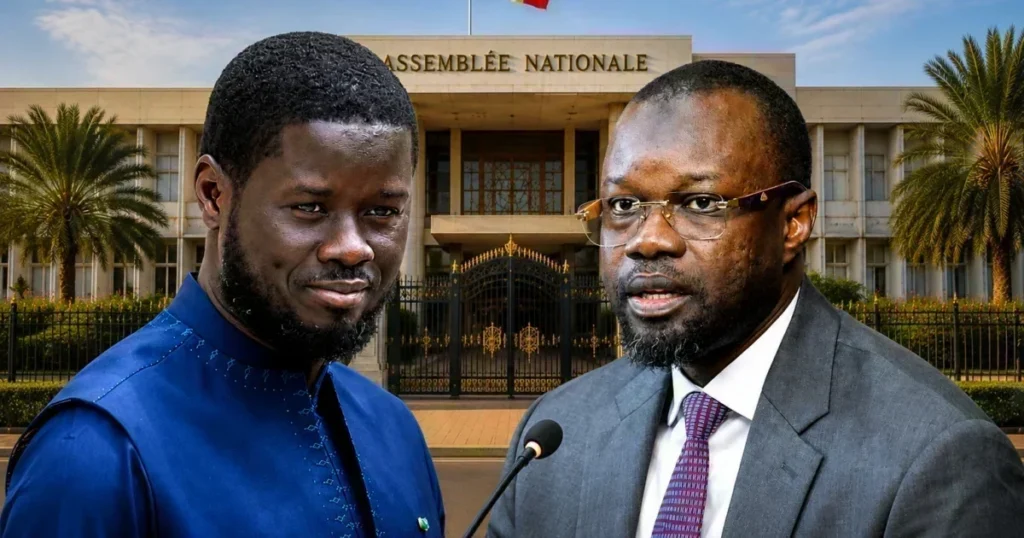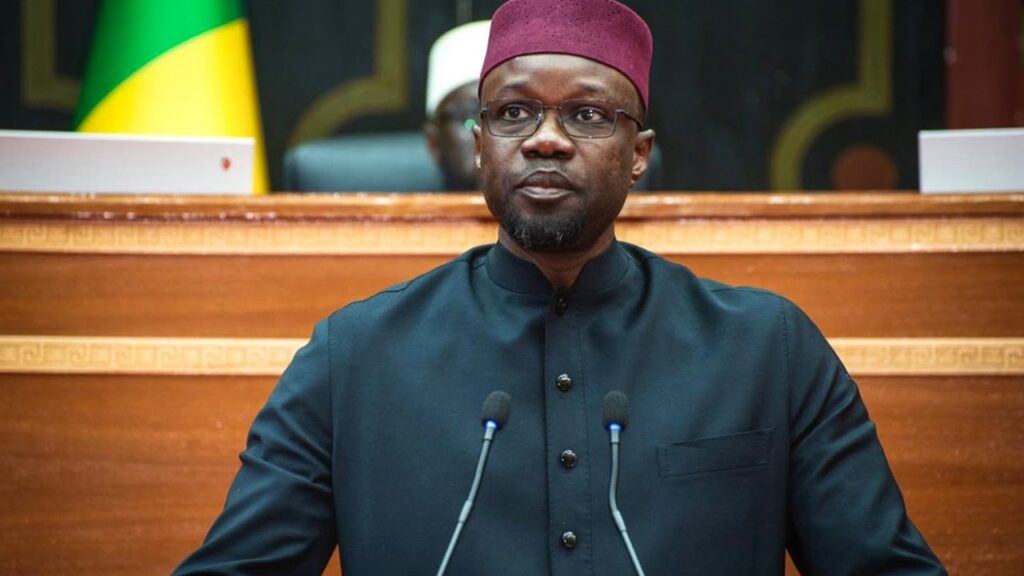
A heated public discourse has emerged in Senegal concerning the administration of political funds within the Primature. Prominent commentator Badara Gadiaga has openly criticized what he terms “vampirism” in the utilization of discretionary allocations granted to the head of government. Based on his assertions, out of an estimated fund of 1.77 billion CFA francs, former Prime Minister Ousmane Sonko reportedly transferred only around 70 million to his successor. This serious allegation, made during a broadcast in Dakar, underscores the inherent lack of transparency surrounding these particular credits, which traditionally bypass parliamentary oversight.
A controversy directly targeting the primature
This issue touches upon a highly sensitive aspect of Senegalese political life. Political funds, distinct from conventional budgetary lines, are intended to finance sovereign expenditures and discretionary interventions by the Prime Minister. Their usage is not subject to standard public accounting regulations, a situation that frequently fuels suspicions of partisan manipulation. By specifically naming Ousmane Sonko, a central figure in the ruling coalition and president of the Pastef party, Badara Gadiaga shifts the critique directly to the executive structure established after the March 2024 political transition.
The assertion of a residual balance of 70 million CFA francs, when compared to an initial allocation of 1.77 billion, has captured significant attention. The stark contrast between these figures suggests that a substantial portion of the credits was expended prior to the handover. The commentator views this as evidence of hasty management inconsistent with the ethos of austerity championed by the new administration since taking power. However, it is crucial to note that these allegations have not yet been substantiated by publicly available accounting documents.
A recurring debate on budgetary transparency
This controversy is not isolated. For several years, Senegalese civil society and segments of the political class have advocated for a comprehensive reform of the legal framework governing political and special funds. Organizations like the Forum Civil and various governance groups have called for stricter oversight, mirroring reforms implemented in other democracies across the West Africa region. This matter is part of a broader discussion on accountability and the curbing of extra-budgetary spending, a key theme emphasized by the Diomaye Faye-Ousmane Sonko duo during their presidential campaign.
In practice, the Cour des comptes (Court of Auditors) remains the sole institution empowered to thoroughly examine these financial flows, yet its reports seldom delve into granular detail regarding the Primature’s allocations. Should the reported discrepancy between the initial allocation and the transferred balance be confirmed, it would raise profound questions about the consistency between the new authorities’ reformist rhetoric and their actual governance practices. It would also prompt scrutiny of internal controls within the Primature during the institutional transition phase.
A political signal amid ongoing recomposition
The timing of Badara Gadiaga’s statement lends it particular significance. Since the appointment of a new Prime Minister, Dakar’s political landscape has been undergoing a period of recomposition, where every public declaration is closely scrutinized. Internal tensions within the ruling coalition, alongside efforts by an opposition seeking renewed momentum, explain the intensity of discussions surrounding financial governance. The controversy implicitly fuels the political narrative of Ousmane Sonko’s detractors, who accuse him of concentrating considerable resources in the months leading up to his departure from the Primature.
As of now, no official response has been issued by the Primature’s offices. Allies of the former Prime Minister might cite expenditures related to the preparation of political and administrative deadlines, as well as the routine operational costs of ministerial cabinets. Without the detailed publication of financial movements, the debate risks remaining confined to a communication battle, lacking documented arbitration. Nevertheless, the call for an independent audit, voiced by several parties, could gain traction if this controversy persists, impacting African politics and transparency discussions.