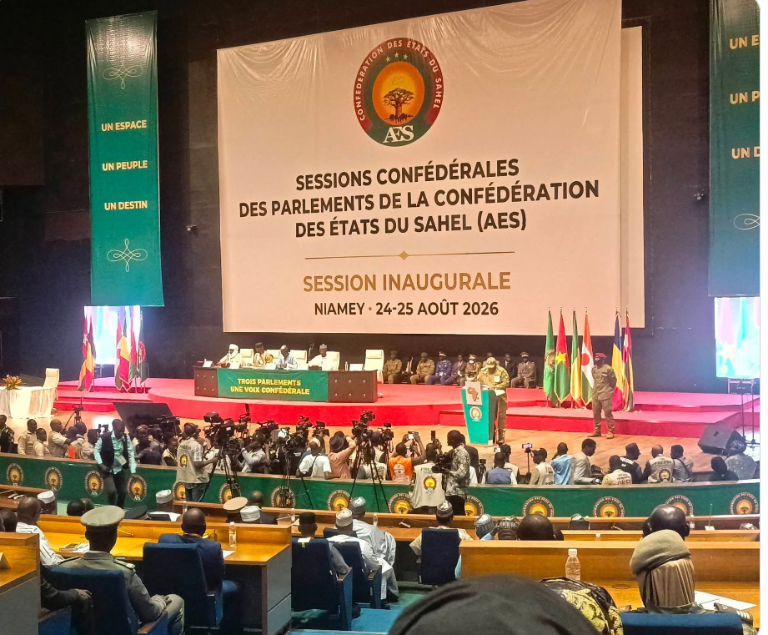
In Niamey, the newly formed Confederation of Sahel States has marked a significant institutional milestone with the inauguration of its parliament. Yet, beneath this seemingly structured development lies a profound question: can genuine regional integration flourish without foundational democracy, political pluralism, and a true popular mandate?
The symbolism in Niamey was carefully orchestrated. In late August 2026, representatives from Burkina Faso, Mali, and Niger officially established the confederal parliament for the Alliance of Sahel States (AES). This new body comprises forty-five deputies, with fifteen from each participating nation, tasked with contributing to the Confederation’s framework. These parliamentarians have already ratified their internal rules and established three dedicated commissions focusing on defense and security, diplomacy, and development.
On paper, the vision is compelling: three nations, having departed from ECOWAS, endeavoring to forge their own shared institutions. Official pronouncements position this parliament as a testament to newfound sovereignty and an embodiment of Sahelian integration.
However, an unsettling question persists: who do these deputies genuinely represent?
An institutional blueprint mirroring ECOWAS
A striking paradox emerges. After criticizing ECOWAS as an organization detached from its populace and lacking sufficient sovereignty, the AES appears to adopt several of its institutional mechanisms. This includes a confederal structure, shared political bodies, and now a parliament designed to address issues pertinent to the member states’ populations.
The comparison becomes particularly salient when examining the parliamentary design.
The ECOWAS Parliament, with its 115 seats, aims to represent the community’s people, with ECOWAS now declaring its objective to elect parliamentarians through direct universal suffrage. Currently, its members are often designated from national assemblies of member states.
In contrast, the AES inaugurates a parliament with 45 members, fifteen for each of the three countries. While the quantitative difference is clear, the underlying principle remains similar: to establish a regional assembly dedicated to advancing integration.
Therefore, the fundamental distinction lies not in the architectural structure, but rather in the source of political legitimacy.
And it is precisely this point that presents a significant challenge.
A parliament without popular elections?
The AES confederal parliament emerges in three nations currently under military governance, following coups d’état: Mali since 2020-2021, Burkina Faso since 2022, and Niger since 2023. The initially promised temporary transitions have extended indefinitely, casting uncertainty on any return to a normal electoral order. International IDEA highlights that military transitions across these three countries have persisted for several years.
The situation in Burkina Faso is particularly illustrative. The military authorities have indefinitely postponed elections and progressively curtailed political freedoms. In April 2026, Ibrahim Traoré publicly urged Burkinabè citizens to "forget" democracy, deeming it unsuitable for the nation. His government had previously disbanded political parties.
In Mali, the 2020 coup, followed by another in 2021, solidified the military’s grip on state institutions. Elections slated for 2024 were deferred, with the junta remaining in power.
Given these circumstances, how can a truly representative confederal parliament be constructed?
The question is not about denying the people of the Sahel their right to regional integration. It is simpler: should an institution claiming to speak for the people be composed of representatives whose legitimacy does not directly originate from those very people?
The risk is the creation of a superficial democracy: seats, commissions, internal rules, speeches, and ceremonies, yet minimal capacity for ordinary citizens to choose those who articulate on their behalf.
The absent citizen in West Africa’s political landscape
In the capitals of the AES, the lexicon of sovereignty has become pervasive. Political sovereignty, economic sovereignty, military sovereignty, monetary sovereignty: the term has become the guiding principle of the new Sahelian doctrine. This narrative often dominates pan-African news and African politics discussions.
However, sovereignty should not solely imply independence from Paris, Washington, or Brussels.
It should also signify the sovereignty of the citizen in relation to their own state.
For what value does national sovereignty hold when citizens cannot freely elect their leaders? What good is a regional parliament when political parties are banned or marginalized? What significance does a Confederation possess if civil society, journalists, unions, and opposition voices lack sufficient space to challenge public decisions?
It is here that the AES reveals its primary contradiction.
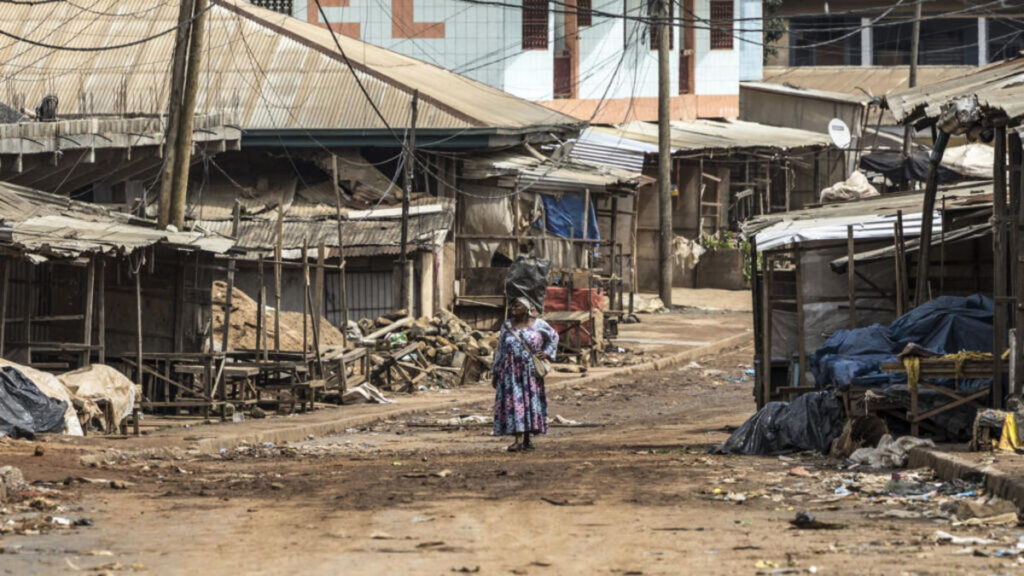
The populations of the Sahel are primarily grappling with insecurity, poverty, forced displacement, unemployment, inadequate public services, and rising living costs. Armed groups continue to devastate vast territories. Millions have been displaced by violence across the region. Institutional construction, therefore, cannot be detached from the daily realities faced by these communities.
A new parliament will not feed a family. A confederal commission will not replace a destroyed school. Internal rules will not heal a sick person in a rural area devoid of medical care.
The priority should thus be to build institutions that serve citizens, rather than citizens serving institutions.
The paradox of integration replicating what it denounced
The AES was partly forged on a critique of ECOWAS, which authorities in Bamako, Ouagadougou, and Niamey accused of being overly intrusive and defending interests contrary to those of the Sahelian peoples.
Yet, the paradox is now striking: the organization presented as an alternative to ECOWAS is replicating some of its institutional forms while further weakening democratic oversight mechanisms.
The question should be posed unequivocally: why not surpass ECOWAS?
Why not establish an AES Parliament directly elected by citizens? Why not enshrine strong protections for public liberties in its foundational texts? Why not constitutionally guarantee multiparty systems, press freedom, judicial independence, and the peaceful transfer of power?
That would have constituted a true institutional revolution in West Africa.
Instead, the AES risks giving birth to an institutional replica of ECOWAS, devoid of its democratic aspirations.
And what of Togo in this equation?
Togo’s presence in the regional dynamic also warrants close scrutiny, even though Lomé is not an AES member. News from Africa often highlights evolving political alliances.
Faure Gnassingbé’s Togo appears increasingly to align politically with the Sahelian regimes, despite its own democratic record raising significant concerns. This is a key aspect of contemporary African politics.
Since the constitutional reform of 2024, the nation has shifted towards a parliamentary system where the President of the Council of Ministers holds most executive power. Faure Gnassingbé, in power since 2005 after succeeding his father, assumed this role in May 2025. This transformation has been condemned by the opposition as a strategy to circumvent presidential term limits and prolong his tenure.
Recent events are even more troubling. In June 2025, demonstrations against the government and the constitutional reform resulted in several fatalities, according to human rights organizations. Restrictions on social media and arrests have also been reported.
As recently as July 2026, Togolese citizens demonstrated, demanding a return to the previous Constitution and denouncing the concentration of power in Faure Gnassingbé’s hands.
More recently, the arrest of two French journalists in Togo also reignited concerns about the media environment, particularly as RFI and France 24 remain off-air in the country since restrictions were imposed in 2025.
Togo is therefore not merely an observer of West African political realignments. It is progressively becoming an actor whose political model is raising questions.
The true test will be the people
The AES Parliament may be a historic development. But history will judge it less by its inaugural ceremonies than by its genuine capacity to represent its populations.
Having a parliament does not automatically equate to having a democracy. Having deputies does not guarantee true representation. And invoking the people’s name does not justify governing without seeking their consent.
The AES still has a choice of path.
It can construct a Confederation founded on popular sovereignty, political freedom, and accountable leadership. Alternatively, it risks becoming an institutional framework designed to consolidate military powers which, under the guise of sovereignty and combating insecurity, indefinitely postpone democratic progress.
This encapsulates the entire ambiguity of this parliamentary birth.
The AES has established its Parliament. It now faces the task of establishing its democracy.
For in the Sahel, as elsewhere, true sovereignty should not be that of juntas against external forces. It should be the sovereignty of the people against all forms of power usurpation.