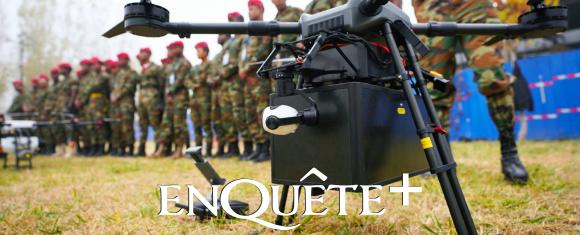
How drones are reshaping African military strategies
Drones have rapidly emerged as cornerstone assets in Africa’s military toolkit, transforming both state-led security operations and asymmetric warfare across the continent. Their integration reflects a broader shift in conflict dynamics, offering enhanced surveillance, precision strikes, and reduced battlefield risks for national forces. Yet this technological leap also exposes deep-seated vulnerabilities, particularly in technological sovereignty and geopolitical reliance.
Military drones in Africa: a decade of exponential growth
The adoption of unmanned aerial systems has surged in recent years. Between 2001 and 2021, documented drone acquisition agreements in Africa rose from one to twenty-one. From 1980 to 2024, over 1,500 military drones were procured by 31 African nations, with demand peaking between 2020 and 2023. North African states account for more than half of these purchases, while Nigeria stands out as a leading regional buyer.
The primary driver behind this expansion is the deteriorating security landscape. Persistent threats from armed groups, insurgencies, and internal conflicts have pushed governments to seek advanced, low-risk solutions. Drones enable real-time intelligence gathering, targeted strikes, and operational coordination without endangering ground troops. Conflicts in Sudan, Mali, Burkina Faso, Niger, Somalia, and Ethiopia highlight their growing centrality in modern warfare.
From state arsenals to rebel tools: the democratization of drone warfare
One of the most striking developments is the accessibility of drone technology to non-state actors. Commercial drones—readily available on the global market—are being repurposed into offensive weapons by groups such as Boko Haram, Al-Shabaab, and the Group for the Support of Islam and Muslims (JNIM). This shift has redefined battlefield dynamics, allowing armed factions to conduct precision attacks, coordinate ground operations, and amplify psychological warfare through distributed footage.
Foreign dominance in Africa’s drone market
Despite progress, African nations remain heavily dependent on foreign suppliers. China, Israel, the United States, and Turkey dominate the market, not only through equipment sales but also via training, software updates, maintenance, and spare parts. This dependency creates long-term strategic vulnerabilities, particularly concerning data sovereignty and operational continuity.
The lack of local production capacity exacerbates these challenges. Only about 12% of Africa’s drone needs are currently met by domestic industries. South Africa leads the continent in drone manufacturing, while Morocco, Nigeria, Egypt, Ethiopia, Tunisia, and Algeria are investing in hybrid models combining local development with international partnerships.
Senegal’s Ndobine: a model of local innovation
The West African nation of Senegal is making strides through Ndobine, a company specializing in maritime surveillance, precision agriculture, and cartographic drones. While still a minor player, its work illustrates the potential of homegrown solutions to support both civilian and security applications.
Drones and conflict resolution: a double-edged sword
According to regional security analysts, drones do not address the root causes of Africa’s conflicts. While they enhance tactical capabilities, their proliferation can intensify violence. In 2024 alone, drone strikes resulted in 1,176 civilian deaths across thirteen African countries. In Sudan, nearly 700 civilians were reportedly killed in the first quarter of 2026 due to drone attacks.
To prevent escalation, experts urge governments to adopt comprehensive regulatory frameworks. This includes aligning drone usage with international humanitarian law, enhancing operator training, improving transparency in acquisitions, fostering local industries, and promoting continental harmonization under African Union leadership.
Sovereignty at stake: the path forward for African nations
The central challenge today is not merely acquiring drones, but mastering their deployment. Without robust governance, the continent risks deepening technological dependency and entrenching cycles of violence. A balanced approach—combining strategic autonomy, ethical deployment, and local innovation—is essential to ensuring that drone technology serves Africa’s long-term security, rather than undermining it.