Behind the budget battle: how Senegal’s 2026 finance bill reveals deeper economic tensions
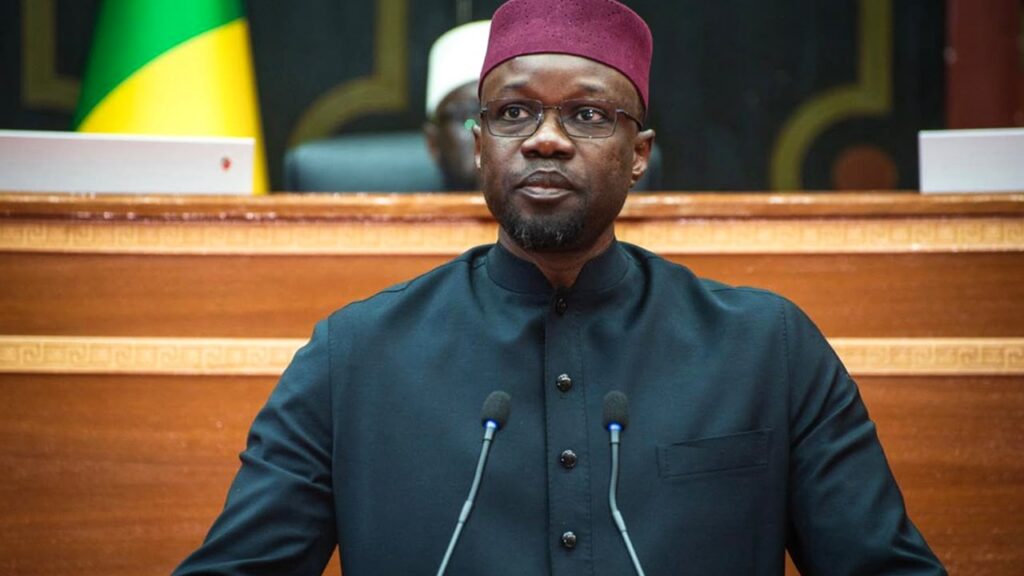
The draft 2026 finance bill has become more than just a fiscal document—it has exposed the fault lines in Senegal’s economic priorities and governance. As the National Assembly prepares to vote on the rectified budget law (LFR), Ousmane Sonko, leader of PASTEF, has taken a firm stance against the current proposal, arguing that it strays from the country’s transformative agenda and risks widening inequality.
At a press conference on October 19, 2026, Sonko made clear that PASTEF deputies would vote against the bill in its current form. His objections are not merely technical but reflect a broader critique of the government’s fiscal choices, which he says fail to protect the most vulnerable while deepening debt reliance on international partners like the IMF.
The hidden trade-offs behind social spending cuts
Central to Sonko’s criticism is the reduction in key social expenditures, particularly in education, vocational training, and public investment. These cuts, he argues, contradict the government’s own Agenda for National Transformation (ANT) and undermine long-term development goals.
The government defends its austerity measures as necessary for macroeconomic stability under the IMF program. However, Sonko warns that reducing subsidies on petroleum products—likely to drive up fuel prices—will disproportionately hurt low-income households. He points out that compensatory measures, like allocations to the Family Security Fund, remain insufficient to offset rising living costs.
Energy subsidies: a balancing act between reform and social cost
Sonko acknowledges the need to reform energy subsidies, a condition of Senegal’s IMF agreement. Yet he cautions that the government’s approach lacks adequate safeguards for vulnerable populations. His warning: without targeted social protection, the poorest families will face a heavier burden than intended.
He also highlights the mismatch between fiscal consolidation and national priorities. While the IMF-backed plan pushes for lower deficits, Sonko insists that revenue mobilization and domestic resource strengthening should take precedence—through improved tax collection and tighter oversight of special funds.
Debt, IMF pressure, and the illusion of fiscal reform
The PASTEF leader goes further, questioning the sustainability of Senegal’s debt trajectory under current conditions. He argues that the government’s focus on short-term deficit reduction risks entrenching long-term dependence on external financing.
Sonko points to the government’s limited success in mobilizing domestic resources. Despite launching the Economic and Social Recovery Plan (PRES), which raised nearly 300 billion FCFA, he claims several government actions have undermined this effort. He cites inconsistent tax policy and weak economic monitoring as barriers to sustainable growth.
He calls for a reevaluation of the IMF framework itself—not just compliance with its conditions, but a strategic negotiation that protects Senegal’s economic sovereignty and social cohesion.
Transparency deficits and the unchecked power of special funds
A rarely discussed aspect of the budget debate is the management of special funds. Sonko has introduced proposals to tighten legal oversight and enhance transparency over these financial flows, which often operate outside conventional parliamentary scrutiny.
For him, fiscal responsibility cannot be achieved without full parliamentary and public control. He stresses that financial laws must balance fiscal consolidation with transparency, equity, and citizen accountability—standards he believes are currently missing.An open debate or political showdown? Sonko’s call for a national conversation
Beyond budget votes, Sonko has invited Prime Minister Amadou Aminou Lô to a public debate on Senegal’s economic future. This move signals more than policy disagreement—it frames the budget as a flashpoint in a broader struggle over governance and public trust.
Sonko argues that only an open, evidence-based discussion can reveal the true costs of the government’s choices. In a time of rising discontent over purchasing power and economic insecurity, he positions this dialogue as essential for democratic legitimacy.The stakes extend beyond the 2026 budget. As parliament prepares for the 2027 fiscal year, the debate over investment priorities, debt sustainability, and social protection will only intensify. Sonko’s refusal to endorse the bill as-is may force revisions—but it also signals a deeper political and ideological divide over Senegal’s economic direction.
He concludes with a clear message: “We are ready for an honest debate with the government to reach a balanced compromise—one that respects both economic imperatives and the living conditions of the Senegalese people.”