The vision behind Côte d’Ivoire’s Institute for Coffee and Cocoa (I2C): aligning research with market demands
The Institut du Café et du Cacao (I2C) is not just another research center—it’s a strategic response to decades of challenges in Côte d’Ivoire’s most vital agricultural sectors. With coffee and cocoa accounting for nearly 40% of the country’s export earnings and supporting over eight million livelihoods, the stakes couldn’t be higher. But why now, and what forces shaped this initiative?
From policy to practice: how three decades of research laid the groundwork
Long before the I2C was formally approved in September 2026, the building blocks were already in place. The project’s foundation rests on the decades of genetic research, seed banks, and experimental plots managed by the Centre National de Recherche Agronomique (CNRA) in Divo. This site was chosen precisely because it already housed the scientific assets needed to launch a national hub without starting from scratch. Rather than uprooting existing studies, the I2C will build upon them, ensuring continuity in addressing the sector’s most pressing issues.
Three pillars of a resilient agricultural future
The I2C’s mission is structured around three core components: research, resources, and infrastructure. But these aren’t isolated efforts. Collaboration is at the heart of the model, bringing together:
- CNRA and other agricultural research institutions
- Universities and higher education schools
- Specialized centers and industry experts
This united front is designed to address the sector’s biggest challenges: climate change resilience, market demands for quality and traceability, and the sustainability of a supply chain that fuels nearly 17% of the national GDP.
Why global benchmarks matter
Côte d’Ivoire isn’t reinventing the wheel—it’s learning from the best. The country’s leaders point to models like Brazil’s CEPLAC, Colombia’s CENICAFE, and Ghana’s CRIG as proof that dedicated research institutes can transform agricultural sectors. The I2C aims to replicate—and even surpass—this success by not only consolidating local expertise but also attracting global partnerships and investments.
Overcoming fragmentation: the collaborative edge of Côte d’Ivoire’s new institute
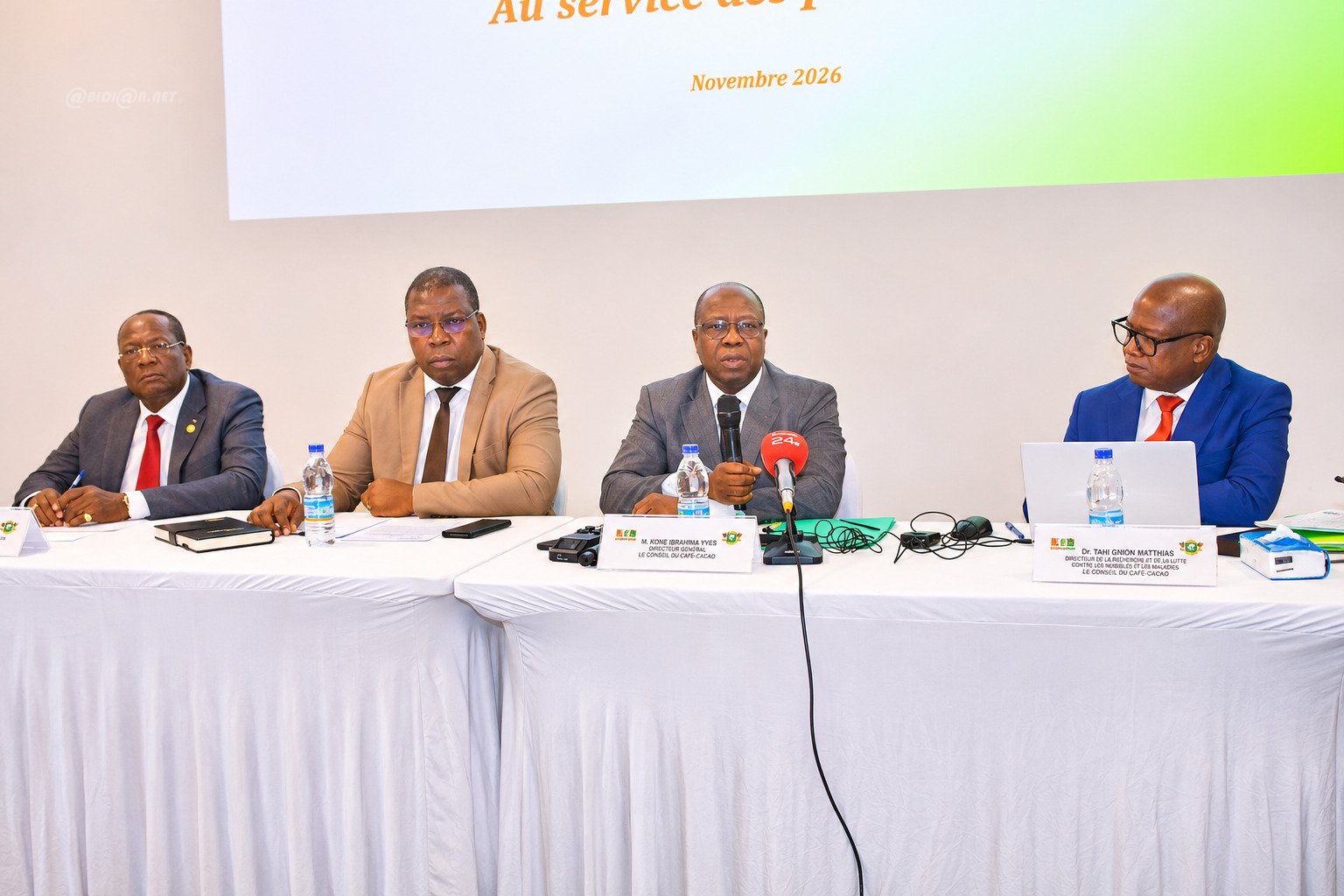
One of the most persistent issues in agricultural research is fragmentation. Studies are often duplicated, resources are scattered, and findings don’t always reach farmers or policymakers. The I2C is designed to break this cycle. As Dr. Tahi Gnion Mathias, Director of Research and Climate Change at the Conseil du Café-Cacao, explained during the launch event, the institute won’t replace existing entities. Instead, it will foster synergies, ensuring that universities, CNRA, and other stakeholders work in lockstep toward shared goals.
A united front: stakeholders rally behind the I2C’s vision
The November 2026 launch event was more than a formal announcement—it was a show of solidarity. Leaders from Côte d’Ivoire’s Ministry of Agriculture, university presidents from Man, Daloa, and Nangui Abrogoua (Abidjan), and representatives from CNRA and ANADER all signaled their support. But their endorsement wasn’t just symbolic. It underscored a shared belief in the I2C’s potential to:
- Accelerate applied research on high-priority topics
- Mobilize operational funding for critical projects
- Bridge the gap between scientific discovery and real-world impact
As Kone Brahima Yves, Director General of the Conseil du Café-Cacao, emphasized, the I2C isn’t just about preserving Côte d’Ivoire’s position as a global player—it’s about securing its future. By aligning research with the practical needs of producers and the demands of international markets, the institute aims to create a coffee and cocoa sector that is not only profitable but also sustainable and resilient.