On a sunny Wednesday in mid-July 2026, the people of Toviklin gathered in the heart of the Couffo region to witness a watershed moment in Benin’s social development. The government, led by Romuald Wadagni, presented a groundbreaking social investment package that transforms campaign promises into tangible reality. A historic allocation of 31 billion West African CFA francs is set to redefine the daily lives of citizens across the six communes of the Couffo.
The announcement was met with unwavering attention from teachers, local leaders, and community members. At its core, the plan is designed to strengthen the essential pillars of life for every Beninese household: access to water, reliable electricity, and emergency healthcare. Each franc from this unprecedented budget is earmarked with one clear objective: improving lives without delay.
Lifesaving care takes priority: healthcare without conditions
The first tranche of this sweeping initiative—1 billion CFA francs—embodies a principle that should never require justification: human life comes first. This bold decision marks the end of an era where emergency medical care was conditional on upfront payment. From now on, treatment begins immediately, and financial arrangements follow after the patient is stabilized.
« In a life-threatening situation, we treat first and ask questions later. No one should ever have to choose between oxygen and a receipt. »
To address concerns about uneven implementation or local discrimination, officials were unequivocal: stringent monitoring mechanisms will be deployed nationwide to ensure this lifesaving rule applies uniformly, without exception.
20 billion CFA francs to transform schools into dignified learning spaces
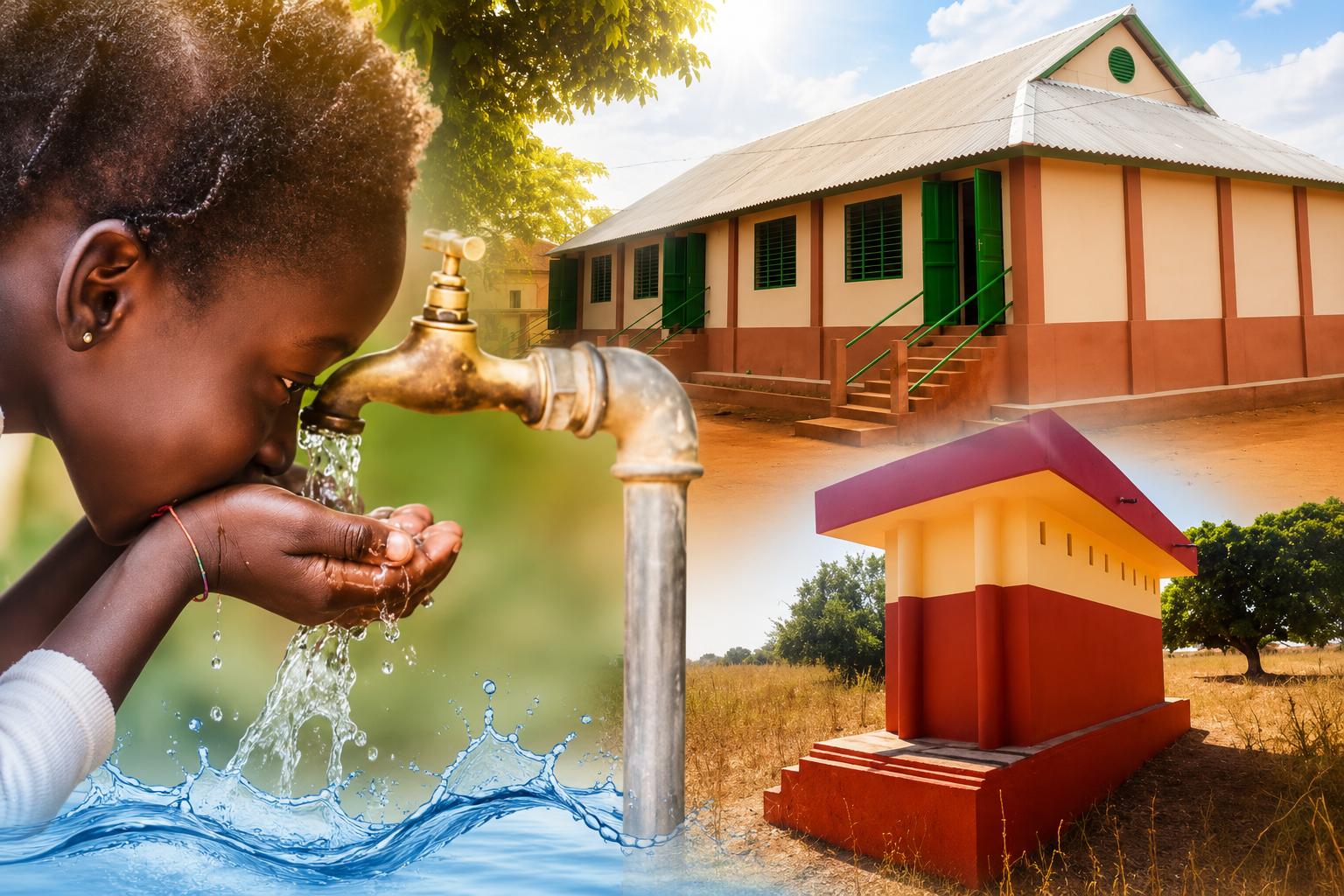
The second major allocation—20 billion CFA francs—tackles what has long been a silent crisis: the lack of basic amenities in Benin’s schools. This substantial investment aims to connect every educational institution to clean water, reliable electricity, and gender-segregated sanitation facilities. Providing proper restrooms is not just a matter of hygiene; it is a critical step toward protecting the dignity of young girls and reducing school dropout rates among adolescents.
By addressing these foundational needs, the government is sending a powerful message: education is a right, and every child deserves a safe and dignified environment to learn.
10 billion CFA francs to power rural health clinics
The third component of this far-reaching plan allocates 10 billion CFA francs to revitalize local health clinics by addressing their most pressing operational challenges. Recognizing the vulnerability of traditional power grids in remote areas, the government is prioritizing solar energy solutions. Solar-powered clinics ensure that critical nighttime medical procedures—such as emergency C-sections—can proceed uninterrupted, regardless of power outages.
Additionally, consistent access to running water in these facilities is non-negotiable for maintaining hygiene standards and safeguarding patient safety. This investment underscores a commitment to equitable healthcare, no matter where one lives in Benin.
A bottom-up strategy for sustainable development
The significance of this announcement lies not in isolated gestures, but in its cohesive vision. These budgetary commitments are not standalone initiatives; they form a unified strategy aimed at building development from the ground up. By strengthening the most fundamental social services first, the government is laying the groundwork for long-term progress.
The people of Toviklin, and communities across the Couffo, have responded with cautious optimism. While the promise of real change has energized the population, the true test will be in the execution. Citizens are now watching closely, awaiting the swift launch of projects, the drilling of functional boreholes, and the installation of operational infrastructure. The clock is ticking, and the nation is ready to hold its leaders accountable.