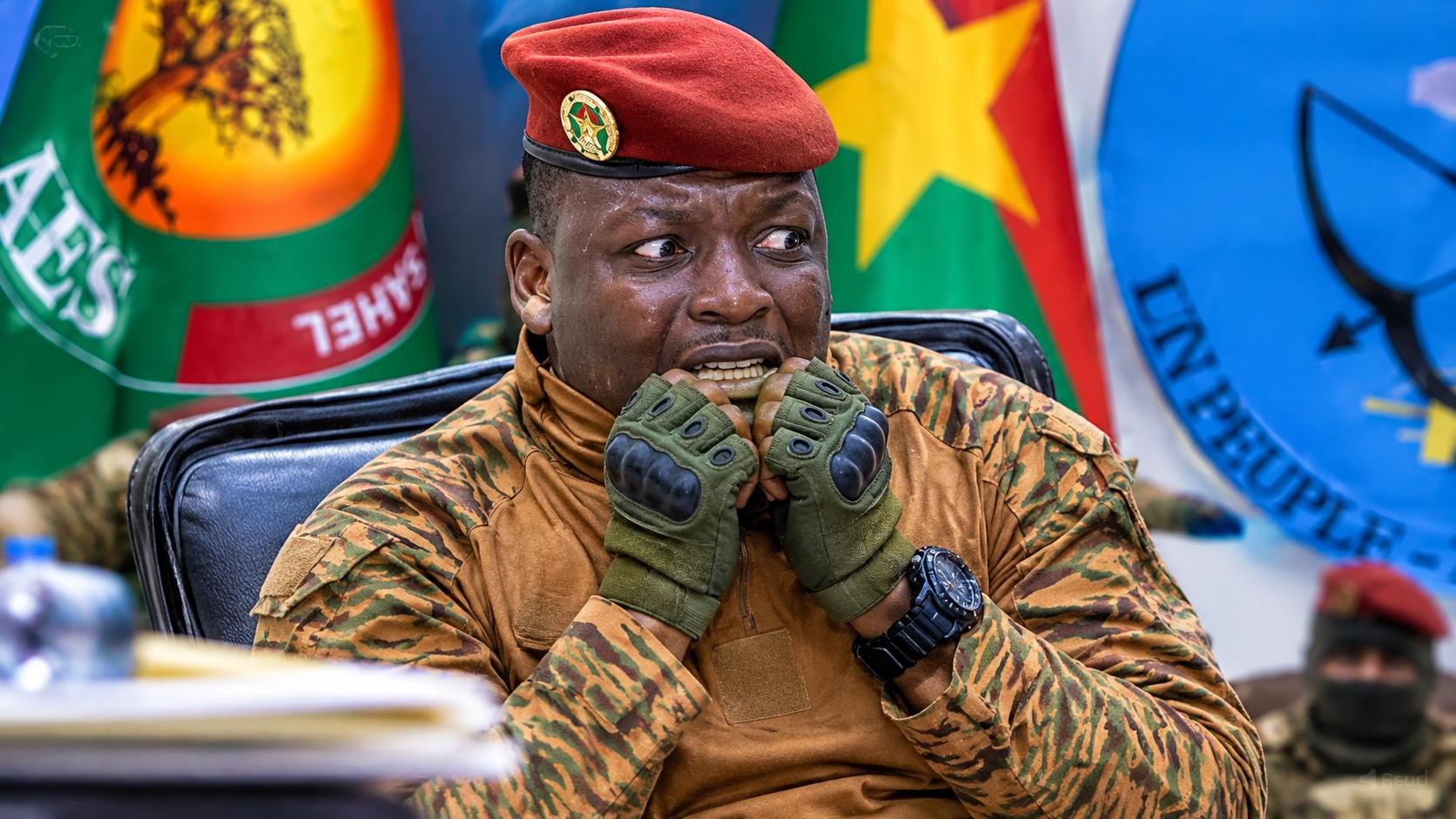
The absence of Burkina Faso’s transitional leader, Ibrahim Traoré, from the Russia-Africa summit has sparked intense speculation about the stability of his government. While international observers highlight his diplomatic ties with Moscow, growing concerns within his inner circle hint at deeper political uncertainties that could reshape the nation’s future trajectory.
Diplomatic posturing vs. domestic pressures
Ibrahim Traoré has spent considerable time cultivating an image as a bold, sovereign-minded leader, particularly through his strategic alignment with Russia. This partnership, framed as a rejection of traditional alliances, has been central to his political messaging, reinforcing perceptions of Burkina Faso as a nation asserting its independence on the global stage.
Yet the decision to skip the summit contrary to his past engagements with high-profile international events suggests that internal calculations may now outweigh external posturing. Reports from insiders indicate that Traoré’s absence stems from fears his prolonged absence could embolden rivals within his own ranks, particularly those perceived as loyalists who might exploit the moment to challenge his authority.
This raises a critical question: Can a government that relies heavily on image-building and symbolic diplomacy sustain its cohesion when its domestic foundations appear uncertain?
The dual nature of propaganda and governance
Traoré’s administration has mastered the art of political communication, portraying him as a decisive figure confronting foreign interference while championing national recovery. Social media campaigns and official narratives consistently emphasize his commitment to reversing Burkina Faso’s past dependencies and restoring stability.
Critics, however, argue that this strategy masks deeper governance challenges, particularly in security and humanitarian crises. The disconnect between aspirational messaging and on-the-ground realities risks eroding confidence not just among the public, but potentially within the very coalition that brought him to power.
When a leadership’s legitimacy hinges on its ability to deliver visible results rather than symbolic victories, even minor missteps can fuel internal dissent. The absence at a pivotal summit may inadvertently underscore this vulnerability, prompting allies to reconsider their long-term alignment with a leader whose grip on power appears increasingly fragile.
Military loyalty: the invisible fault line
In nations governed by military transitions, the cohesion of security apparatuses often determines political survival. Traoré’s rise was facilitated by a network of officers whose loyalty was presumed unshakable until now. Reports suggest that some within this circle may view his absence as an opportunity to recalibrate influence, whether through overt challenges or subtler maneuvers.
Such dynamics are not uncommon in post-coup regimes where power is shared among factions with competing priorities. The distribution of military portfolios, access to decision-making channels, and control over security operations can become arenas for quiet rivalry. While Traoré’s absence alone does not confirm a coup in progress, it does expose the fragility of an alliance system built on personal trust rather than institutional resilience.
Beyond the optics: what Traoré’s absence might reveal
The optics of a leader skipping a high-stakes summit to prioritize domestic security could be strategically sound or dangerously revealing. If the decision stems from genuine security concerns, it may reflect a mature understanding of governance risks. However, if the absence signals panic or indecision, it could embolden critics who question Traoré’s ability to navigate internal and external pressures simultaneously.
One thing is clear: the Burkina Faso of today is not the Burkina Faso of yesterday. The geopolitical boldness once celebrated by supporters now coexists with a less visible but no less critical battle one fought within the corridors of power, where trust is currency and vulnerability is exposed.
For now, the truth remains obscured, leaving observers to decipher whether this absence is a tactical retreat, a calculated risk, or the first tremor of a political earthquake.
Key takeaways
Perceived instability: Traoré’s decision to avoid the summit has fueled speculation about fractures within his inner circle.
Propaganda vs. reality: His administration’s reliance on image-driven governance may obscure deeper challenges in security and delivery.
Military dynamics: Long-term loyalty among security officials is now being tested, raising questions about long-term cohesion.
Strategic ambiguity: The absence could be a move for stability or a sign of underlying weakness yet to surface.
By Ousmane Tandja — Journalist