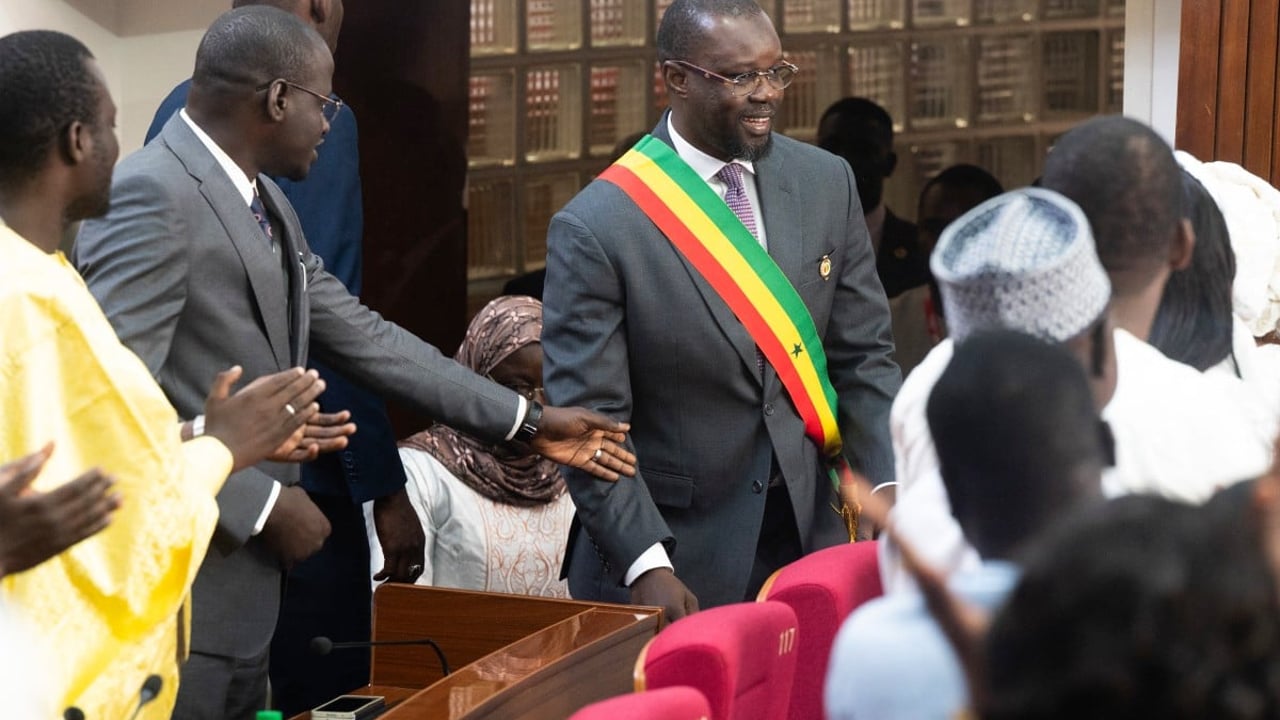
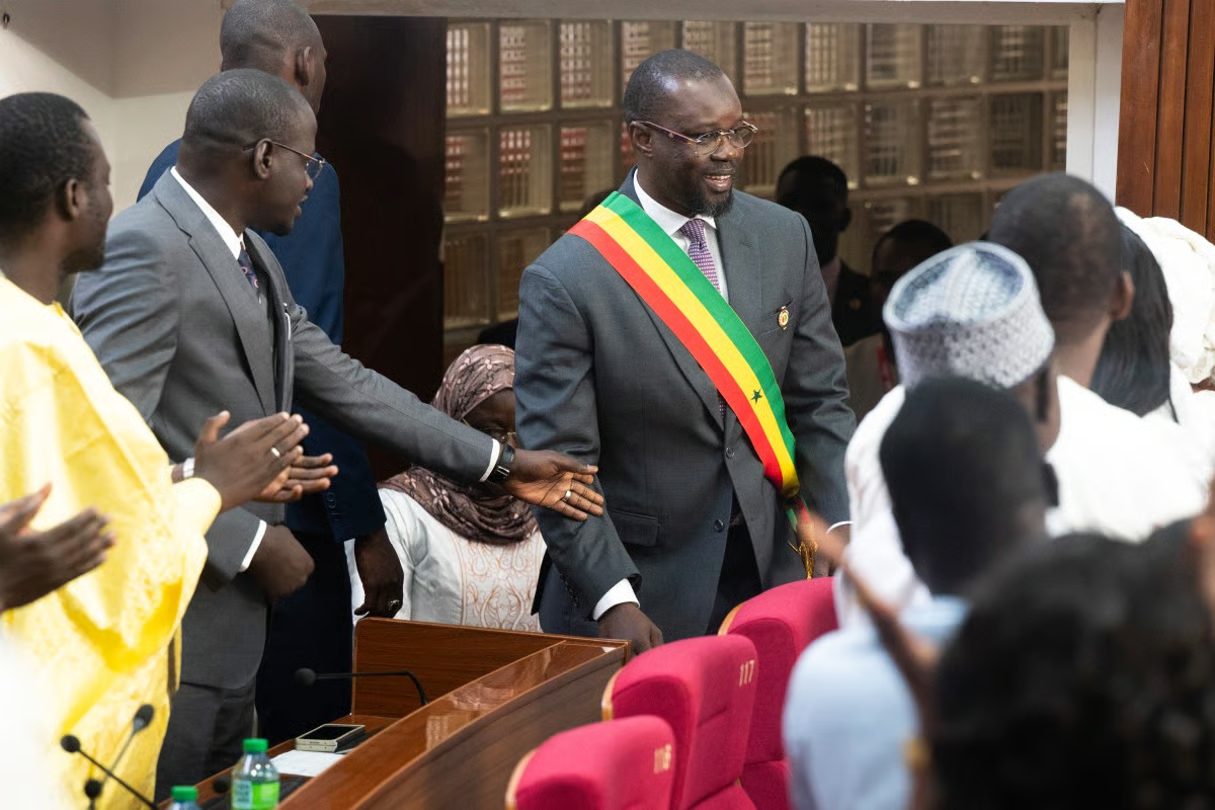
Ousmane Sonko has been sworn in as President of Senegal’s National Assembly just days after his abrupt dismissal as Prime Minister. The swift election took place in Dakar on May 26, 2026, during a brief morning session that began at 9:00 AM. Colleagues have begun referring to the new assembly leader as the “guardian of the revolution,” a title he embraced in his inaugural address.
from prime minister to assembly president in record time
Sonko’s political trajectory took a dramatic turn when President Bassirou Diomaye Faye removed him from the prime ministerial post on May 22, 2026. Within days, Sonko’s party secured his election as the new parliamentary leader, demonstrating significant legislative influence. The session proceeded with remarkable speed, raising immediate questions about political maneuvering behind the scenes.
opposition condemns election as a ‘sham’
The swift transition has drawn sharp criticism from opposition factions, who denounce the process as a “sham” and question its legitimacy. Critics argue that the rapid succession of events suggests a prearranged political strategy rather than a transparent democratic process. The controversy has intensified political tensions in the West African nation, where public sentiment remains sharply divided.
what’s next for Senegal’s political landscape?
Sonko’s elevation to the assembly presidency comes at a pivotal moment for Senegal. With his party now controlling key legislative positions, the political dynamics are shifting rapidly. Analysts suggest this move could either stabilize the government or deepen political divisions, depending on how opposition groups respond in the coming weeks. The international community is closely monitoring developments, particularly given Senegal’s role as a regional diplomatic and economic hub.
The coming days will reveal whether this political realignment strengthens democratic institutions or further polarizes the nation. As Senegal navigates this critical phase, all eyes remain on Dakar, where Sonko’s leadership will shape the country’s political future.