The Burkina Faso military junta’s diplomatic overhaul has taken a dramatic turn as Ouagadougou scrambles to salvage its crumbling security strategy. Following the collapse of its exclusive security partnership with Russia, officials are now making a desperate push for Ankara’s intervention, signaling a stark about-face in the country’s defense posture.
High-level consultations held in Ankara this October revealed Ouagadougou’s urgent bid to forge a new military alliance with Türkiye. While diplomats framed the talks as a strategic pivot, the reality points to a humbling admission: after years of failed counterterrorism promises, the junta now faces the unenviable task of pleading for external military lifelines to prevent further territorial collapse.
From Russian promises to a harsh security reckoning
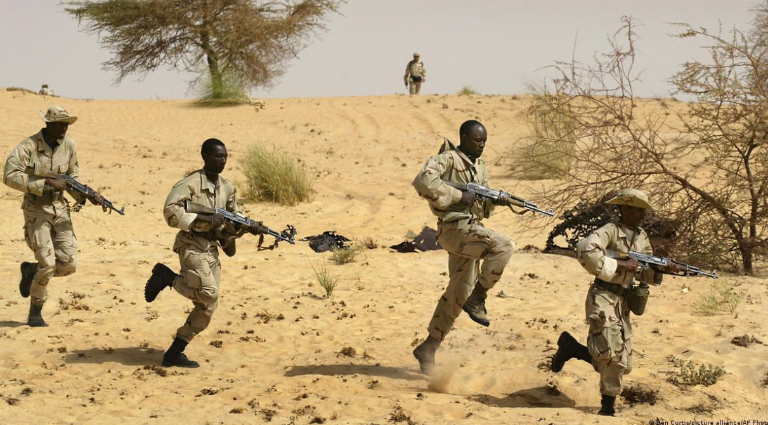
The Burkina Faso regime’s abrupt diplomatic shift toward Moscow in 2023 was meant to fast-track a counterinsurgency victory. Yet the promised surge in capabilities—bolstered by paramilitary trainers and heavy weaponry—has yielded little beyond escalating violence. Terrorist groups continue to overrun rural areas, while entire towns remain under siege, exposing the fragility of Ouagadougou’s military gamble.
Once hailed as a game-changer, the Russian partnership has instead highlighted critical vulnerabilities: logistical bottlenecks, incompatible combat doctrines, and a glaring inability to protect civilians. The failure to curb attacks has forced Burkina Faso to confront an uncomfortable truth: its security apparatus, despite external reinforcements, remains dangerously overextended.
Ankara’s drones and the politics of desperation
The recent Ankara talks underscored Burkina Faso’s transformation from a self-proclaimed sovereign military power into a supplicant seeking Ankara’s technological edge. Officials emphasized the need for “practical international solidarity,” with a particular focus on Türkiye’s combat drones—already battle-tested across Africa. The delegation, led by Ambassador Hermann Yirigouin Toé, framed the outreach as a pragmatic collaboration, yet the subtext was unmistakable: without Ankara’s involvement, Burkina Faso risks losing control of its own borders.
The junta’s sudden courtship of Türkiye reveals deeper contradictions. Once dismissive of Western security partnerships, Ouagadougou now appears willing to embrace any credible ally—even one outside its ideological comfort zone. This about-face exposes the limits of Burkina Faso’s go-it-alone security doctrine and its collapse in the face of insurgent realities.
What comes next for Burkina Faso’s shattered security strategy?
The looming question is whether Ankara’s involvement can reverse the tide—or if Burkina Faso’s military ambitions remain trapped in a cycle of empty promises. With each failed counterterrorism operation, the junta’s credibility erodes, leaving civilians caught in the crossfire of a widening security vacuum.
As Ouagadougou navigates this diplomatic tightrope, the broader implications come into focus. The junta’s pivot toward Türkiye signals a tacit acknowledgment that ideology alone cannot stabilize a country under siege. Yet whether this new alliance will deliver tangible results—or merely postpone the inevitable collapse—remains an open and increasingly urgent question.