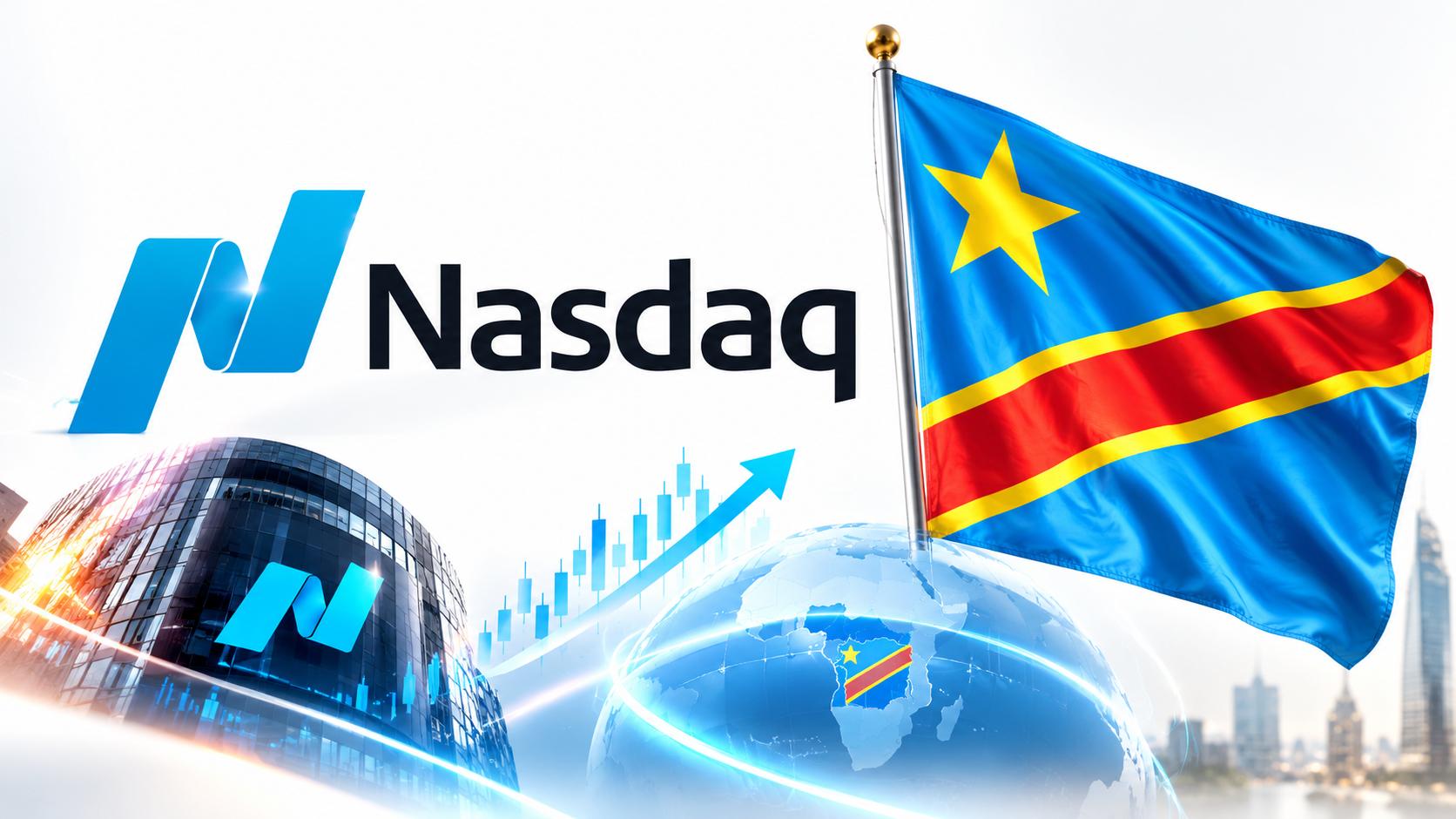
Dubai’s Nasdaq exchange welcomes Congo’s debt debut amid global financial debate
The Republic of the Congo has taken a historic step by listing two sovereign bonds totaling $1.55 billion on Nasdaq Dubai, marking the first-ever entry of sub-Saharan African debt into the emirate’s financial hub. The move has ignited discussions about Africa’s evolving debt strategies and the shifting dynamics of international capital flows toward emerging markets.
What the Congo’s $1.55 billion bond listing means for global investors
Finance Minister Christian Yoka formalized the bond listing, which includes two high-yield sovereign tranches designed to attract institutional investors from the Middle East, sovereign wealth funds, and global investment banks. The bonds come with an identical coupon rate of 9.5%, with maturities set for 2035 and 2036, respectively.
The Congo’s decision to pursue a dual listing—already traded on the London Stock Exchange—reflects a deliberate effort to diversify its investor base and enhance liquidity in secondary markets. The strategy aims to position Congo as a competitive issuer in the emerging debt landscape, where high-yield opportunities are increasingly sought after.
The ripple effects on Africa’s sovereign debt market
Congo’s pioneering move has set a precedent, positioning Dubai’s Nasdaq exchange as a key gateway for African sovereign debt. The emirate’s financial ecosystem, already a magnet for cross-border capital, now serves as a strategic bridge between African issuers and Middle Eastern investors.
With total listed debt exceeding $147.5 billion—sovereign bonds representing 43% of the total—Nasdaq Dubai solidifies its role in facilitating trade between emerging economies and global capital markets. The Congo’s listing is expected to pave the way for other African nations to explore similar financing avenues.
How Congo’s bonds compare to regional alternatives
- Attractive yields: The 9.5% coupon rate outpaces many peer sovereign bonds in Africa, drawing fund managers seeking higher returns in risk-adjusted portfolios.
- Geopolitical leverage: The move aligns Congo with Dubai’s growing influence as a financial hub, potentially reducing reliance on traditional Western markets.
- Future funding potential: A stronger secondary market for Congo’s debt could lower borrowing costs for future infrastructure and development projects.
Public and market reactions: mixed sentiments emerge
While international investors view the bonds as an opportunity to diversify into high-growth African debt, critics highlight concerns over debt sustainability and the economic viability of such high-interest obligations. The dual listing strategy, though innovative, has also sparked debates about the long-term implications of frequent sovereign borrowing in volatile markets.
Analysts suggest that Congo’s bold play could either strengthen its financial credibility or expose it to greater scrutiny from global rating agencies. The outcome may influence neighboring countries considering similar financing routes.
What’s next for Congo’s debt strategy?
The success of Congo’s bond listing will depend on investor appetite, market stability, and the government’s ability to channel proceeds into productive sectors. With future maturities approaching, Brazzaville must balance immediate financing needs with long-term fiscal responsibility.
The move also signals a potential shift in how African nations approach global debt markets, favoring strategic partnerships with Middle Eastern financial centers over traditional Western counterparts. As the dust settles, the Congo’s experiment will be closely watched for lessons on debt diplomacy and economic resilience.