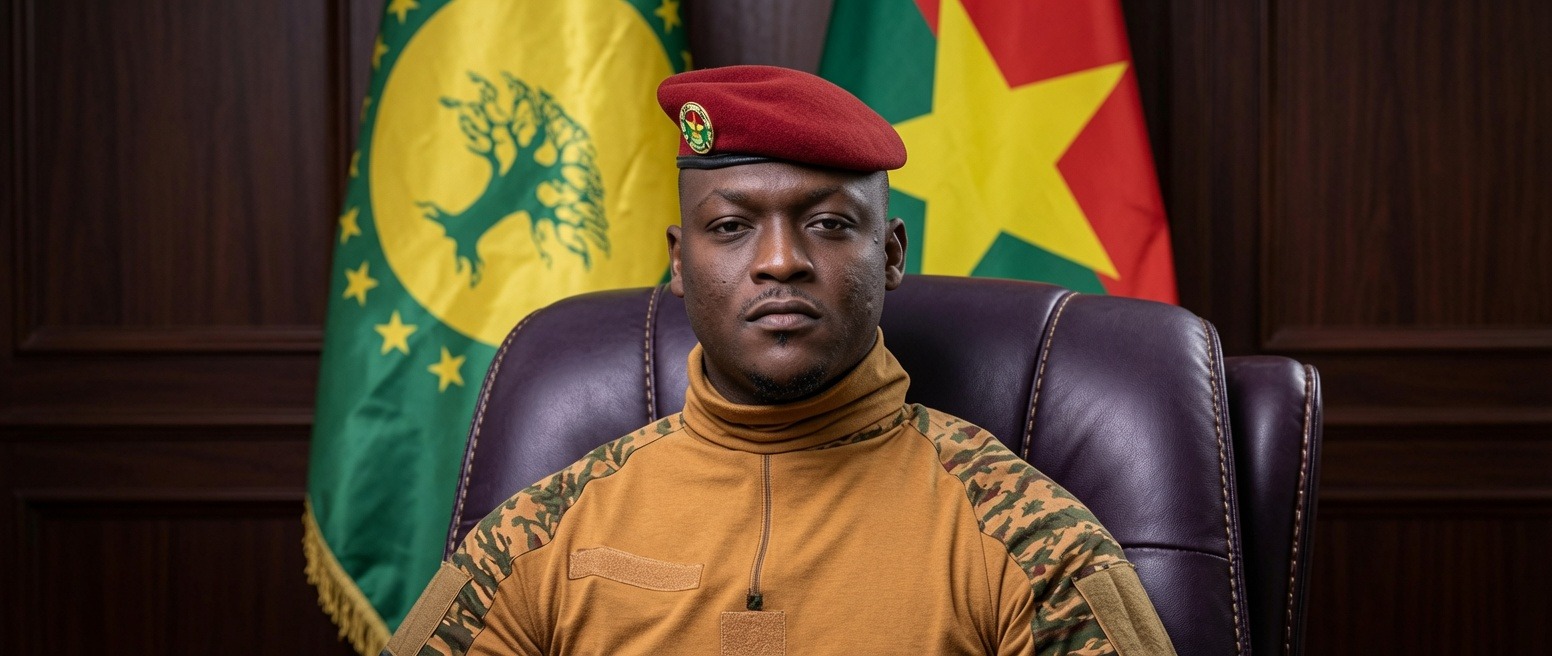
Burkina Faso’s military government has just taken a bold step that could reshape the nation’s future. By unanimously reinstating the death penalty through its transitional legislative assembly, the regime under Captain Ibrahim Traoré has signaled a definitive shift toward harder lines in Ouagadougou. Dubbed with chilling clarity as the end of ‘sentimentalism,’ this legal move—abolished in the country since 2018—is being framed by the executive as a stern measure to restore national resolve. Yet beneath the nationalist rhetoric and claims of fighting treason, many suspect this isn’t just about justice. It’s about elimination. And the primary target appears to be one man: former transitional leader Lieutenant Colonel Paul-Henri Sandaogo Damiba.
Why the timing of the death penalty’s return raises eyebrows
The reintroduction of capital punishment comes as no coincidence to seasoned analysts. With Damiba already facing charges of high treason and conspiracy against state security, the legal overhaul paves the way for prosecutors to seek the ultimate penalty when his trial commences. By stripping away any possibility of clemency under the banner of rejecting “sentimentalism,” the Traoré administration is not just sending a message—it’s issuing a warning. A warning to political opponents. A warning to dissenters within the armed forces. And above all, a warning to Damiba himself.
From revolutionary savior to condemned enemy: the Damiba paradox
The irony is as sharp as it is bitter. The same man once hailed as a savior of the nation now stands accused of the very crimes he once justified. The current regime’s relentless judicial pursuit of Damiba mirrors the very contradictions that have fueled Burkina Faso’s cycle of coups and counter-coups. Consider this grim symmetry:
- January 2022: Damiba overthrew President Roch Marc Christian Kaboré, arguing his actions were a ‘patriotic surge’ to save the country. His supporters celebrated his rise as liberation.
- September 2022: Ibrahim Traoré, once a loyal ally, removed Damiba in an identical maneuver—only this time, the narrative shifted. What was once ‘patriotism’ became ‘high treason.’ The tools of power that Damiba wielded are now being turned against him.
This reversal isn’t just poetic justice—it’s a dangerous precedent. When justice becomes a political weapon, the line between conviction and vengeance blurs. And in Burkina Faso, that line has already been crossed.
Terror as statecraft: the risks of weaponizing the death penalty
The Traoré administration’s insistence on ending “sentimentalism” in favor of state terror may provide short-term control, but it risks plunging the country deeper into instability. Justice, as history has shown in Burkina Faso and across the Sahel, cannot be divorced from politics when used to punish former allies or deter future rivals. Each execution or death sentence handed down for political reasons doesn’t just silence one voice—it fuels the cycle of retaliation, radicalization, and distrust.
Those who today restore capital punishment to condemn yesterday’s coup leaders must remember a painful truth: in the world of military takeovers, today’s executioner is often tomorrow’s defendant. The chilling slogan ‘sentimentalism is over’ may sound decisive, but it could ultimately be a self-fulfilling prophecy—one that buries Burkina Faso’s fragile democracy beneath a mountain of unresolved vendettas.
What lies ahead: a nation on the brink of deeper division
As Burkina Faso prepares for Damiba’s trial under the shadow of the death penalty, the nation stands at a crossroads. Will the return of capital punishment bring stability, as the regime claims? Or will it merely escalate tensions, deepen fractures within the military, and push more citizens toward disillusionment or extremism? One thing is clear: history rarely forgives those who trade justice for vengeance. And in Burkina Faso, the cost of that gamble may be far greater than the regime bargained for.