Burkina Faso, Mali and Niger jointly bid for 2032 Africa Cup of Nations amid enduring security crisis
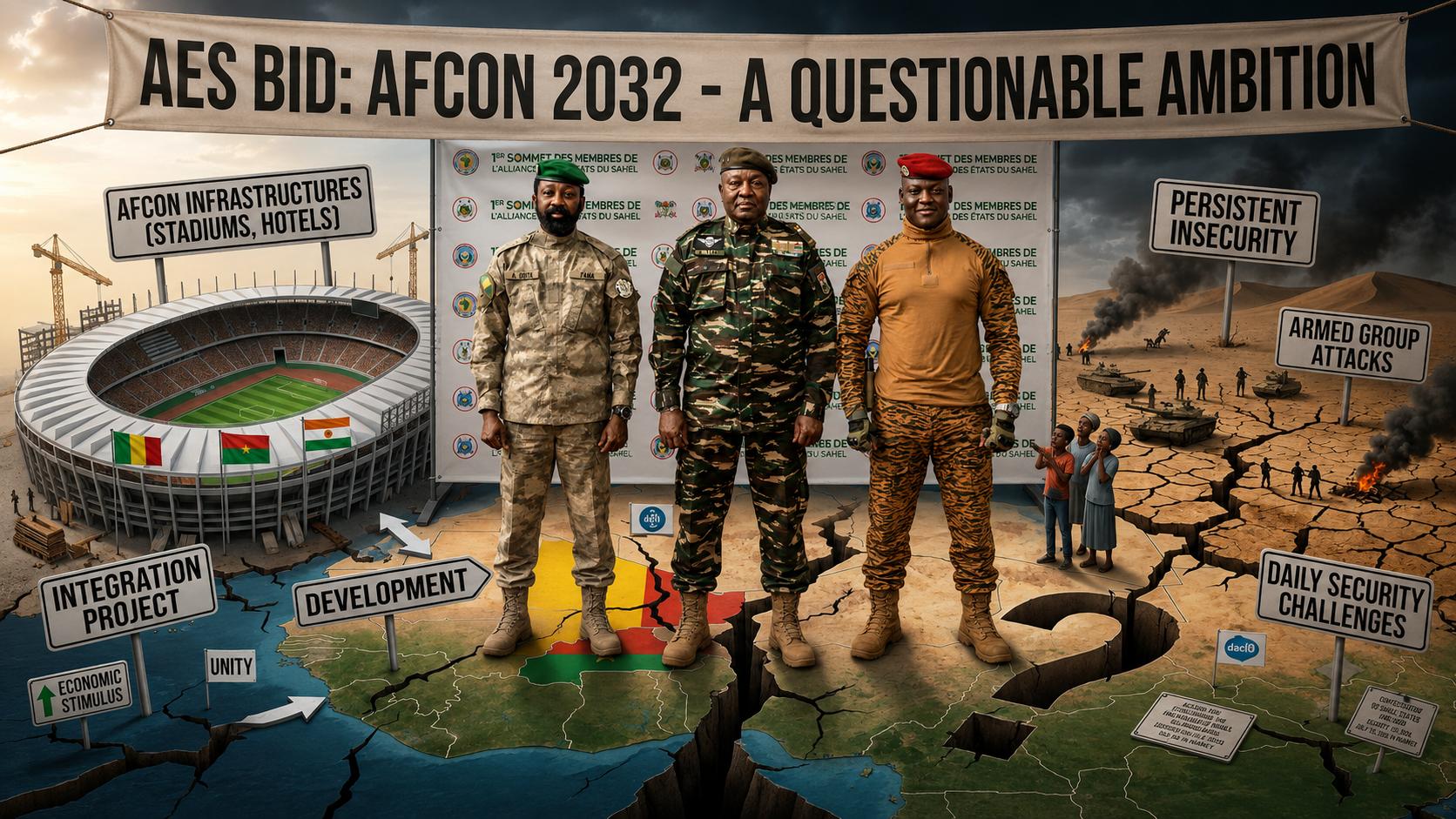
Burkina Faso, Mali and Niger have submitted a joint bid to host the 2032 Africa Cup of Nations (AFCON), positioning this initiative as a symbol of unity within the Alliance of Sahel States (AES). While the move aims to project confidence across the continent, it has sparked debate about whether these nations currently possess the minimal security and stability required to execute Africa’s premier football tournament.
The challenge of hosting AFCON extends far beyond stadium construction. A successful bid must ensure the safety of athletes, officials, journalists, supporters and the hundreds of thousands of visitors expected over several weeks. It is precisely this requirement that has cast doubt on the feasibility of the Sahel trio’s joint proposal.
Since military-led governments took power in Burkina Faso, Mali and Niger through coups, restoring security and regaining control over insurgent-held territories have been central to their legitimacy. Yet years later, the security situation remains dire. Civilian and military casualties continue to rise, key infrastructure faces repeated attacks, and large parts of all three countries remain under severe threat.
In light of these conditions, some analysts argue that pursuing AFCON hosting rights may be premature. Before aspiring to welcome thousands of international tourists and foreign delegations, critics contend, authorities should first demonstrate that local populations can move and live safely across these territories.
The logistical hurdles are equally daunting. Hosting AFCON demands high-performance road and air transport networks, a robust hotel sector, advanced medical facilities and a reliable security apparatus. Meeting these standards requires substantial investment at a time when all three nations are prioritizing defense spending to combat ongoing insurgencies.
The international credibility of the bid is another critical factor. Federations, sponsors and broadcasting partners prioritize stability above all else to mitigate risk. Any ongoing violence or uncertainty could significantly undermine the bid’s evaluation.
This initiative has reignited discussions about national priorities. For many citizens, the most pressing victory expected from military authorities is the restoration of daily security. The coups that overthrew democratically elected leaders were largely justified by promises of greater effectiveness against armed groups. Yet persistent insecurity in multiple regions raises questions about the real impact of these transitions.
In this climate, voices are growing louder calling for Burkina Faso, Mali and Niger to first achieve tangible improvements in security, governance and stability before pursuing AFCON hosting rights. Organizing such a high-profile event demands ironclad assurances not only for participants, but also for the local population.
While a successful AFCON bid can serve as a unifying project and catalyst for development, its credibility hinges on tangible progress rather than political rhetoric. Until security is durably restored, infrastructure strengthened and public trust rebuilt, many observers will continue to argue that the priority lies not in hosting a continental tournament, but in ensuring the basic safety and well-being of all citizens.