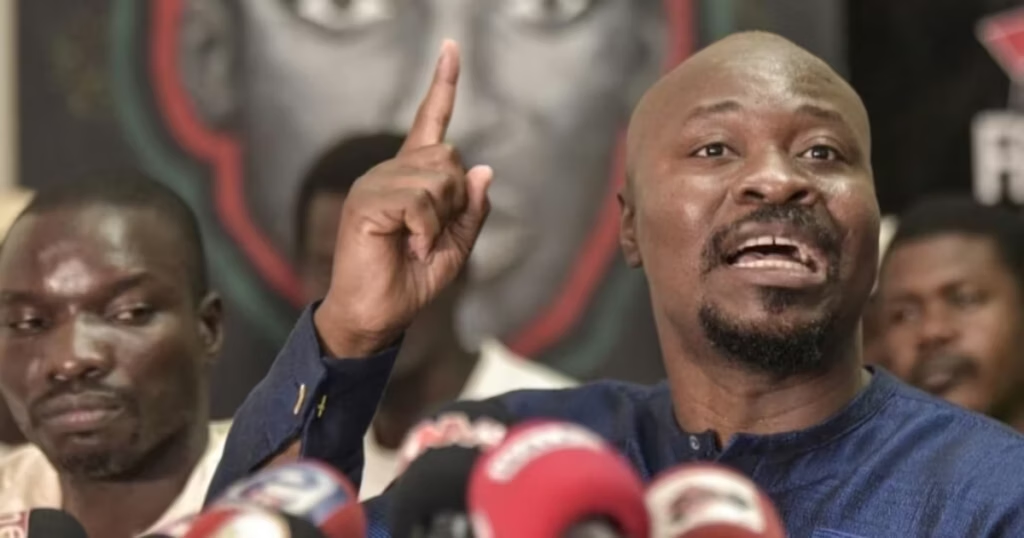
In a recent parliamentary session, Member of Parliament Guy Marius Sagna disclosed 1.7 billion West African CFA francs received by Ousmane Sonko during his tenure as Prime Minister. These funds, Sagna emphasized, were allocated without any institutional oversight, raising serious questions about transparency in Senegal’s political finance system.
Contradictions in political funding discourse
While Sagna acknowledged that the legal framework allowed these disbursements, he questioned the lack of accountability surrounding these funds—particularly as they mirror the opaque financial practices reportedly used by President Bassirou Diomaye Faye. According to Sagna’s statements, the President controls over 8 billion F CFA across multiple unregulated financial channels, including special funds and sovereign reserves.
This revelation has intensified scrutiny on Ousmane Sonko, who has long positioned himself as a champion of financial transparency. Sagna pointed out the stark contrast between Sonko’s public advocacy for strict oversight of political funds and his own receipt of 1.7 billion F CFA without institutional checks. In a pointed social media post, Sagna quipped, “Is this the sorcery of some politicians? Sorcerers, is this acceptable?”, highlighting what he sees as hypocrisy in Sonko’s stance.
Public debate on political finance transparency
The disclosure has sparked a broader conversation about the management of political funds in Senegal. Critics argue that the current system enables unsupervised financial flows, undermining public trust in governance. Sagna’s remarks have amplified calls for reform, particularly as citizens demand greater clarity on how public funds are allocated and utilized by political leaders.
As Senegal navigates these financial transparency challenges, the debate over political funding continues to evolve, with implications for both legislative accountability and public confidence in the country’s democratic institutions.