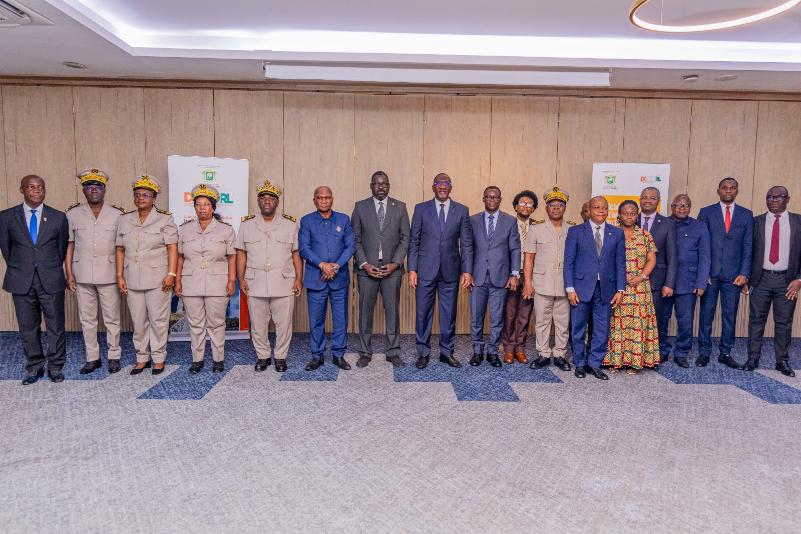
The Minister of Planning and Development, Dr. Souleymane DiarraSSouba, led a pivotal national workshop in Abidjan today, marking a decisive step toward validating the Côte d’Ivoire National Territorial Planning Scheme (SNAT CI-2045). The gathering convened key stakeholders including government institutions, prefectural officials, local authorities, technical and financial partners, public administrations, private sector representatives, civil society, academic experts, and media professionals.
The workshop sets the stage for adopting the country’s first national reference framework for territorial planning. Once implemented, the SNAT CI-2045 will equip the state with a strategic roadmap to guide public and private investments, enhance government efficiency, and foster balanced regional development across Côte d’Ivoire.
Under the leadership of President Alassane Ouattara, the Ivorian government is advancing its national strategic planning framework to align with ongoing economic, social, and environmental transformations. Territorial planning plays a central role in this vision by ensuring investments are strategically distributed, regional strengths are leveraged, and development policies are harmonized.
The SNAT CI-2045 is designed as the long-term spatial development blueprint for Côte d’Ivoire. It defines the strategic placement of public and private investments while aligning state, local, and development actors around tailored regional priorities. This ensures each area contributes meaningfully to national progress.
Dr. Souleymane DiarraSSouba emphasized: “The 2026-2030 National Development Plan (PND) outlines medium-term priorities and investments to drive national growth. The SNAT CI-2045 translates these into a long-term territorial vision, serving as the foundation for future National Development Plans. Together, these frameworks ensure coherent public action nationwide. Our mandate—to ensure every region plays a vital role in national development—requires that territorial planning remains at the forefront of our strategy.”
The validated framework reflects a collaborative, multi-scale process rooted in scientific analysis and broad participation. It addresses critical challenges such as reducing regional disparities, managing urban expansion, boosting territorial competitiveness, strengthening local governance, preserving natural resources, and deepening regional integration.
The SNAT envisions a Côte d’Ivoire where all territories are resilient, competitive, and share in shared prosperity. It is structured around five strategic pillars: balanced territorial development, efficient urban-rural networks, enhanced local governance, a high-performance and inclusive economy, and accelerated climate transition.
Following the workshop, the draft Scheme will proceed to government approval before parliamentary adoption. Once enacted, Côte d’Ivoire will have its first national territorial planning framework—a guiding tool to steer state investments toward high-impact regions and promote balanced national development.