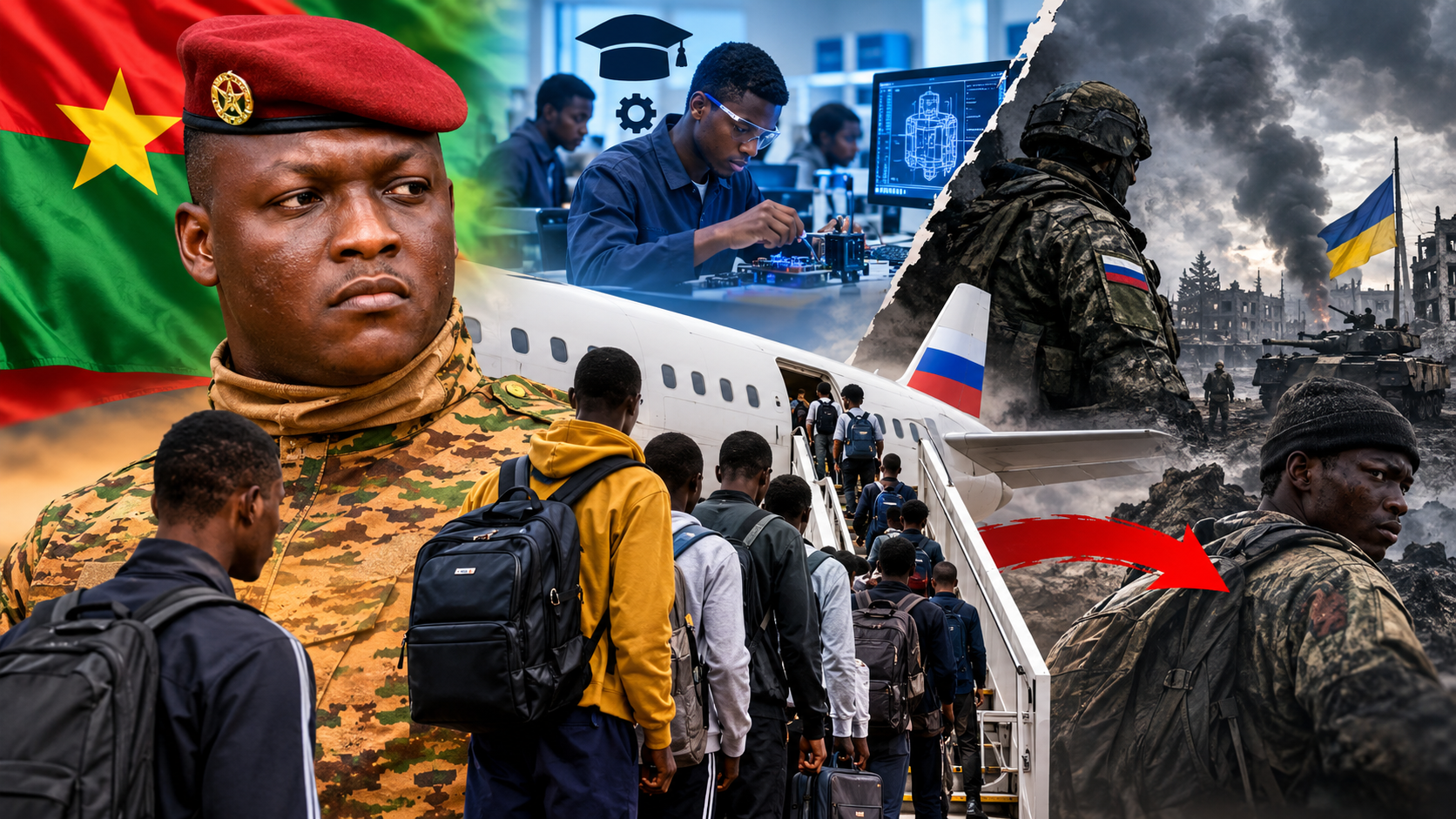
As Burkina Faso prepares to send a new wave of young citizens to Russia for allegedly advanced technological training, critics are questioning whether these individuals are being set up for a far more perilous fate. The initiative, championed by Captain Ibrahim Traoré, promises cutting-edge education and skills development, but growing skepticism surrounds the true intentions behind the program. In a nation already grappling with security threats and economic challenges, the debate over this controversial move is intensifying.
From technological promise to potential battlefield exposure
The official narrative frames the partnership with Russia as a golden opportunity for Burkinabè youth to acquire high-level technical and scientific expertise. Yet, the timing and context of the program raise serious concerns. Moscow’s deep involvement in the war in Ukraine casts a long shadow over such initiatives. Past cases involving foreign recruits in Russia often lured by misleading job or study offers have ended with individuals being sent to the front lines, fueling fears that a similar fate may await Burkinabè trainees.
What safeguards are in place to ensure these young people do not become unwilling participants in a foreign conflict? The silence from Burkinabè authorities on critical details only amplifies the unease. No clear numbers have been provided on how many will be sent, which Russian institutions will host them, or what guarantees exist for their safe return. Without concrete answers, families are left to wonder whether their children are truly heading toward education or into harm’s way.
Broken promises: the shift from domestic to foreign training
This initiative starkly contradicts Captain Traoré’s earlier stance on youth education. Only months ago, he emphasized the importance of training young Burkinabè within national borders to build local technological sovereignty. The current proposal sending them abroad seems to mark a U-turn, raising doubts about the government’s commitment to its own educational and developmental priorities. If Burkina Faso possesses the resources and will to train its youth, why not invest in domestic infrastructure, universities, and research centers instead?
The contradiction is glaring. Promising to cultivate homegrown talent on national soil and then redirecting that talent abroad undermines both trust and the nation’s long-term goals. For a country still recovering from repeated crises, this inconsistency cannot be overlooked.
Public skepticism and the unanswered questions
The government’s vague assurances have done little to quell public worry. Key questions remain unaddressed: What specific technologies will these young people be trained in? What legal frameworks will govern their stay in Russia? Will their diplomas be recognized in Burkina Faso? Most critically, how will authorities prevent any form of military conscription whether overt or covert during their time abroad?
Lack of transparency: No public list of participating institutions or students has been published.
Uncertain return guarantees: No formal agreements outline the conditions for repatriation.
Potential exploitation: Historical precedents involving African recruits in Russia suggest a risk of manipulation.
The opacity surrounding the program fuels speculation. Is this collaboration driven by genuine educational goals, or is it a covert strategy with unintended consequences? As the government remains tight-lipped, citizens are left to interpret the silence and that silence speaks volumes.
Protecting the youth: a duty beyond rhetoric
At its core, this issue is about safeguarding a generation. Burkina Faso’s youth represent the future of the nation engineers, scientists, and innovators who could drive economic growth and technological progress. Sending them abroad under unclear circumstances not only risks their lives but also squanders an opportunity to strengthen national capacity.
The government must move beyond declarations of intent and deliver tangible assurances. Families deserve clarity on the program’s objectives, safety measures, and the long-term benefits for their children and the country. Without these guarantees, the initiative risks being seen not as an investment in the future, but as a gamble with irreparable costs.
For Ibrahim Traoré, the choice is clear: either he upholds his promises to protect and empower the youth at home, or his leadership risks becoming synonymous with a policy that sends them into the unknown. The nation will be watching and waiting for answers.
By Aïcha Abdou — Journalist