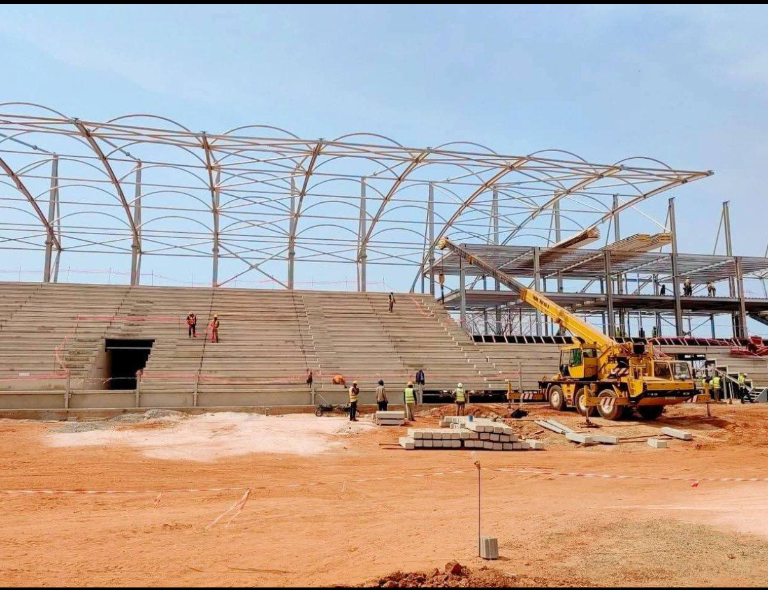
Public scrutiny intensifies over financial origins of Burkina Faso’s new stadium
The announcement of a 15,000-seat stadium in Koudougou has ignited discussions across Burkina Faso about who will ultimately bear the financial burden. While authorities celebrate the infrastructure project as a milestone for local sports development, critical questions remain unanswered about the funding mechanisms behind this $60 million initiative. Citizens and analysts demand clarity on whether this investment will rely solely on public coffers or involve international partnerships.
Behind the project announcement lies financial ambiguity
Positioned as part of the Presidential Initiative for Sports Excellence (IP-RELIS), the stadium project promises to boost Burkina Faso’s sporting infrastructure. With construction slated to begin imminently, officials have yet to disclose essential financial details including the project’s total cost, payment schedule, or funding sources. The lack of transparency has fueled speculation about potential foreign investment or debt financing arrangements.
Site preparation activities are reportedly underway, yet the public remains in the dark about:
- The breakdown of projected construction costs
- Whether financing will come from domestic revenue or international partners
- The role of state-owned agencies in financial commitments
- Potential guarantees or repayment terms if external funding is involved
Turkish construction firm Integral Sport appointed as executor
The Turkish construction company Integral Sport has been selected to build the stadium in partnership with Burkina Faso’s Faso Mêbo Agency. This same consortium is currently constructing the 15,000-capacity stadium in Bobo-Dioulasso, suggesting a standardized approach to sports infrastructure development.
While Integral Sport’s involvement demonstrates technical capacity, their role remains limited to construction services unless otherwise specified in contractual agreements. The company’s exact financial contribution remains unspecified, leaving observers to question whether:
- The project operates under a traditional public works contract
- Turkish government or financial institutions are providing funding
- A build-operate-transfer model is being implemented
- Private sector investors are participating through risk-sharing agreements
State institutions’ financial commitments remain undefined
The IP-RELIS framework positions the stadium project as a government priority, but this designation doesn’t automatically confirm full state funding. The Faso Mêbo Agency’s operational involvement appears focused on execution rather than financing, raising questions about:
- Whether government budgets have allocated specific line items
- The extent of local funding compared to potential external partners
- How construction milestones will be tied to payment schedules
- Whether maintenance and operational costs have been budgeted
Calls grow for financial transparency in infrastructure projects
The absence of verifiable financial information contrasts sharply with the public’s right to understand how taxpayer resources are being allocated. For citizens invested in Burkina Faso’s development, key transparency measures should include:
- Published cost estimates for each construction phase
- Detailed funding source breakdowns
- Contract award procedures and selection criteria
- Financial guarantees or security instruments involved
- Independent cost-benefit analysis of the project
Without access to tender documents or financial memoranda, citizens cannot properly assess whether this infrastructure represents sound public investment or potential debt burden.
Looking beyond the announcement: what’s next for project financing?
The stadium’s social and economic impact will ultimately depend on transparent financial arrangements. As construction preparations proceed, stakeholders await clarity on:
- Whether financing comes through sovereign debt instruments
- The presence of international development partners
- Revenue generation models for stadium operations
- Accountability mechanisms for project completion
- Performance guarantees from construction partners
Until concrete financial information is released, the true cost of Burkina Faso’s flagship sports facility will remain speculative. Citizens deserve to understand not just the stadium’s capacity, but the financial implications that will shape its legacy for generations.
