Armed Islamist militants have carried out a series of brutal attacks in western Niger, resulting in the deaths of 30 civilians, including four children, along with five captured fighters. The Islamic State in the Sahel (EIS) has been identified as the perpetrator of these violent acts, which Human Rights Watch has condemned as war crimes.
On January 18, militants from the EIS executed 31 men and boys in the village of Bossieye in retaliation for residents refusing to pay the zakat—an Islamic tax imposed by the group—and for joining pro-government militias. A second attack on January 26 in the village of Alfaga Daweyzé Koira left four men dead and five wounded after assailants opened fire on a crowd defending a villager accused of collaborating with the military. Both villages are located in the Tillabéri region, a hotspot for EIS activity and government counterinsurgency operations for the past decade.
“The EIS is deliberately targeting civilians in the Tillabéri region,” said Ilaria Allegrozzi, Senior Sahel Researcher at Human Rights Watch. “These recent massacres are part of a disturbing pattern of atrocities committed by the group against civilians, demonstrating a complete disregard for human life.”
Between January 21 and February 4, Human Rights Watch conducted remote interviews with 13 individuals, including six attack witnesses and seven local activists, journalists, and community leaders. On February 6, a letter outlining findings was sent to the junta’s cabinet, requesting a government response, which remains unanswered.
While the EIS has not claimed responsibility, witnesses reported that the attackers wore red-striped turbans, a signature seen in previous assaults. In November 2025, EIS militants visited Bossieye on six motorcycles, demanding residents pay the zakat within a month. A 45-year-old resident revealed that the village chief urged locals to stop funding the armed group and instead join the pro-government militia. “For the chief, it was unacceptable to keep giving our cattle and millet to a few men on six motorcycles,” he explained. “That day, I stood up and told the chief to be careful. I said, ‘It’s not the trunk of the elephant you should fear, but where the trunk comes from.’ The chief didn’t listen. And the elephant came.”
By late 2025, most residents of Bossieye—primarily from the Zarma ethnic group—had received military training and weapons to form a militia against the EIS.
Witnesses described the January 18 attack: around noon, over 100 armed assailants arrived on motorcycles, forcing many villagers, including the chief, to flee. The militants went door-to-door, rounding up men and boys, including those at the 1 p.m. mosque prayer. Five arrested men were known to have joined the militia but were unarmed. A woman recounted seeing the militants gather men near the mosque and chief’s home, sparing women and young children. Gunfire was heard afterward.
Two men from the nearby village of Yatakala reported that late on January 18, the son of Bossieye’s chief arrived carrying his father’s body. The son explained that armed men had killed his father and others. The men helped bury the body, alerted the military, and sought assistance.
The next day, Nigerian forces from Operation Borkono—a January campaign against Islamist armed groups—arrived in Bossieye with militiamen, securing the area and allowing villagers to bury the dead.
A 42-year-old man from Yatakala, who visited Bossieye on January 19, saw 31 bodies near the mosque. “The attackers had riddled them with bullets,” he said. “Some were shot in the head, feet, legs, and back.” Another man, 65, described digging four mass graves: “The first held nine bodies; the second, nine more; the third and fourth, six and seven, respectively.”
Human Rights Watch reviewed a list compiled by locals naming 27 men (ages 19–71) and four boys (ages 15–17) among the dead.
On January 26 around 4 p.m., EIS militants arrived in Alfaga Daweyzé Koira on five motorcycles, searching the market for a man accused of aiding the military. Unable to find him, they stormed his home, where a crowd had gathered to defend him. A 35-year-old survivor recalled: “They opened fire on the crowd, killing four men instantly and wounding five others.”
After the militants left, villagers “first helped evacuate the injured, then buried the four victims in individual graves at the village cemetery,” said a 37-year-old man.
Soldiers arrived in Alfaga Daweyzé Koira on January 28, urging the village chief to leave but failing to address the situation of other residents, including the wounded.
Human Rights Watch verified a list from locals naming the deceased (ages 23, 25, 34, and 43) and the wounded (ages 34–60).
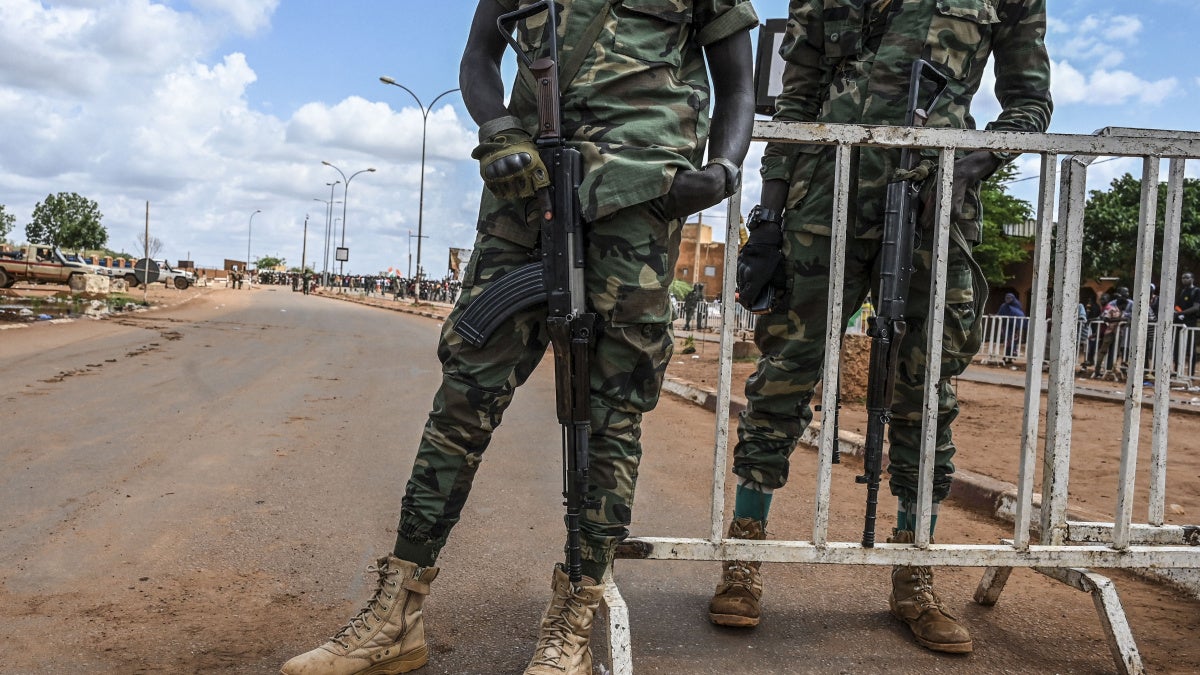
Niger, under military rule since a July 26, 2023 coup led by General Abdourahamane Tiani that ousted President Mohamed Bazoum, has pledged to combat Islamist insurgencies. Security forces have conducted large-scale counterinsurgency operations in Tillabéri, including airstrikes, some of which have resulted in severe violations of international humanitarian law.
The Armed Conflict Location and Event Data Project (ACLED) reported that in 2025, Tillabéri recorded the “highest number of civilian fatalities from attacks” in the central Sahel, primarily attributed to the EIS, followed by Niger’s military and the Support Group for Islam and Muslims (GSIM), an Al-Qaeda-linked armed group.
All parties in Niger’s conflict are bound by Common Article 3 of the 1949 Geneva Conventions and customary international humanitarian law, which prohibit attacks on civilians, mistreatment of detainees, looting, and destruction of civilian property. Those ordering or aiding war crimes may face prosecution. The Nigerien government is obligated to investigate alleged war crimes and hold perpetrators accountable.
“The EIS’s relentless atrocities against civilians are deeply alarming,” concluded Allegrozzi. “Niger’s military authorities must urgently prioritize civilian protection, prosecute abusers, and ensure victims and families receive adequate support.”