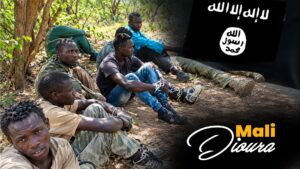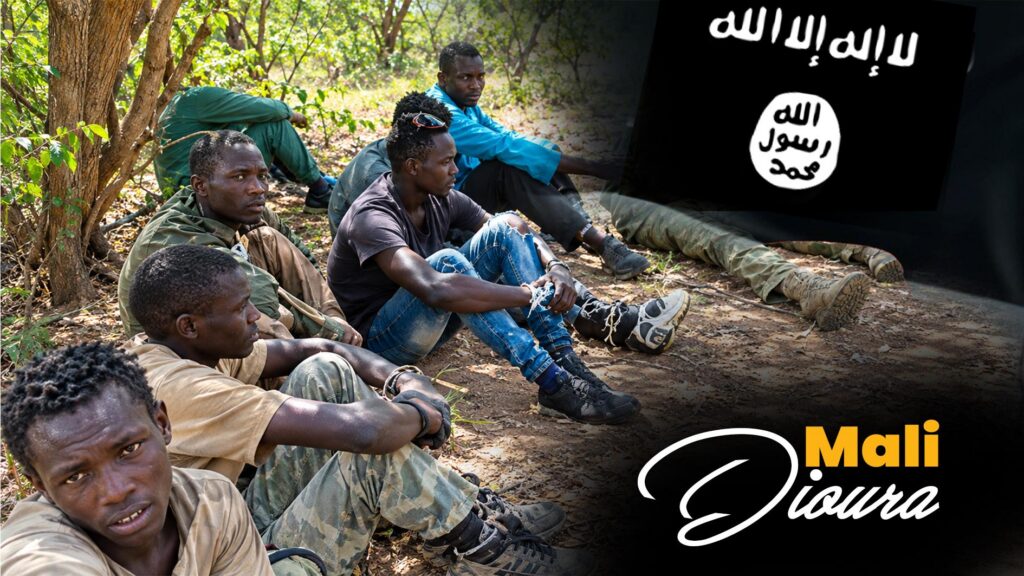
One sentence was meant to close the file. Asked about the situation around Dioura, Mali’s chief of defence staff replied curtly that there was ‘nothing’ there. Hours later, the Group for the Support of Islam and Muslims (JNIM) answered with a communiqué, photographs and video footage — and the question now hanging over Bamako is a blunt one: can an authority that denies a battle still decide how that battle will be remembered?
By claiming the assault with unusual precision, detailing casualties, captives and seized equipment, the Al-Qaeda branch in the Sahel transformed a tactical setback into a credibility test for the military leadership. The stakes reach far beyond one garrison. They touch the morale of troops in the field, the confidence of Malian households, and the junta’s central promise of a war being gradually won.
The question Dioura forces Mali’s junta to answer
For a leadership built on the rhetoric of sovereign reconquest and the steady rise of its armed forces, the calendar could hardly be less forgiving. The claim that no significant event had occurred in Dioura was presumably intended to smother the impact of yet another strategic disappointment. That calculation collapsed the moment the JNIM rushed out a rebuttal as firm as it was granular.
Denying an event before images of it circulate leaves the authorities exposed to a particularly corrosive form of doubt — not only among international observers, but above all among Malians who are increasingly unsure what is really happening on the country’s battlefields.
A rebuttal built to be checked, not just read
The group’s account describes a military rout of rare scale, and it is delivered in a form designed to pre-empt contradiction. Figures are given, categories are listed, and the whole statement is packaged with visual material that its authors clearly expect to be verified and shared.
What the JNIM says Mali’s army lost at Dioura
The human toll claimed by the organisation is heavy by any standard, and it is compounded by the political weight of the prisoners it says it holds.
Fatalities, officers and captives
The group states that 150 Malian soldiers were killed in the fighting, among them senior officers — a colonel and a captain are named by rank. A further 93 troops were taken prisoner, a pool of captives that gives the armed organisation considerable leverage, both as bargaining material and as a symbol it can display.
An inventory of destroyed and captured equipment
The logistical picture painted by the group is equally stark:
- Army losses: 15 military vehicles destroyed, along with more than 100 motorbikes used by patrols.
- Vehicles seized: 6 tactical vehicles and 10 motorbikes captured in working condition.
- Heavy weaponry recovered: 6 14.5 mm guns, 17 DShK-type heavy machine guns, 32 PK machine guns, 10 RPG launchers, 3 mortars and one SPG recoilless cannon.
- Small arms and ammunition: 233 Kalashnikov assault rifles and a large stock of rounds in various calibres.
Photographs and video sequences detailing the booty and the prisoners accompanied the statement, a deliberate move to foreclose any attempt at contestation.
Why Bamako’s information strategy keeps failing
Dioura exposes something more structural than a single bad day: a systemic weakness in the way the crisis is managed. By defaulting to denial or radio silence when operations go wrong, the military command hands the narrative to its opponent. When jihadist militias release checkable images of seized hardware and captured soldiers, official communications fold — and the sense of isolation felt by units deployed at the front only deepens.
This contest over the story matters all the more because the JNIM is demonstrating a capacity for complex operations, pairing a mass assault with the systematic recovery of heavy weapons. Every setback the authorities refuse to acknowledge eats away at trust inside the ranks and strains national cohesion.
Sovereignty rhetoric meets the reality of the front
The ground keeps restating how complicated the security crisis in central and northern Mali remains. Despite the declared strategic break and the turn to new partners, the disruptive capacity of armed groups is intact. The assault on Dioura shows that the JNIM still enjoys the tactical mobility and striking power to unhinge fortified army positions.
Faced with the level of detail produced by the attackers, silence or downplaying cannot pass for military doctrine. For Mali’s junta, the challenge is no longer only about retaking territory. It is about confronting the facts in order to recalibrate a security response that is now being tested to its limits.