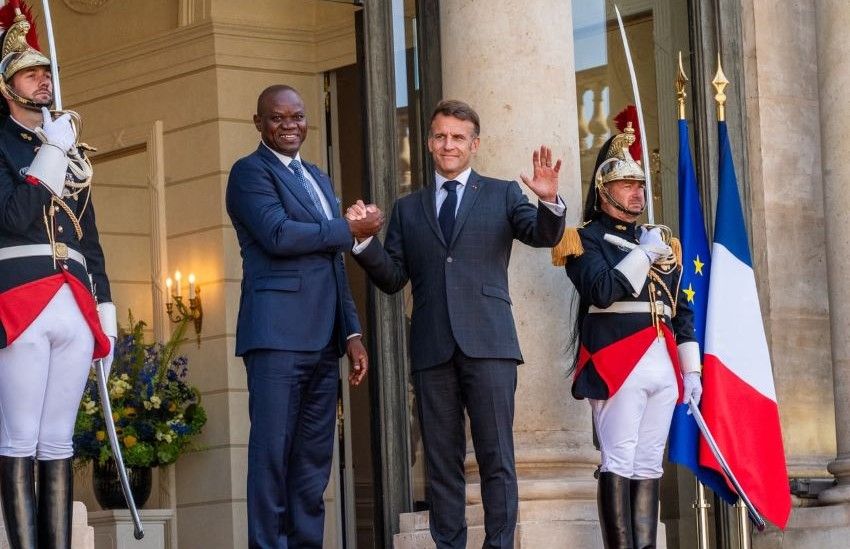
French honors Gabonese President with state visit ceremony in Paris
Paris, Tuesday, July 21, 2026 — The diplomatic language of protocol speaks volumes. When a nation grants its highest state honors to a foreign leader, the gesture transcends mere symbolism. It signals a deliberate choice to elevate bilateral relations to a new level.
By welcoming Gabonese President Brice Clotaire Oligui Nguema with full state honors, France did more than celebrate a diplomatic tradition. It marked the inauguration of a renewed partnership between Paris and Libreville, set against a backdrop of shifting geopolitical dynamics across Africa.
This state visit holds historic significance. It represents the first official trip abroad for President Oligui Nguema since assuming office and the first such reception for a Gabonese head of state since Omar Bongo Ondimba’s visit in October 1984. The unprecedented protocol underscores both nations’ commitment to rebuilding cooperation based on mutual respect, shared interests, and a forward-looking vision of Franco-Gabonese relations.
The language of protocol
The July 20, 2026 ceremony unfolded with meticulous precision at some of France’s most iconic landmarks. At Les Invalides, a bastion of military tradition, President Oligui Nguema received a full military salute before reviewing the troops—a rare honor reserved exclusively for visiting heads of state.
The presidential motorcade then traversed Paris under the escort of twenty-five motorcyclists and 128 cavalrymen from the French Republican Guard. This elaborate formation, seldom deployed, stands among the highest diplomatic distinctions France can bestow upon a foreign leader.
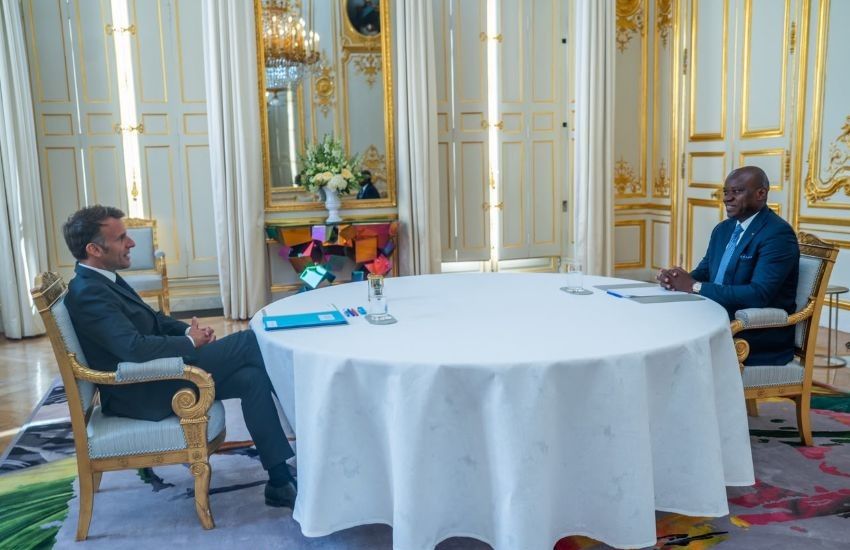
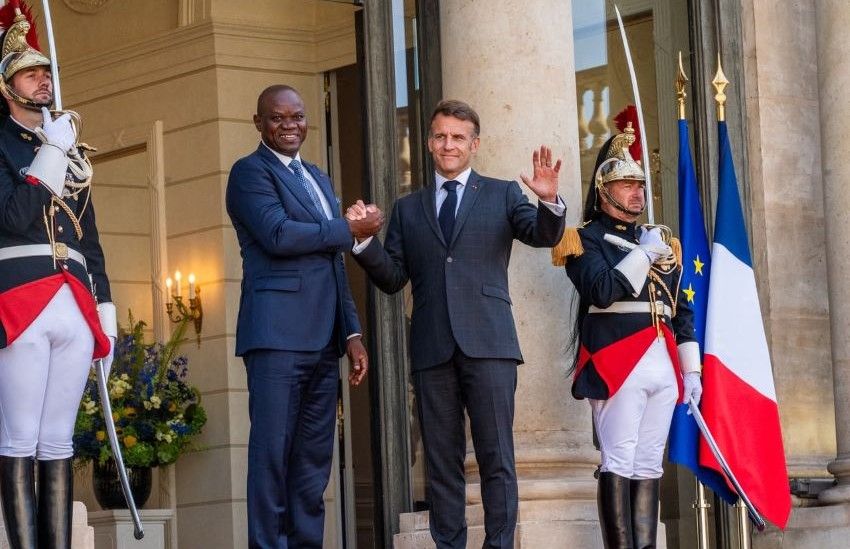
Upon arrival at the Élysée Palace, President Oligui Nguema was greeted by French President Emmanuel Macron. The two leaders exchanged a warm handshake before engaging in hours of strategic discussions focused on strengthening economic, security, and energy ties between their nations.
While the pageantry of the ceremony captivated observers, its true significance lay in the unspoken diplomatic message it conveyed. In international relations, symbols often precede tangible political decisions. By extending this extraordinary welcome, Paris acknowledged Gabon’s growing importance in its African policy framework.
A partnership taking on new dimensions
The evolving cooperation between France and Gabon reflects a deliberate shift away from historical dependencies toward a model centered on mutual investment, industrialization, infrastructure development, security cooperation, and energy transition.
This visit arrives at a pivotal moment as both governments seek to institutionalize a new era of co-development. Discussions at the Élysée covered critical issues poised to redefine the parameters of this renewed partnership.
For Gabon, this diplomatic engagement aligns with its ongoing transformation strategy aimed at enhancing economic sovereignty, boosting local processing of natural resources, modernizing infrastructure, and improving living standards nationwide.
For France, this rapprochement underscores its ambition to forge a new generation of African partnerships rooted in productive investment, skills transfer, and equitable mutual benefits.
A signal with regional implications
The weight of this visit extends far beyond the bilateral relationship. In an era marked by intensified competition among global powers for influence across the African continent, every diplomatic gesture carries immense symbolic weight.
The honors bestowed upon President Oligui Nguema reflect Gabon’s growing international recognition as a stable partner in Central Africa and an active participant in the continent’s emerging development narrative.
Beyond the splendor of military parades and the grandeur of the Élysée Palace, this visit carries a clear message: diplomacy’s symbols are never trivial. They often foreshadow tomorrow’s political directions.
By restoring Franco-Gabonese relations to the highest level of French republican protocol, Paris and Libreville have sent an unambiguous signal. Their partnership has entered a new phase where strategic dialogue, shared economic interests, and concrete outcomes definitively supersede the legacies of the past.
Related posts

Real Madrid vs RB Leipzig: Champions League clash triggers fierce reactions and reshapes group dynamics
Aftermath of sharp defeats and rising tensions The upcoming Real Madrid vs RB Leipzig showdown in...
Lille’s Ligue 1 upset against Brest sparks intense post-match reactions and reshapes title race
The shock 0-1 defeat suffered by Lille against Brest in the 7th matchday of Ligue 1...
Moussa Kaka’s disappearance in Niger: one month on, outrage grows and questions mount
More than a month has passed since Moussa Kaka, a towering figure in Niger’s journalism and...