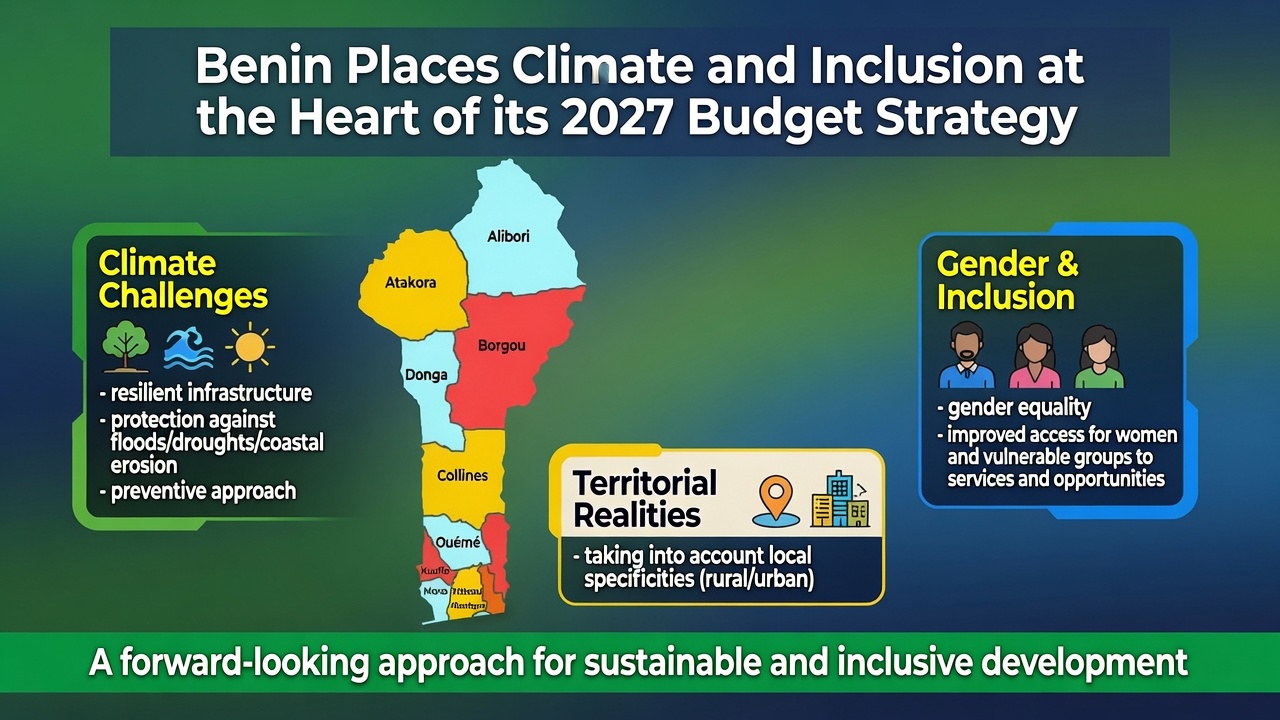
The Republic of Benin has achieved a significant milestone in the modernisation of its public policies with the 2027 budget framework. By placing climate resilience, gender equality, and territorial realities at the core of fiscal planning, the administration demonstrates a forward-thinking approach that transcends conventional budgetary management. This strategic shift reframes public investment as a proactive tool for fostering long-term sustainability and equitable development.
The decision to embed climate considerations into budgetary decisions reflects a broader recognition of Benin’s vulnerability to environmental challenges. Extreme weather events, natural resource depletion, and persistent social inequalities demand a preventive approach—one that prioritises risk mitigation over reactive crisis management. The 2027 budget framework embodies this philosophy by allocating resources to climate-resilient infrastructure, strengthening protections for at-risk communities, and enhancing the country’s capacity to withstand recurring climate-related disasters such as floods, droughts, and coastal erosion.
Climate resilience as a cornerstone of fiscal planning
Incorporating climate risks into budgetary allocations marks a paradigm shift in Benin’s economic governance. This strategic alignment ensures that investments are directed toward durable solutions, reducing the long-term economic and social costs associated with climate-related catastrophes. Beyond immediate disaster response, this approach underscores a commitment to sustainable development, reinforcing the country’s ability to attract international climate financing and partnerships.
Advancing gender equality through budgetary inclusion
Another pivotal aspect of the 2027 budget framework is its emphasis on gender mainstreaming. Recognising that public policies often yield disparate outcomes for women and men, the government is prioritising an inclusive development model. This initiative aims to bridge existing gaps by ensuring equitable access to essential services, economic opportunities, and social protection mechanisms for women, youth, and marginalised groups. By doing so, Benin is not only advancing social justice but also unlocking the untapped potential of half its population to contribute to national progress.
Territorial differentiation for targeted development
Benin’s commitment to integrating territorial realities into budget planning further underscores its dedication to responsive governance. Acknowledging that urban and rural regions face distinct socio-economic challenges, the framework tailors investments to local needs, enhancing the effectiveness of public policies. This decentralised approach ensures that national strategies are not only theoretically sound but also practically aligned with the lived experiences of citizens across the country.
The 2027 budget framework signals a departure from traditional fiscal management, positioning Benin as a regional leader in climate-conscious and inclusive economic planning. By anticipating environmental and social challenges, the government is not merely preparing for crises—it is actively shaping a resilient, equitable future. This strategic foresight is likely to bolster Benin’s appeal to international partners, who increasingly value fiscal policies that integrate sustainability, social equity, and climate adaptation.
At its core, the 2027 budget strategy represents more than a technical exercise; it is a roadmap for sustainable and balanced development. It reflects an ambitious vision for a Benin that is resilient in the face of climate change, inclusive in its growth, and adaptive to the evolving needs of its people. This framework lays the foundation for a future where economic progress is harmonised with environmental stewardship and social justice, ensuring prosperity for all segments of society.