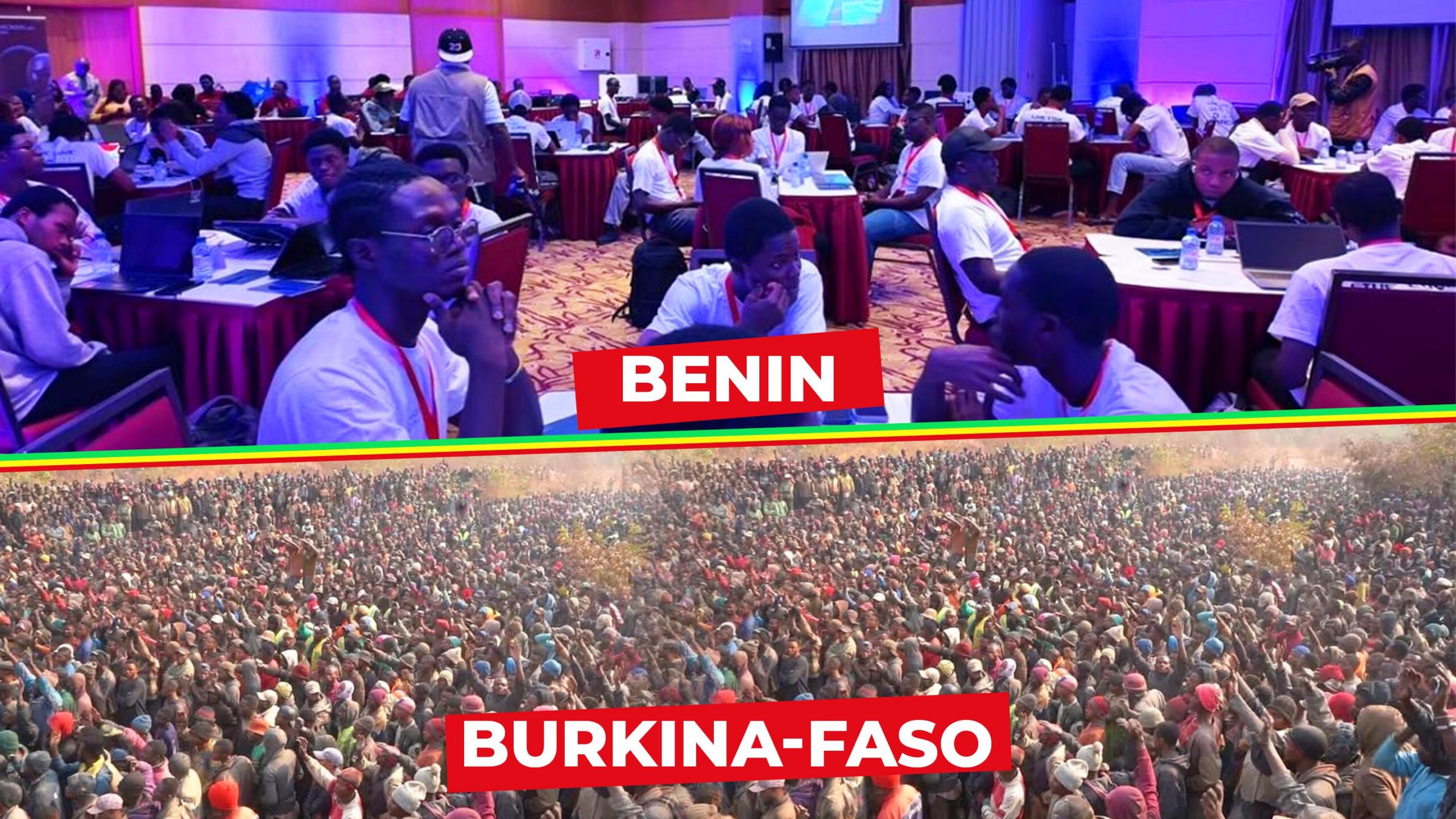
As nations across Africa grapple with competing priorities, the divergent paths taken by Benin and Burkina Faso offer a stark reflection of the continent’s evolving discourse. While one nation invests in shaping its future through innovation, the other confronts pressing social and economic fallout that demands immediate attention. The contrasting developments in these two countries underscore a critical question: what narratives and actions are truly driving progress?
Benin’s strategic focus: nurturing talent amid technological competition
Benin recently hosted the Cyber Africa Forum (CAF), a two-day event that brought together young tech enthusiasts to tackle pressing digital challenges. The competition, held on November 16 and 17, was not merely a spectacle but a carefully structured process designed to identify and cultivate talent. For more than two months leading up to the event, participants underwent rigorous selection rounds, including daily challenges that tested their technical skills and adaptability.
Only the top 20 teams earned a spot in the final round, where they competed to demonstrate their problem-solving abilities and innovate under pressure. This meticulous approach highlights a broader strategy: fostering a competitive ecosystem that aligns youth ambition with market demands. By prioritizing talent identification and professional development, Benin is laying the groundwork for a digital economy that can meet future demands.
The forum’s underlying philosophy goes beyond competition it represents a commitment to long-term capacity building. In today’s world, a nation’s strength is no longer measured solely by military or political influence but by its ability to harness innovation, education, and technological advancement. Investing in digital skills, as Benin is doing, is not just an economic strategy; it is a statement about the country’s vision for sustainable growth.
Burkina Faso’s immediate crisis: displacement and the erosion of livelihoods
While Benin’s focus remains on preparing for the future, Burkina Faso faces a more immediate challenge: the displacement of thousands of artisanal miners, many of whom were recently expelled from neighboring Guinea. These workers, now stranded without stable income, represent a microcosm of the urgent social and economic pressures gripping the nation. Their plight raises fundamental questions about governance and crisis response.
For the affected populations, the stakes could not be higher. The loss of livelihoods directly impacts families, local economies, and social stability. Yet the discourse surrounding this crisis often overshadows the practical steps needed to address it. How many individuals are impacted? What measures are in place to support their return and reintegration? Are there programs for professional retraining or economic diversification?
Responsible leadership demands transparent, actionable solutions not rhetorical posturing. Political gestures, no matter how grand, cannot substitute for concrete policies that stabilize communities and restore economic opportunities. The contrast between Burkina Faso’s current struggles and Benin’s forward-looking approach highlights a pressing dilemma: are leaders prioritizing immediate challenges or laying the groundwork for future resilience?
Reimagining Africa’s development: where policy meets reality
It would be simplistic to frame this contrast as a competition between two nations. The realities of Benin and Burkina Faso differ vastly, and each faces unique challenges. However, the juxtaposition of their current trajectories invites a deeper examination of national priorities.
Africa’s future will be shaped not by headlines or political slogans but by deliberate investments in education, innovation, and economic opportunity. The Cyber Africa Forum exemplifies a proactive stance one that empowers young minds to drive technological progress. Conversely, Burkina Faso’s situation underscores the cost of neglecting social and economic fundamentals.
True progress requires more than mobilizing crowds or crafting compelling narratives. It demands policies that translate ambition into tangible outcomes: jobs, security, and sustainable livelihoods. The choices made today will determine whether African nations can harness their greatest resource their youth or remain mired in recurring cycles of crisis and reaction.
As debates rage over competing visions for the continent’s future, one truth remains clear: development is not declared; it is built one policy, one innovation, and one opportunity at a time.
By Ousmane Tandja — Journalist