Gabon’s Bélinga–Kobe-Kobe iron ore corridor: The hidden dynamics shaping an industrial dream
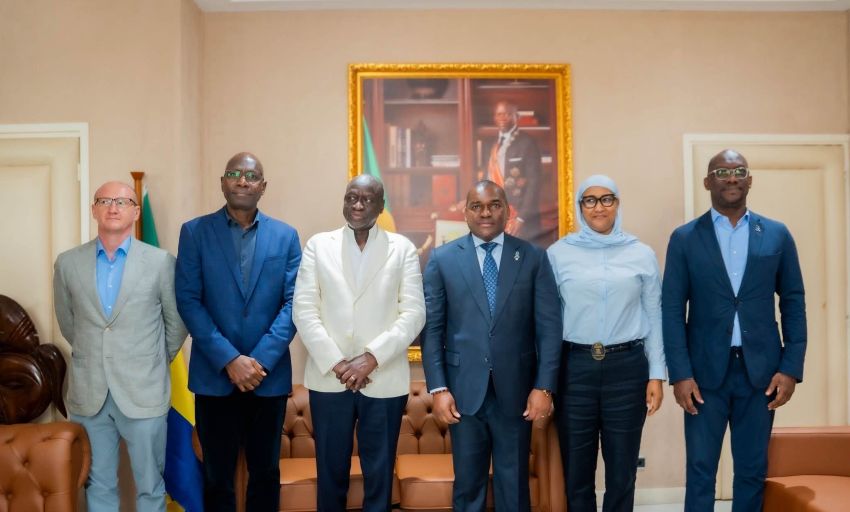
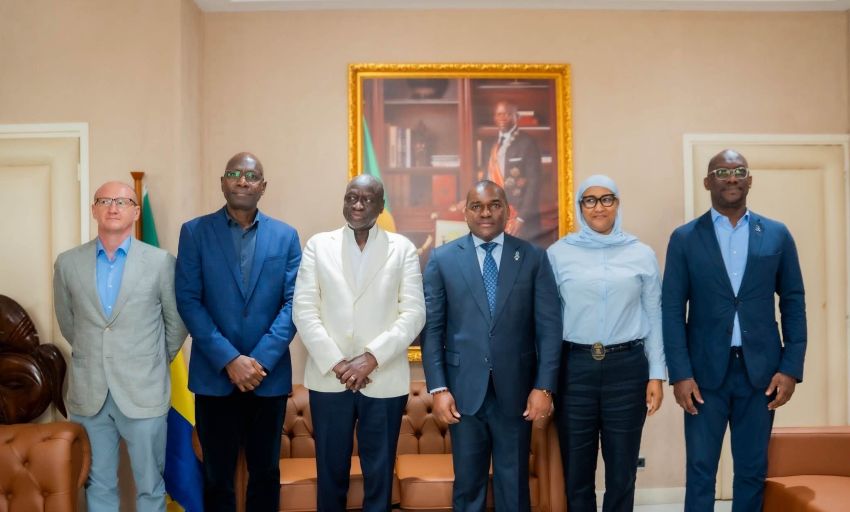
Libreville, November 16, 2026 — Gabon is quietly building one of its most ambitious economic ventures around the Bélinga iron ore deposit and the upcoming Kobe-Kobe mineral port in Ogooué-Ivindo. Beyond mere extraction, the project aims to construct a fully integrated industrial and logistics system. The November 15 visit by Ousmane Diagana, World Bank Vice President for West and Central Africa, to Minister of State for Transport Ulrich Manfoumbi Manfoumbi, underscores the international significance of this initiative.
The visit at the Kobe-Kobe port’s Base Zéro provided a platform to showcase the project’s progress, core components, and partnerships. Libreville is actively seeking financial and industrial partners to convert its natural resources into sustainable wealth. The stakes are high: transforming iron ore into a driver for industrialization, job creation, and economic diversification, rather than just another export commodity.
The unseen gears of a complex partnership network
The corridor’s development has followed a carefully orchestrated timeline since early 2026. Key milestones include a convention signed on April 23 with Africa Global Logistics (AGL) and Algest Investment Bank, marking the official commencement of Kobe-Kobe’s port planning and construction on June 8. July saw an agreement with Swiss trader Trafigura on iron ore marketing, followed by technical and institutional missions in Paris and China to deepen discussions with industrial and potential partners.
This structured approach reflects a deliberate strategy to consolidate the project’s architecture. However, it does not imply all infrastructures or financing are already secured. The announced configuration encompasses twelve interconnected components:
- Mining operations: Fortescue leads the Bélinga deposit extraction
- Rail and port infrastructure: China Harbour Engineering Company handles rail and port development
- Energy supply: Gabon Power Company and Sinohydro manage the energy component
- Rail equipment: American firms Wabtec and Progress Rail supply locomotives and rolling stock
- Access routes: Qatari firm PIH is involved in servitude pathways
- Port operations: AGL will manage Kobe-Kobe’s port facilities
- Commercialization: Trafigura will oversee ore marketing
- Financial structuring: Algest Investment Bank supports the financial framework
- Local transformation: Plans include setting up industrial units
- Skill development: Training programs for Gabonese workers
- Environmental studies: Comprehensive impact assessments
- Social programs: Measures to benefit local communities
From mine to industry: the critical value-added challenge
This integrated strategy sets the corridor apart from traditional mining projects. Extracting iron ore from Bélinga won’t fully unlock its economic potential without a synchronized logistics chain encompassing energy, rail, service roads, equipment, ports, and maritime transport. Yet, the most pivotal challenge lies downstream: Gabon’s ability to process a portion of its ore domestically.
Establishing industrial units, fostering local services, and developing national expertise could elevate the project far beyond mere export revenues. Authorities foresee up to 100,000 direct and indirect jobs, a significant figure for Gabon’s labor market. However, this potential will hinge on the project’s timeline, actual investment mobilization, and the share of jobs accessible to nationals. The November 15 visit by Ousmane Diagana opens a dialogue with a key multilateral institution, though it does not constitute a financing commitment or World Bank pledge. For Libreville, the challenge is to demonstrate the project’s economic, financial, and environmental viability to prospective partners.
The economic sovereignty test: Execution as the ultimate measure
Championed under President Brice Clotaire Oligui Nguema’s vision, the Bélinga–Kobe-Kobe corridor aligns with a broader ambition for economic sovereignty and industrialization. Yet, success won’t be measured by the number of international partners gathered around the table. It will depend on the state’s capacity to coordinate stakeholders, secure financing, control costs, and ensure transparent commitments.
Environmental and social imperatives are equally critical. In a region where ecosystems and local communities must be safeguarded, rigorous studies, preventive measures, and effective impact monitoring are non-negotiable. The industrial promise cannot be built at the expense of the territories involved. If realized as planned, the corridor could reshape Gabon’s relationship with its natural resources, linking extraction, transport, energy, and transformation into a cohesive system. Yet, between ambition and reality lies a pivotal step: execution. The true measure of this strategic project will be found in the completion of its infrastructures, the creation of on-site value, and tangible benefits for local populations.