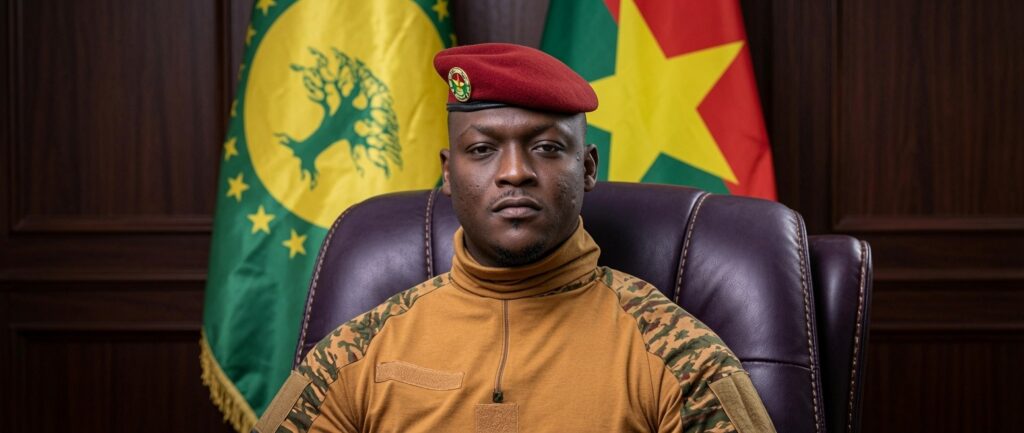
The endorsement of the freshly revised UEMOA convergence pact by Alassane Ouattara, announced on October 23, 2026, marks a pivotal moment for West Africa’s economic bloc. Unlike symbolic gestures of the past, this act introduces a rigorous fiscal framework designed to address the lingering debt imbalances that have plagued the region for years. For Ivory Coast—home to nearly 40% of the UEMOA’s collective GDP—the commitment is anything but ceremonial. It represents a critical step in managing the nation’s debt trajectory and, by extension, safeguarding the stability of the franc CFA pegged to the euro.
Reimagining fiscal discipline in the wake of Senegal’s debt shock
The previous convergence pact, established in 2015 and repeatedly extended, established clear benchmarks: public deficits capped at 3% of GDP, public debt below 70%, inflation under 3%, and no accumulation of arrears. These standards, inspired by the EU’s Maastricht criteria, remained aspirational rather than enforceable. Since 2020, no single UEMOA member has consistently met all four conditions. The pandemic, escalating global interest rates, and Senegal’s shocking debt revision in 2024—revealed under the administration that succeeded Ousmane Sonko’s election—exposed the fragility of the original framework.
The new pact emerges in response to stark realities. Debt ratios have surged: Senegal’s now exceeds 80% of GDP, while Ivory Coast and Togo hover around or above 60%. Sovereign bond yields in the regional market have spiked, with long-term rates breaching 7% in 2024 and 2025—a clear signal that investors demand higher risk premiums. The revised pact aims to restore fiscal discipline as a cornerstone for maintaining the franc CFA’s peg to the euro and advancing the long-delayed Eco currency initiative.
Divergent fiscal paths: Ivory Coast leads, others struggle to keep pace
Ouattara’s signature carries outsized weight because it comes from the region’s economic leader—a country whose GDP growth has consistently ranged between 6% and 7% over the past decade. By embracing stricter fiscal rules, Abidjan is signaling to credit agencies and multilateral lenders, including the IMF, with which it maintains a $3.5 billion Extended Credit Facility approved in 2023.
However, the remaining seven UEMOA members face vastly different realities. Senegal grapples with a debt load far exceeding earlier official estimates, prompting the IMF to briefly suspend disbursements in 2024. Mali, Burkina Faso, and Niger contend with escalating security spending amid instability in the Sahel and reduced engagement with ECOWAS. Benin, better rated in global markets, and Togo, which has successfully issued multiple eurobonds, sit in a more favorable position. Guinea-Bissau, meanwhile, remains under a structural adjustment program.
Can multilateral enforcement turn the tide?
The true test lies not in the written rules, but in their enforcement. The previous pact included semi-annual reviews and warnings, yet compliance remained inconsistent due to a lack of penalties. Ivory Coast’s public endorsement changes the calculus: when the region’s largest economy voluntarily submits to stricter oversight, neighboring capitals face greater diplomatic pressure to follow suit.
The West African Central Bank (BCEAO), headquartered in Dakar, now faces dual pressures: protecting its foreign reserves—which dwindled to barely five months of import coverage by 2024—and continuing to finance member states through public bond issuances. A credible convergence framework gives the central bank breathing room to sustain cautious monetary policy, following a series of rate hikes since 2022. The first joint reviews with the UEMOA Commission, slated for the coming year, will reveal whether the signed agreement translates into budgetary laws that truly align with the new standards.
Defining fiscal rigor in a shifting economic landscape
The revised pact isn’t just about numbers—it’s about credibility. For a currency union tied to the euro and aspiring toward continental monetary integration, fiscal discipline is no longer optional. Whether Ivory Coast and its peers can sustain this new path will determine not only individual economic trajectories, but the very future of UEMOA’s integration project.