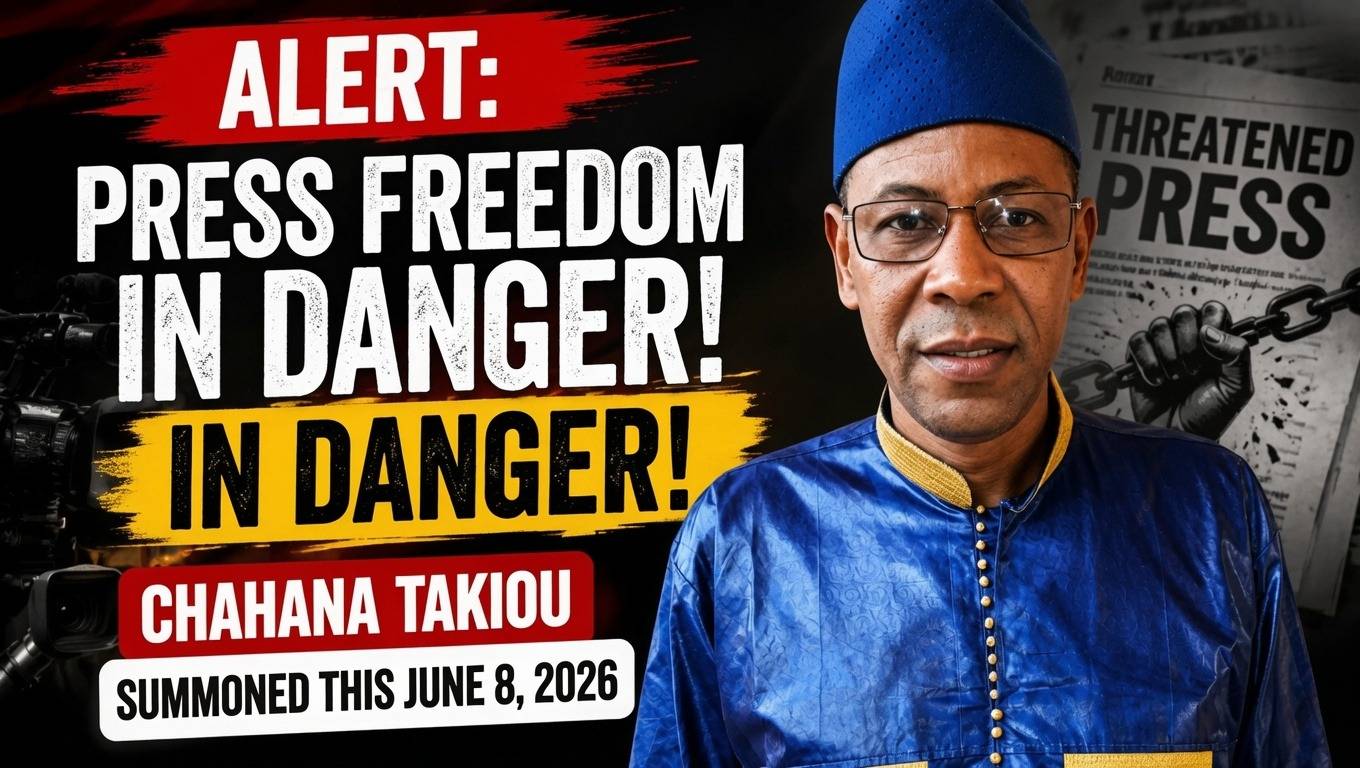
Journalist Chahana Takiou summoned: a new blow to Mali’s struggling press freedom
The director of the weekly newspaper Le 22 Septembre, Chahana Takiou, is set to appear before the cybercrime unit prosecutor in Bamako on June 8, 2026, at 1 p.m. His summons follows sharp public critiques of the military-led government’s handling of political, security, and economic affairs. This case underscores a troubling pattern of judicial intimidation targeting dissenting voices, journalists, and citizens who refuse to endorse the transitional authorities’ official narrative.
A judicial trap disguised as law enforcement
The news sent shockwaves through Mali’s media landscape. Chahana Takiou, a respected journalist and publisher, now faces an investigation under the guise of cybersecurity—a field increasingly weaponized by authorities to silence critics. The cybercrime unit, once intended to combat digital offenses, has evolved into a tool for suppressing free speech. For Takiou, the act of reporting now carries the weight of a potential criminal charge.
Under the pretext of combating online misinformation, the prosecutor’s office has become a weapon against independent journalism. The timing of the summons—following Takiou’s unfiltered analysis of the military’s policies—leaves little doubt about the political motivations behind the move. In Mali today, practicing journalism without fear of retaliation is not just difficult; it is dangerous.
Press freedom suffocates under military rule
The once-vibrant Malian press now operates under suffocating constraints. Freedom of expression, once a cornerstone of the nation’s democratic identity, has been systematically eroded. Journalists live in a climate of fear, forced into self-censorship to avoid imprisonment or worse. Reporting facts that contradict official narratives is no longer a professional duty—it is an act of defiance.
The transitional government demands absolute loyalty, equating independent journalism with treason. Outlets that deviate from the official line face immediate consequences: suspensions, fines, or administrative harassment by the Haute Autorité de la Communication (HAC). Financial strangulation and moral intimidation have become standard tools in silencing the press. In this climate, neutrality is a luxury few can afford.
From summons to disappearances: the escalation of repression
Chahana Takiou’s case is not an isolated incident. It reflects a broader strategy of repression unfolding across Mali. Dissent, whether voiced by politicians, activists, or ordinary citizens on social media, is met with harsh reprisals. The tactics have grown increasingly brutal, with reports of abductions and enforced disappearances rising sharply. Citizens are seized by armed men—often linked to intelligence services—and held in secret detention for weeks without charge. This campaign of fear aims to crush all forms of opposition and impose a stifling silence on public debate.
The cybercrime unit’s summons is merely the latest weapon in this arsenal. It sends a chilling message: even the act of reporting can now be criminalized.
A fractured press under siege
In response to Takiou’s summons, Mali’s press community has rallied in solidarity. Professional unions have issued urgent calls for vigilance, condemning the judicial harassment of a colleague. Yet this collective resistance is fragile. The military-led government’s repressive machinery operates with near-impunity, rendering constitutional protections meaningless. Journalists’ appeals for fairness are met with silence—or worse, further persecution.
Media organizations stress that constructive criticism is vital for national resilience, especially during crises. But the current regime dismisses dissent as destabilization, closing the door to any meaningful democratic dialogue. The message is clear: conformity is the only path to survival.
A nation’s future hangs in the balance
Chahana Takiou’s judicial summons marks a dangerous turning point in Mali’s democratic decline. By targeting a journalist of his stature, the military government sends a stark warning: no dissent will be tolerated. This obsession with enforced unanimity—achieved through intimidation, imprisonment, and disappearances—further isolates Mali from the global community and deepens internal divisions.
As the country grapples with profound security and humanitarian challenges, silencing truth-seekers will not resolve its crises. The fate of independent journalism and civic freedoms in Mali is now being decided in the courtrooms of Bamako. The question remains: will the world stand by as the country’s democratic foundations crumble under the weight of authoritarianism?