Public backlash grows over Mali’s costly Russian military partnership
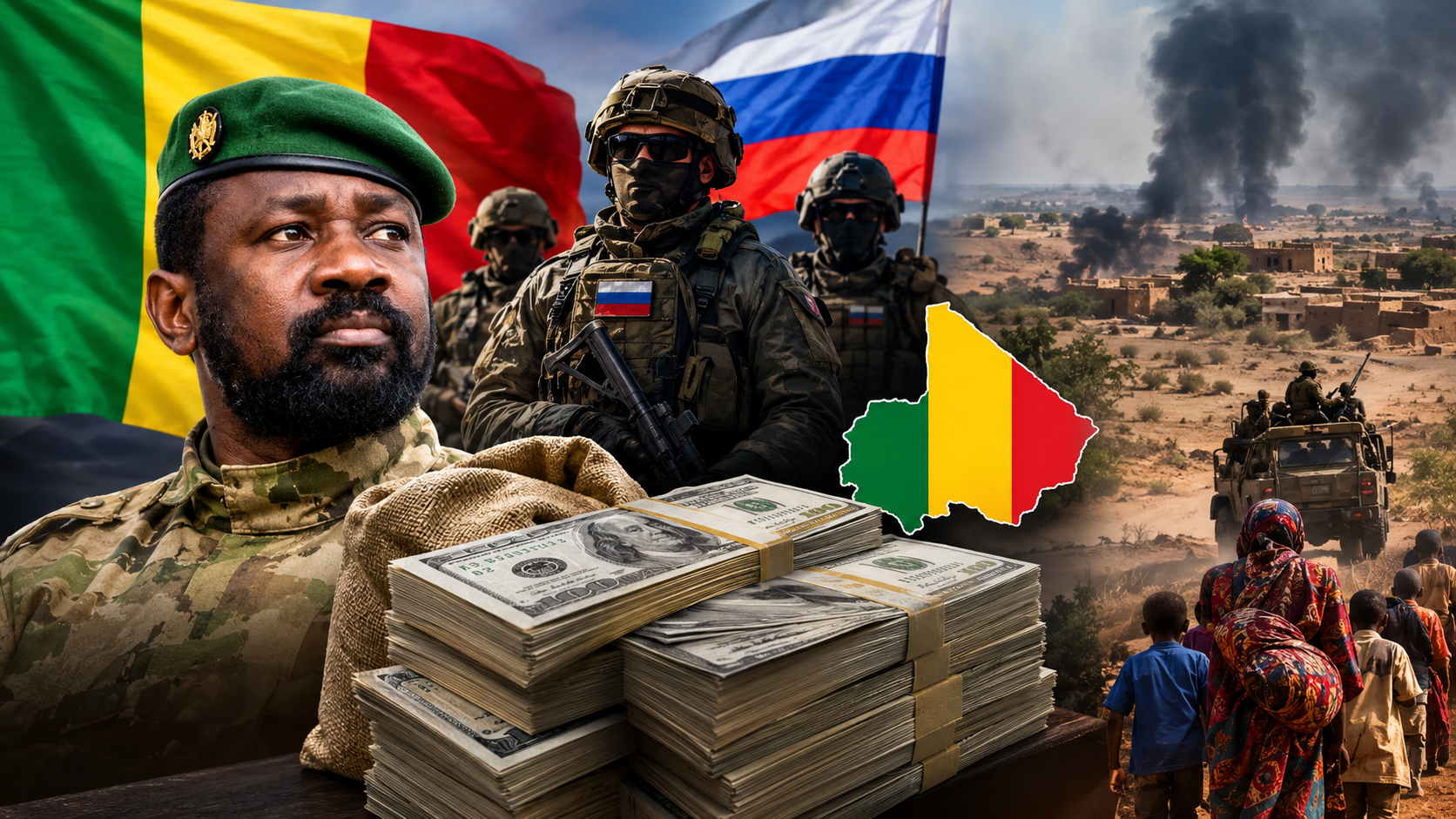
The Malian government’s decision to pivot toward Russian military support first through Wagner Group fighters and later via the Africa Corps framework has sparked intense debate. With expenditures reportedly reaching nearly $1 billion, taxpayers and political observers are demanding accountability for a strategy that promised security but continues to face severe scrutiny.
The sheer scale of the financial commitment raises pressing questions: After diverting vast public funds toward this alliance, what tangible outcomes can Bamako demonstrate to justify such an investment? The answer remains elusive for many, as the human and territorial costs of jihadist violence persist unabated.
From promises of security to persistent insecurity
When Mali’s transitional authorities severed long-standing military ties with Western partners, notably France, they framed the shift as a move toward greater national autonomy. Russian paramilitary forces were positioned as the vanguard of this new strategy, tasked with restoring state authority and reclaiming control over insurgent-held territories. Yet, nearly two years into this partnership, the results have done little to silence critics.
The financial burden is undeniable. Reports suggest that each Russian fighter costs upwards of $10,000 per month a figure that, when multiplied across personnel, equipment, and logistical support, may have consumed a staggering portion of Mali’s defense budget. These funds, critics argue, could have been redirected toward critical civilian needs such as healthcare, education, or infrastructure development in conflict-affected regions. Instead, they have been funneled into a high-stakes gamble with uncertain returns.
A security strategy judged by outcomes, not rhetoric
Security partnerships are not evaluated by the nationality of their participants or the boldness of their announcements. Their success is measured in measurable progress: reduced civilian casualties, stabilized trade routes, reclaimed territory, and restored access to essential services. On these fronts, the Russian military presence in Mali has yet to deliver conclusive evidence of improvement.
Military analysts point to a fundamental paradox: while foreign fighters may bring specialized capabilities, they cannot replace the long-term necessity of building a self-sufficient Malian armed forces. Without indigenous capacity to hold recaptured areas, the security gains risk being temporary. The continued vulnerability of military outposts and the inability to ensure safe passage for civilians underscore the limitations of an externally dependent approach.
The political fallout of unmet expectations
The transition government’s decision to embrace Russian support was framed as an assertion of sovereignty a rejection of perceived foreign interference and a bid for diversified alliances. Yet, this strategic pivot has not been shielded from scrutiny. Citizens and opposition voices are increasingly questioning the transparency of the agreement, the specifics of the financial arrangements, and the absence of publicly verifiable progress reports.
Public debates have intensified around three core demands:
Clear documentation of all payments made to Russian forces or contractors
Transparent disclosure of the roles, missions, and operational timelines of Africa Corps personnel
Independent assessments of security improvements in regions previously under jihadist control
The failure to provide these details has fueled skepticism, with many interpreting the silence as a tacit admission of unmet objectives. In governance, no military partnership should be exempt from evaluation simply because it aligns with the political narrative of the ruling administration.
Wagner to Africa Corps: a change in name, but not in accountability
The rebranding from Wagner Group to Africa Corps represents an organizational shift rather than a substantive transformation. While the new structure may reflect a Kremlin-led consolidation of Russian operations in Africa, it does not inherently translate to improved coordination with Malian forces or enhanced security outcomes.
The true test lies in concrete results: Has the partnership led to fewer attacks on civilians? Are supply routes safer? Has the Malian state regained control over previously contested regions? Without clear answers, the rebranding risks appearing as little more than a cosmetic exercise designed to obscure ongoing challenges.
The human cost of unfulfilled promises
For civilians living in conflict zones, the alliance with Russia has done little to alleviate daily hardships. Families displaced by violence continue to live in camps, farmers are unable to tend their fields, and traders face persistent threats along insecure roads. These communities are not concerned with geopolitical maneuvers or financial disclosures; they demand tangible protection and a return to normalcy.
The $1 billion figure, while staggering in isolation, cannot be divorced from its human context. Each dollar spent should be measured against the number of lives protected, the number of villages reclaimed, and the number of children who can safely attend school. Thus far, the correlation between expenditure and improvement remains unproven.
The credibility gap facing Bamako
As the transitional government navigates this critical juncture, its greatest challenge may not be external opposition but the erosion of public trust. A strategy sold as a path to security and sovereignty is now being evaluated based on its actual deliverables. The longer the absence of tangible results persists, the harder it becomes to justify the financial and political costs of the alliance.
Governance in times of crisis demands more than bold rhetoric; it requires demonstrable progress. The Malian leadership must now confront a pivotal question: Does the Russian military partnership represent a strategic breakthrough or an unsustainable gamble? The answer will define not only the country’s security trajectory but also the credibility of its current leadership.
A partnership in need of re-evaluation
Mali stands at a crossroads. The transition authorities face a dual imperative: to defend their strategic choices and to acknowledge where those choices have fallen short. Transparency will be key not only in financial reporting but in providing verifiable evidence of security gains. Without such clarity, the partnership risks being seen as an end in itself rather than a means to an end.
The $1 billion investment is not merely a financial transaction; it is a social contract between the government and its people. Citizens have a right to expect that their sacrifices through taxes and vulnerability will yield lasting peace. Until such expectations are met, the alliance with Russia will remain mired in controversy, its long-term viability dependent on results yet to materialize.
By Ousmane Tandja — Journalist