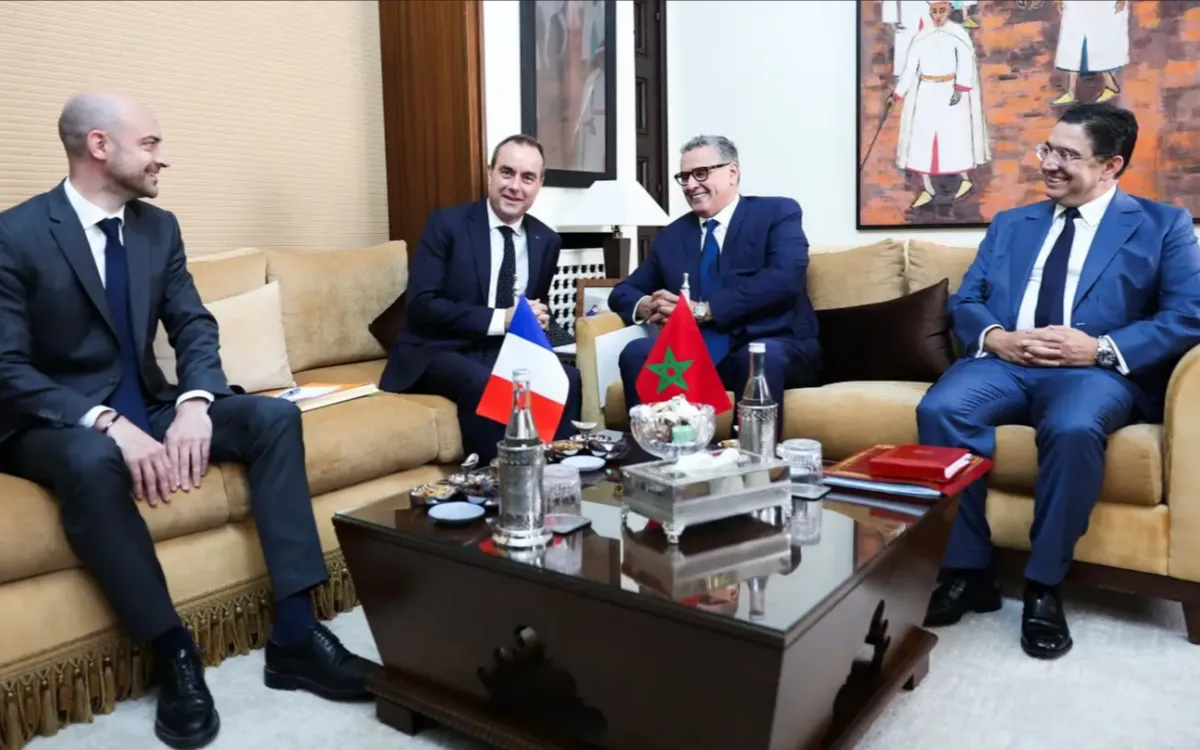
The France-Morocco treaty currently under negotiation marks a pivotal moment in the bilateral relationship, aiming to establish a robust, future-oriented framework for cooperation. This landmark agreement will be France’s first bilateral treaty with a non-EU country, signaling a new chapter in diplomatic ties.
French Interior Minister Sébastien Lecornu unveiled this initiative during a high-level meeting in Rabat, where he led a delegation of twelve French ministers. The announcement follows the 15th Franco-Moroccan High-Level Meeting, underscoring the urgency of modernizing the partnership between the two nations.
« We are crafting a treaty that will redefine our shared future, » Lecornu stated. « This agreement will go beyond traditional diplomacy to create a unique, stable, and ambitious structure for long-term collaboration. » A joint committee of French and Moroccan experts is diligently working to finalize the treaty’s provisions, ensuring it addresses the challenges of the coming decades.
a strategic partnership for the 21st century
The new treaty builds on the momentum generated by French President Emmanuel Macron’s state visit to Morocco in October 2024. Both governments are committed to turning past commitments into tangible outcomes, with a focus on key sectors such as industry, energy, transportation, defense, security, agriculture, culture, and higher education.
Enhanced mobility for entrepreneurs and students is also a cornerstone of the agreement, fostering stronger people-to-people connections. Additionally, France and Morocco are reinforcing their joint efforts to combat terrorism, drug trafficking, human trafficking, and irregular migration through a comprehensive security accord.
Lecornu reaffirmed France’s unwavering stance on Western Sahara, describing it as an « inviolable » issue. He emphasized that this position would remain unchanged and would continue to shape France’s approach to its relationship with Morocco.
As negotiations progress, this treaty is poised to set a new standard for international partnerships, reflecting the evolving geopolitical and economic landscape of the 21st century.