At first glance, Morocco’s claim over Western Sahara appears rooted in centuries of historical continuity, particularly tied to the Alaouite dynasty. A closer examination, however, reveals a striking absence of evidence supporting this narrative. Between Spain’s 1884 encroachment and Morocco’s first formal territorial assertion in 1958, the region operated largely outside Moroccan administrative or political control. This behind-the-scenes reality challenges the widely accepted storyline of Morocco’s legitimate sovereignty over the territory.
The dynasty’s disconnect: a 74-year blind spot
Despite portrayals of the Alaouite dynasty as a continuous force since the 17th century, historical records show minimal engagement with Western Sahara until the mid-20th century. During Spain’s colonial expansion beginning in 1884, the region was administratively integrated into Spanish Africa—not the Moroccan state. For nearly seven decades, Morocco’s rulers demonstrated little interest in the territory’s fate, allowing external powers to shape its governance without interference.
This period of indifference culminated in 1956 when Morocco gained independence from France. The newly sovereign state did not immediately assert claims over Western Sahara. It took another two years for Morocco to voice its first territorial demand—1958—marking the beginning of a process that would later be framed as historical inevitability rather than strategic policy shift.
Colonial inheritance and the roots of territorial ambition
The timing of Morocco’s claim raises critical questions about its motivations. By 1958, Spain had already established deep administrative and economic structures in Western Sahara, including infrastructure like port facilities in Dakhla and Laâyoune. Morocco’s delayed response suggests its territorial ambition was not a historical reflex but a reaction to shifting geopolitical winds of the post-colonial era.
Analysts point to several factors that likely influenced this strategic pivot:
- Resource discovery: The 1963 phosphates deposits in Bou Craa, one of the world’s largest phosphate reserves, transformed Western Sahara from a peripheral territory into a potential economic cornerstone.
- Cold War realignment: As decolonization reshaped global power structures, Morocco sought to consolidate its claims to counterbalance emerging regional influences.
- Spanish vulnerability: Spain’s declining post-war influence made the territory a lower-cost target for territorial expansion compared to more heavily contested regions.
Decolonization dilemmas: who speaks for Western Sahara?
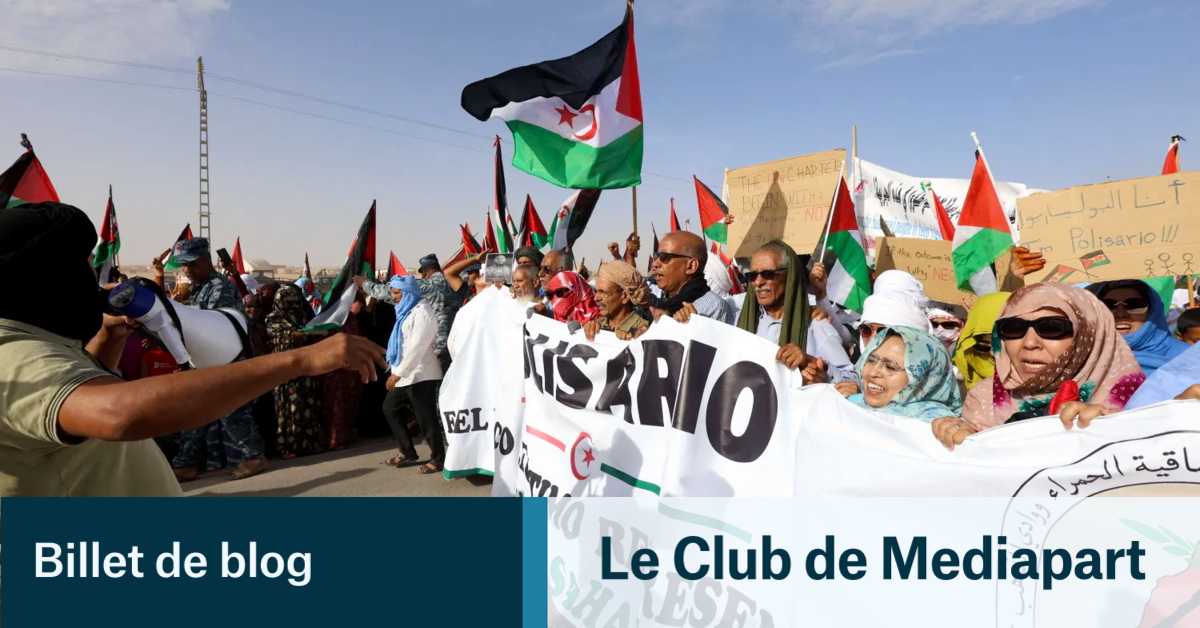
The United Nations’ 1960 Declaration on the Granting of Independence to Colonial Countries and Peoples propelled Western Sahara onto the international agenda. Yet Morocco’s claim clashed with another narrative: that of the Sahrawi people themselves. By the 1970s, local movements advocating for self-determination began challenging both Spanish colonial rule and Morocco’s territorial assertions.
The International Court of Justice’s 1975 advisory opinion further complicated Morocco’s position. The court found no legal basis for Moroccan sovereignty over Western Sahara, endorsing instead the principle of Sahrawi self-determination. This ruling directly contradicted Morocco’s historical claims, forcing a recalibration of its diplomatic and military strategies.
Narrative versus reality: the politics of historical continuity
Morocco’s persistent framing of its claim as historically inevitable obscures the contingent nature of its territorial ambition. The narrative relies heavily on selective historical interpretation, emphasizing ancestral ties while omitting the dynasty’s prolonged detachment from the territory. This framing serves a dual purpose: legitimizing Morocco’s position in international forums and marginalizing competing claims.
Critics argue that this selective storytelling creates a revisionist history that prioritizes political expedience over historical accuracy. By presenting Morocco’s claim as a natural extension of its past, the narrative obscures the strategic decisions and external pressures that shaped the country’s territorial policies in the 20th century.
Implications for the present: what does the past mean for Western Sahara’s future?
Decades after the initial claim and subsequent conflict, the roots of Morocco’s territorial dispute remain contested. The historical gaps in Morocco’s narrative highlight the fluid nature of territorial legitimacy, particularly in post-colonial contexts. Western Sahara’s status today—partitioned between Morocco-controlled areas and the Sahrawi Arab Democratic Republic’s proclaimed territory—reflects the enduring consequences of these overlooked historical dynamics.
For policymakers and observers alike, understanding this complex backdrop is essential to grasping the dispute’s core. It’s not merely a conflict over land but a collision of narratives: one forged in the fires of decolonization, another embedded in the soil of selective memory. Recognizing the historical gaps in Morocco’s claim isn’t just academic—it’s critical to any meaningful resolution.